![[HERO] Create Unforgettable Campaigns with these 5 Email Marketing Automation Tools](https://cdn.marblism.com/sBK4bpa-t5F.webp)
In 2026, the inbox is no longer a quiet place. It’s a battlefield. If you’re still sending "one-to-many" newsletters, you aren’t just failing: you’re likely training your audience’s spam filters to ignore you permanently. The shift toward hyper-personalization isn't a luxury; it’s the price of entry.
To create an "unforgettable" campaign, you have to move past basic scheduling. We are talking about behavioral triggers, predictive analytics, and cross-channel orchestration. This requires a tech stack that does the heavy lifting while you focus on the strategy.
Here is a deep dive into the five automation tools that are redefining what’s possible in email marketing this year.
1. ActiveCampaign: The Sophisticated Orchestrator
If your business relies on complex customer journeys, ActiveCampaign remains the industry standard. It isn't just an email tool; it’s a customer experience automation (CXA) platform.
The real power lies in its Conditional Content blocks. Imagine sending a single email where the hero image and the discount code change based on whether the recipient is a "VIP Lead" or a "Churn Risk." This isn't just personalization; it’s dynamic utility.
Technical Edge: Predictive Sending
In 2026, "Tuesday at 10 AM" is a dead concept. ActiveCampaign’s AI analyzes individual engagement patterns to determine when a specific user is most likely to open their mail. If Malibongwe checks his emails at 6 PM on a Sunday, that’s when the server hits his inbox.
This level of precision is essential when you are balancing multiple traffic sources. For instance, if you are following PPC best practices for 2026, your cost per lead is likely higher than it was five years ago. You cannot afford to waste those expensive leads on a poorly timed email blast.

2. Klaviyo: The Data Scientist’s Choice for E-commerce
Klaviyo has successfully transitioned from a "Shopify plugin" to a massive data powerhouse. For e-commerce brands, it’s the closest thing to having a dedicated data scientist on the payroll.
What sets Klaviyo apart is its ability to ingest and synthesize "Zero-Party Data." With third-party cookies effectively extinct, the data your customers give you directly: preferences, birthdays, and browsing habits: is your most valuable asset.
Why It Works: Predictive Churn Modeling
Klaviyo doesn't just tell you who bought a product; it tells you who is about to stop buying. Its predictive analytics engine calculates the "Expected Date of Next Order." You can trigger an automation five days before that date with a "Restock and Save" offer.
This ties directly into content marketing for small business. Instead of pushing a hard sale, you can use Klaviyo to deliver educational content: like a "how-to" video for the specific product they just bought: exactly when their interest begins to wane.
3. Brevo (Formerly Sendinblue): The Multi-Channel Powerhouse
Brevo has carved out a niche by proving that "affordable" doesn't have to mean "basic." Their pricing model is based on email volume rather than contact count, which is a godsend for businesses with large lists that they don't want to prune aggressively.
The Unified Inbox Strategy
Brevo’s standout feature in 2026 is its multi-channel automation. You can build a workflow that starts with an email, waits two days, checks if the email was opened, and if not, sends a WhatsApp message or an SMS.
For teams managing high-touch sales cycles, this level of integration ensures no one falls through the cracks. It’s about meeting the customer where they are, rather than forcing them to communicate on your terms.

4. GetResponse: The Full-Stack Funnel Builder
GetResponse has evolved into a comprehensive marketing machine. While others focus purely on the "send," GetResponse focuses on the "conversion." It’s particularly effective for service-based businesses and educators because of its integrated webinar and funnel features.
Automated Conversion Funnels
Within one dashboard, you can build a landing page, host a live webinar, and trigger a post-webinar email sequence based on whether the attendee watched the whole presentation or dropped off after ten minutes.
This integration removes the "API friction" that often breaks complicated marketing stacks. When your webinar tool and your email tool are the same piece of software, data latency disappears. You can trigger "Fast Action" bonuses in real-time with 100% confidence.
5. Mailchimp: The King of Rapid Deployment
It’s easy to dismiss Mailchimp as "the tool for beginners," but that would be a mistake. Since its acquisition by Intuit, Mailchimp has leaned heavily into AI-driven design and integration with QuickBooks.
The Creative Assistant
One of the biggest bottlenecks in email marketing is asset creation. Mailchimp’s "Creative Assistant" uses AI to pull your brand colors, logos, and fonts from your website to automatically generate beautiful, on-brand email designs.
For a small team, this saves hours of design work. It allows you to pivot quickly. If a specific content piece is performing well in your content marketing efforts, you can spin up a dedicated email campaign in under 15 minutes.
The Technical Reality: Deliverability in 2026
Choosing a tool is only half the battle. If your technical setup is flawed, your "unforgettable" campaign will end up in the "Promotions" tab or, worse, the Spam folder.
In 2026, Google and Yahoo have tightened the screws. To maintain a high sender reputation, you must implement the following:
- DKIM (DomainKeys Identified Mail): Think of this as a digital signature that proves the email actually came from you.
- SPF (Sender Policy Framework): A list of IP addresses authorized to send mail on your behalf.
- DMARC (Domain-based Message Authentication, Reporting, and Conformance): This tells receiving servers what to do if an email fails SPF or DKIM.
Most of the tools mentioned above provide guided setups for these protocols. Do not skip them. A beautiful email that isn't delivered has a conversion rate of zero.
Scaling Your Strategy
The goal of automation isn't to remove the human element; it’s to scale it. An automation sequence should feel like a one-on-one conversation that just happens to be happening with 10,000 people simultaneously.
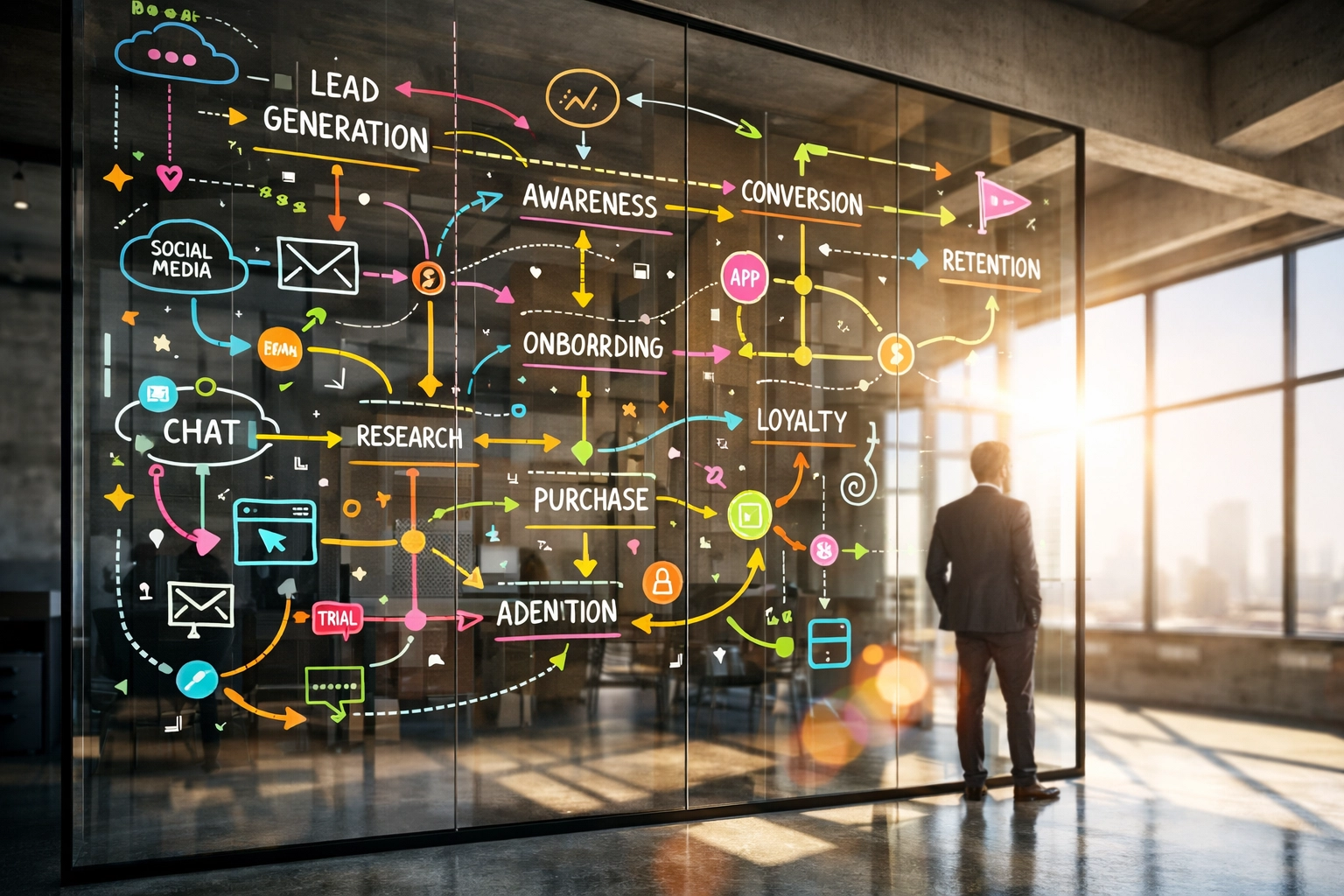
Start by mapping your customer journey on a whiteboard before you touch any software. Identify the "friction points": where do people drop off? Where do they have the most questions?
Once you identify these points, use the tools above to bridge the gaps:
- Use ActiveCampaign for deep logic and lead scoring.
- Use Klaviyo for high-frequency e-commerce triggers.
- Use Brevo for cost-effective SMS and WhatsApp secondary triggers.
- Use GetResponse for tight, webinar-led sales funnels.
- Use Mailchimp for quick, design-heavy newsletters and updates.
Final Thoughts on Automation Ethics
As we move deeper into 2026, the "creepiness factor" is real. Just because you can track a user’s every move on your site doesn't mean you should mention it in every email. Use your data to be helpful, not haunting.
The most "unforgettable" campaigns are those that provide value before they ask for a sale. Whether it's a perfectly timed guide or a discount on a product a customer actually needs, let your automation be the silent assistant that makes your customer’s life easier.
About the Author: Malibongwe Gcwabaza
Malibongwe Gcwabaza is the CEO of blog and youtube, a premier digital strategy firm helping brands navigate the complexities of modern content ecosystems. With over a decade of experience in marketing automation and performance media, Malibongwe specializes in scaling small businesses through data-driven storytelling and technical excellence. When he's not optimizing conversion funnels, he's exploring the intersection of AI and human creativity.
About the Author