![[HERO] SEO Strategies 2026: Adapting to the World of Generative Search](https://cdn.marblism.com/rZaTINDNs_Q.webp)
The search landscape didn’t just change in 2026; it flipped on its head. If you’re still obsessing over getting into the “Top 10” blue links on a Google results page, you’re chasing a ghost. Today, users aren’t just looking for links: they’re looking for answers. They want them fast, they want them summarized, and they want them tailored to their specific context.
We’ve moved from the era of traditional Search Engine Optimization (SEO) into the era of Generative Search Optimization (GSO). Google’s AI Overviews, Perplexity, and OpenAI’s search capabilities have become the primary gatekeepers of information. For small business owners and creators, this shift feels scary, but it’s actually a massive opportunity. The “big players” with massive backlink profiles but thin, corporate content are losing ground to individuals with real expertise.
Here is the deep-dive guide on the SEO strategies 2026 demands to keep your brand visible and your traffic growing.
The Death of the Keyword, The Rise of the Entity
For two decades, SEO was about matching keywords. If you wanted to rank for “best coffee beans,” you wrote a post with that phrase in the title, headers, and every 200 words. In 2026, AI models don’t care about keyword density. They care about entities and intent.
An entity is a well-defined object or concept: a person, a place, a brand, or a specific technical process. AI models use a “knowledge graph” to understand how these entities relate to each other.
Actionable Strategy: Topical Authority Clusters
Instead of writing ten random blog posts, you need to build a “Topic Cluster.” If LearnRise wants to be an authority on microlearning, we don’t just write one post. We build a hub:
- The Pillar: A 3,000-word guide on “The Future of Microlearning.”
- The Spokes: Specialized articles on “Microlearning for SaaS Sales Teams,” “Neuroscience of 5-Minute Lessons,” and “Best Microlearning Tools for 2026.”
By interlinking these, you tell the search engine: “I don’t just have a keyword; I own this entire entity.”

Optimizing for the “AI Snapshot” (GSO)
When a user asks an AI search engine a question, the engine generates a summary and cites a few “trusted sources” in the sidebar or footnotes. Being one of those three citations is now more valuable than being #1 in traditional rankings. This is the heart of SEO strategies 2026.
How do you get cited?
- Be the Direct Answer: Use a “TL;DR” (Too Long; Didn’t Read) section at the top of your long-form posts. Summarize the key findings in 2-3 sentences. AI crawlers love this: it makes their job easier.
- Structured Data (Schema Markup): You must use advanced Schema. It’s the “API” for search engines. It tells the AI exactly what your content is: a review, a recipe, a how-to guide, or a founder’s opinion.
- Niche Data Points: AI models are trained on common knowledge. They cite sources that provide uncommon knowledge. If you have original data, a unique survey, or a case study with specific numbers (e.g., “How we boosted retention by 22% using AI bots”), you are 10x more likely to be cited as a source.
E-E-A-T 2.0: The “Human” Advantage
Google’s “Helpful Content” updates have culminated in a strict enforcement of E-E-A-T: Experience, Expertise, Authoritativeness, and Trustworthiness. In 2026, the “Experience” part is the most critical.
AI can write a technically “perfect” article about how to fix a sink, but it cannot tell you about the time the pipe burst and how the water felt on its hands. It can’t describe the specific smell of a copper fitting. Human experience is the only thing AI cannot replicate.
How to Prove Experience:
- First-Person Narratives: Use “I” and “We.” Share your failures. Instead of “10 SEO Tips,” write “I tested these 10 SEO strategies for 6 months, and here’s what actually happened.”
- Unique Visuals: Stop using generic stock photos. A grainy photo of you actually working on a project is worth more to a search engine than a 4k stock image of a “businessman.” It proves you were there.
- Author Transparency: Every post needs a detailed author bio linked to social profiles. The AI needs to verify that a real human with a history in the industry wrote the piece.

The “Search Everywhere” Ecosystem
In 2026, search doesn’t just happen on Google. It happens on TikTok, Reddit, YouTube, and Amazon. People are using TikTok to search for “how to style a blazer” and Reddit for “is this software worth it?”
Your SEO strategy can no longer be site-centric. It must be platform-agnostic.
The Multi-Channel Loop:
- Publish a Deep-Dive Article: (1,500+ words) on your blog.
- Create a YouTube Video: Summarize the article. Embed this video back into the blog post. This increases “dwell time,” which is a massive ranking signal.
- Seed Reddit and Quora: Don’t just spam links. Answer questions related to your topic and mention your research. Google increasingly prioritizes “hidden gems”: forum discussions: in search results.
- Social Signals: Branded search volume (people typing “LearnRise SEO guide” into Google) is a massive authority signal. Use social media to drive people to search for your brand name specifically.
Multimodal SEO: Beyond the Written Word
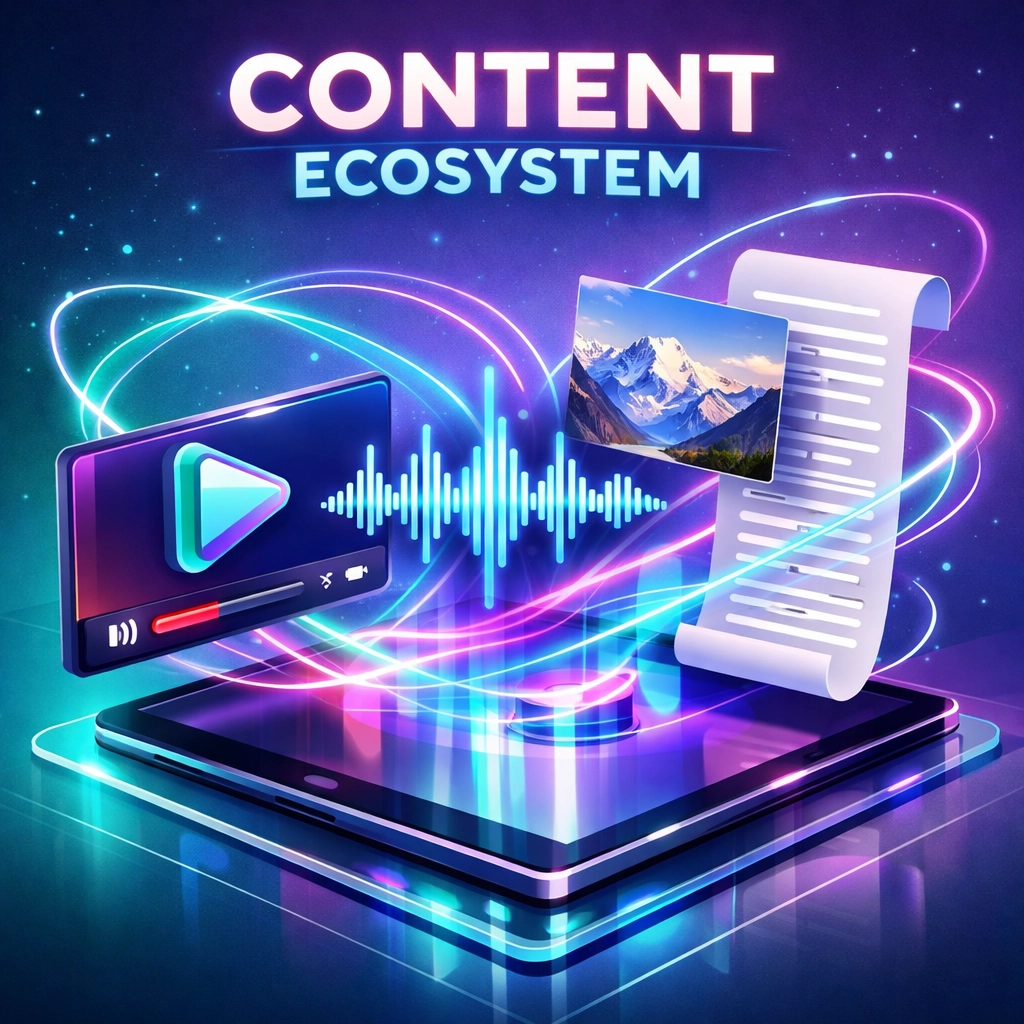
Search engines in 2026 are “multimodal.” This means they process text, images, video, and audio simultaneously. If your blog is just a wall of text, you’re invisible to a large portion of the index.
Technical Fundamentals That Still Matter
While we talk a lot about AI, the “pipes” of your website still need to work.
- Core Web Vitals: If your site takes more than 2 seconds to load on a mobile device, you’re dead in the water. Sites with high Core Web Vitals scores see 24% higher conversion rates because users (and bots) stay longer.
- Mobile-First is Only-First: Over 80% of generative search happens on mobile. If your site’s UI is clunky on a phone, your rankings will plummet regardless of how good your content is.
Rethinking Click-Through Rates (CTR)
The way we write titles has changed. In the past, we wrote for the algorithm. Today, we write for the human who is looking at a list of AI-generated options.
Old Title: “Top 10 SEO Strategies 2026”
2026 Title: “I Spent $5,000 Testing SEO Strategies in 2026: Here’s What Failed”
The second title uses a “curiosity hook” and promises a human perspective. It stands out against the sterile, AI-generated titles that often clutter the search space. Use first-person pronouns and emotional hooks to drive clicks.
The 2026 SEO Checklist for Small Businesses
If you’re feeling overwhelmed, here is your simplified roadmap:
- Audit for “Humanity”: Go through your top 5 posts. Do they sound like a robot wrote them? Add personal anecdotes, real-world examples, and your own photos.
- Claim Your Entity: Make sure your business is listed in Google Business Profile, LinkedIn, and major industry directories. This helps AI connect your brand to your niche.
- Answer Questions Directly: Identify the top 5 questions your customers ask. Create a “FAQ” section on your homepage using Q&A Schema.
- Diversify Your Media: Take your best blog post and turn it into a 60-second vertical video. Post it to YouTube Shorts and TikTok.
- Focus on Value over Volume: One 2,000-word masterpiece that solves a real problem is better than thirty 500-word “SEO filler” posts.
Summary: Focus on the User, Not the Bot
The irony of “SEO strategies 2026” is that as search engines become more automated, the way to beat them is to become more human. The AI is looking for the most helpful, trustworthy, and experienced source to cite.
Stop trying to “trick” the algorithm. Start trying to be the most useful resource in your niche. If you provide genuine value, the AI models will have no choice but to point their users toward you.
At LearnRise, we believe that the future of the internet belongs to the creators who share real knowledge. SEO is no longer about “winning” a game; it’s about earning the trust of your audience and the systems they use to find you.
About the Author