In 2026, the digital landscape has shifted. The internet is saturated with AI-generated noise, generic corporate updates, and recycled "thought leadership" that feels more like a robot wrote it than a human. For a CEO, this presents a massive problem: and an even bigger opportunity.
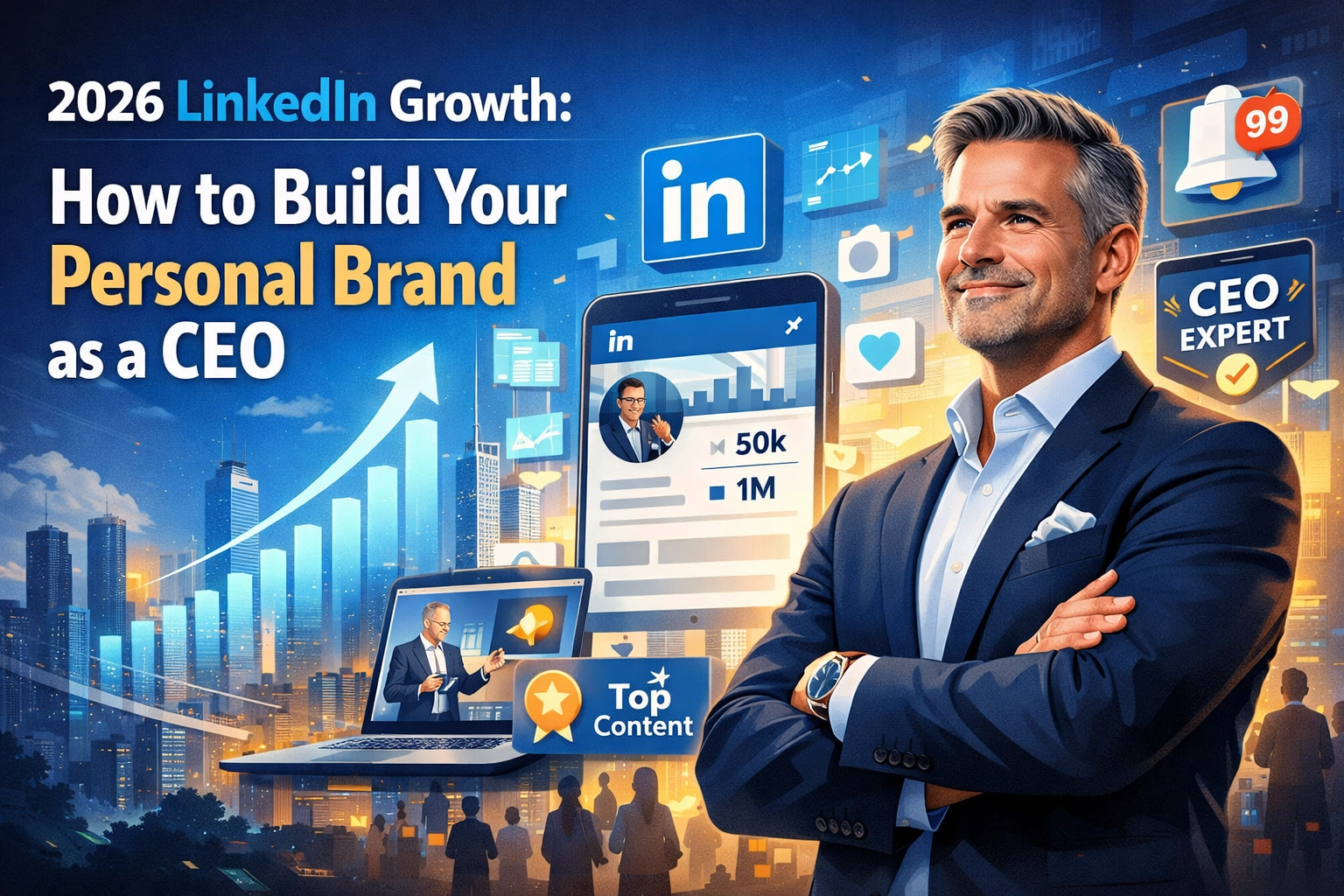
As the leader of your company, your face is now the primary marketing asset. People no longer buy from faceless logos; they buy from people they trust, respect, and feel they know. If you are still hiding behind your company's LinkedIn page, you are leaving millions in potential revenue, talent acquisition, and brand equity on the table.
Building a personal brand on LinkedIn isn't about becoming an "influencer." It’s about building an ecosystem of authority that supports your business goals. This guide will break down exactly how to navigate LinkedIn growth in 2026, focusing on content marketing for small businesses and high-level social media growth tips.
The Shift: Why 2026 is Different for CEOs
A few years ago, you could get away with posting a link to a press release or a "we’re hiring" graphic. In 2026, the algorithm has evolved to favor Human-Centric Content. LinkedIn’s current priority is meaningful conversation. They want to see depth, original data, and controversial (but professional) takes that spark a comments section.
For a CEO, your personal brand serves three main functions:
- Trust-Building: Investors and partners vet you on LinkedIn before they ever sign a contract.
- Talent Magnetism: Top-tier talent wants to work for leaders, not just companies.
- Customer Acquisition: Especially in B2B and high-ticket service industries, the CEO’s profile often acts as the top of the sales funnel.
1. Crafting a High-Conversion Foundation
Before you post a single word, your profile needs to be optimized for conversion. Think of your profile as a landing page, not a CV.
The Headline: Beyond the Job Title
Stop using "CEO at [Company Name]." It tells people what you do, but not why they should care. Your headline should be a blend of your niche, your value proposition, and your expertise.
- Weak: CEO at RiseTech Solutions.
- Strong: CEO at RiseTech | We help Series A startups scale their DevOps without the bloat | 15+ years in Cloud Infrastructure | Featured in TechCrunch.
The "About" Section: The Story of Your "Why"
In 2026, people want to know the person behind the desk. Your About section should follow a narrative arc:
- The Hook: A challenge you faced in your industry.
- The Struggle: Why the old way of doing things failed.
- The Epiphany: The moment you realized there was a better way (which led to your current company).
- The Vision: What you are building now and who you are helping.
- The CTA: Tell them how to engage with you: subscribe to your newsletter, book a call, or follow for daily insights.

2. The 90-Day Content Blueprint
Consistency is the most difficult part of LinkedIn growth. To stay visible without burning out, you need a structured content blueprint. I recommend a "Pillar System" that ensures your feed is balanced.
Pillar 1: Authority & Frameworks (40%)
These are your "teaching" posts. Share the frameworks you use to run your business. Instead of saying "We have a great culture," show the specific 5-step onboarding process you created to reduce churn. Use bullet points and clear headings. These posts establish you as a subject matter expert.
Pillar 2: The "Build in Public" / Proof Posts (30%)
In 2026, transparency is a competitive advantage. Share the wins, but also share the losses. Did a product launch fail? Explain why and what you learned. Did you just hit a milestone? Share the data. Concrete examples and data-driven insights are what get shared in Slack channels and executive boardrooms.
Pillar 3: Personal Philosophy & Values (20%)
What do you stand for? What do you hate about your industry? These posts aren't about your business directly, but about your worldview. This is what makes people like you. It builds the emotional connection that a corporate page simply can't achieve.
Pillar 4: Strategic Engagement (10%)
LinkedIn is a social network, not a megaphone. Your content strategy must include interacting with others.
| Content Type | Frequency | Goal |
|---|---|---|
| Long-form Educational | 1x Weekly | Deep authority & SEO |
| Industry Opinion | 2x Weekly | Engagement & Shares |
| Personal Story | 1x Weekly | Trust & Connection |
| LinkedIn Newsletter | 1x Monthly | Retention & Direct Access |
3. Social Media Growth Tips for the Modern CEO
Growth in 2026 isn't just about hacking the algorithm; it’s about understanding human psychology.
Mastering the "Hook"
The first three lines of your post are all that matter in the "See More" era. If you don't stop the scroll, the rest of your 1,200-word masterpiece is invisible.
- Bad: "I'm excited to share some thoughts on leadership today."
- Good: "We lost our biggest client yesterday. Here is exactly how I told the team."
Depth Over Reach
Don't obsess over "viral" posts. A post with 1,000 views that reaches 10 potential investors is infinitely more valuable than a post with 100,000 views that reaches teenagers. Focus on "High-Value" engagement. When an industry peer comments, reply with a question to keep the conversation going.
Leverage Video and Native Documents
LinkedIn’s 2026 algorithm heavily weights "dwell time": how long someone stays on your post. Carousel documents (PDFs) and short, high-quality video clips (60-90 seconds) of you speaking at an event or recording a quick thought in your office are incredibly effective for increasing dwell time.

4. Content Marketing for Small Business: CEO Edition
If you are running a small business, you likely don't have a massive PR team. You are the PR team. Your LinkedIn profile should act as the engine for your content marketing strategy.
Repurposing is Key
You don't need to create new content every day. If you record a 10-minute YouTube video or a podcast episode:
- Transcribe it into a long-form LinkedIn article.
- Extract 5 key "punchy" quotes for short-form posts.
- Turn the main "how-to" section into a PDF carousel.
- Share a 60-second "behind the scenes" clip of the recording.
The "Dark Social" Effect
A large portion of your growth will happen where you can’t see it: in private messages, Slack groups, and emails. When you provide high-quality, original perspectives, people share your posts privately. This is why "Deep Dives" are better than "Short Tips." A deep dive into "The Future of B2B SaaS Pricing in 2027" is something a VP will copy-paste into their internal strategy channel. That is how you win.
5. Advanced Strategies: Newsletters and Live Events
By mid-2026, your followers are just a number. Your subscribers are your business.
Start a LinkedIn Newsletter
LinkedIn Newsletters are currently one of the best ways to get directly into your audience's email inbox without having to build a separate mailing list from scratch. Aim for a monthly cadence. Use this space for your most technical, in-depth content that wouldn't fit in a standard post.
LinkedIn Live
Hosting a monthly "Ask Me Anything" (AMA) or a short interview with another CEO in a complementary space can skyrocket your visibility. It humanizes you instantly. You aren't just a profile picture anymore; you’re a living, breathing expert.

6. Common Pitfalls to Avoid
As you scale your personal brand, avoid these common traps:
- The "AI-Voice" Trap: It’s tempting to let AI write everything. Don't. Use AI for outlining and research, but the voice must be yours. If it sounds like a textbook, people will tune out.
- The Ego Trap: Don't just talk about yourself. Talk about the problems your audience has. Your brand is about them, not you.
- Ghosting the Comments: If you post and walk away, the algorithm will penalize you. Spend 15 minutes after posting replying to every single comment.
Summary: The Long Game
Building a personal brand as a CEO in 2026 is a marathon. You might not see a surge in leads in the first 30 days. However, by day 90, you will notice a shift. People will start "knowing" you before you meet them. Potential hires will mention your posts in interviews. Sales calls will become easier because the trust has already been established.
Consistency, authenticity, and a commitment to providing real value are the only things that will survive the AI-saturated future. Start today, stay human, and lead the conversation.
About the Author: Malibongwe Gcwabaza
Malibongwe Gcwabaza is the CEO and founder of blog and youtube, a premier content strategy firm helping executives and small businesses dominate their niche through high-impact digital storytelling. With over a decade of experience in brand building and digital marketing, Malibongwe focuses on bridging the gap between technical expertise and human connection. When not refining content strategies, he focuses on mentoring the next generation of African tech leaders.
About the Author