If you’re still sending the same email to every person on your list, you’re essentially leaving a pile of cash on the sidewalk and walking away. In 2026, the "spray and pray" method isn’t just outdated: it’s a recipe for hitting the spam folder.
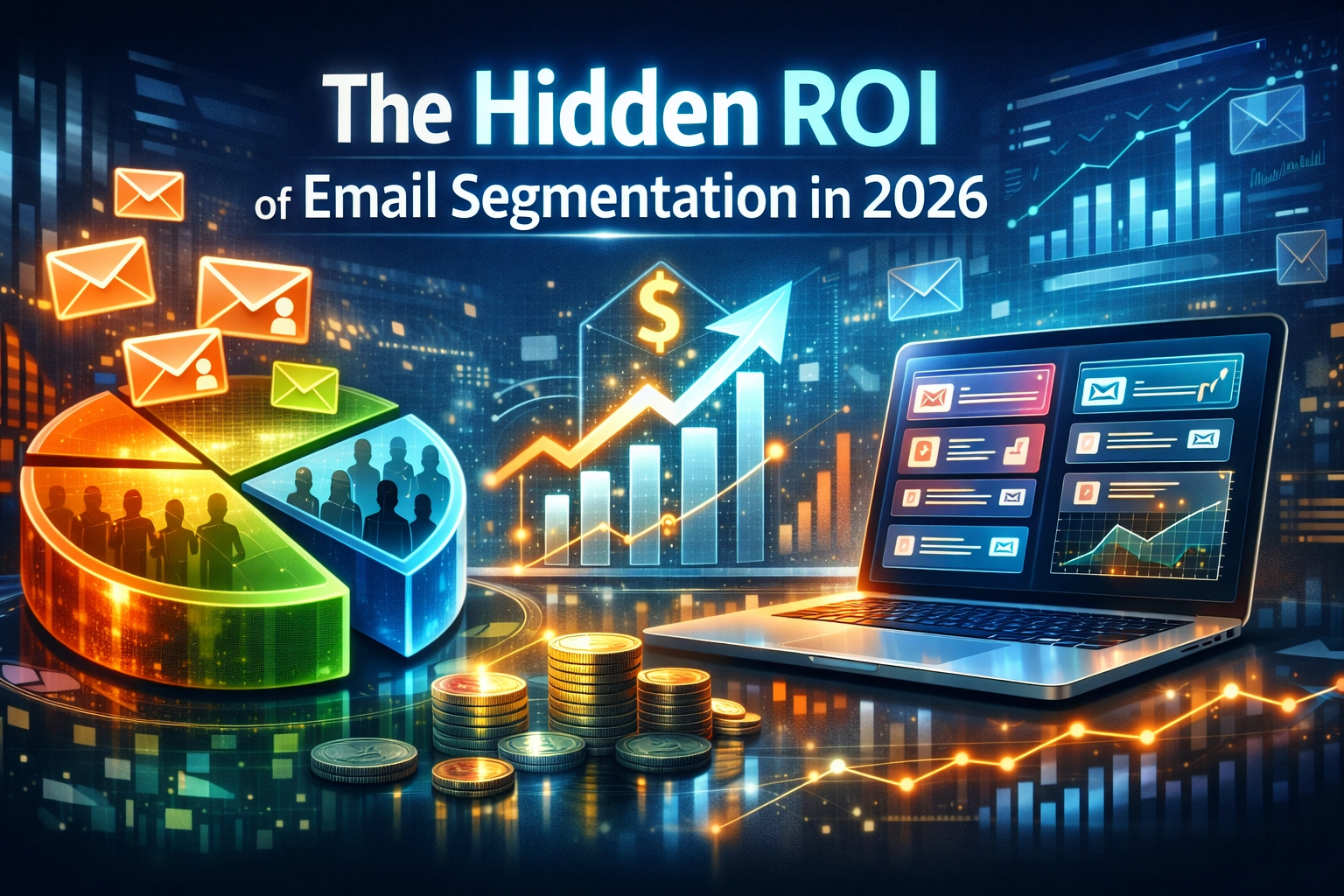
While most marketers focus on open rates and click-throughs as the ultimate truth, there is a much deeper story happening beneath the surface. Recent data shows that segmented email campaigns can lead to a staggering 760% increase in revenue. But the "hidden" ROI isn't just about the immediate sale; it’s about retention, brand equity, and decreasing the cost of customer acquisition.
Let’s break down why email segmentation is the most impactful lever you can pull this year and how it fundamentally changes the math for your business.
The Performance Gap: Why Basic Email is Failing
For years, email was treated as a digital megaphone. You had a message, you had a list, and you shouted at everyone at once. But in 2026, inbox algorithms have become incredibly sophisticated. They prioritize relevance above all else.
According to recent industry reports, segmented campaigns generate 30% more opens and 50% more click-throughs than unsegmented ones. When you send a generic email, you aren't just annoying your subscribers; you are training their email provider (like Gmail or Outlook) to ignore you. Every time a user deletes your email without opening it, your "sender reputation" takes a hit.
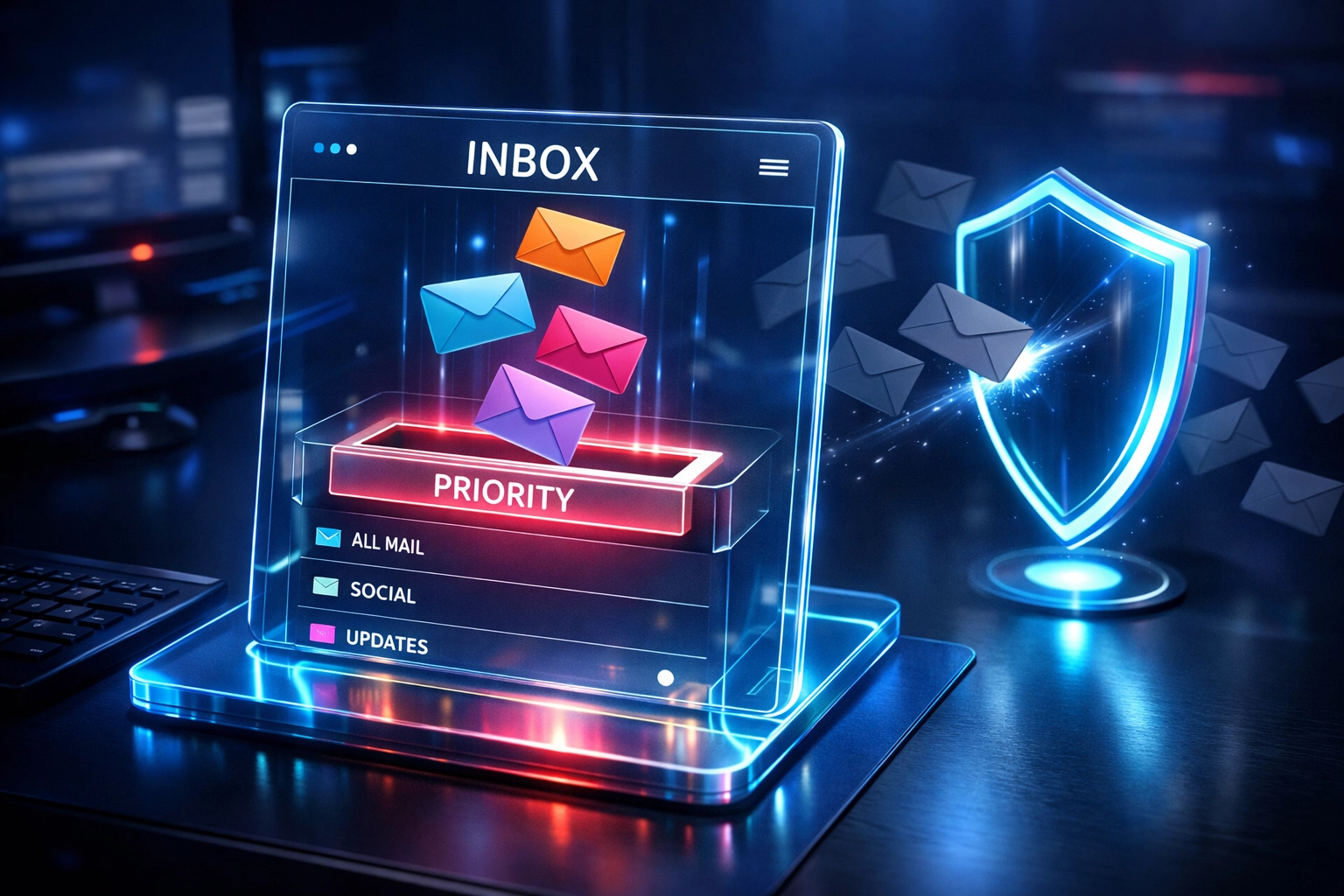
The hidden ROI here is deliverability insurance. By segmenting, you ensure that the people receiving your content actually want it, which keeps your engagement rates high and ensures your emails stay in the primary inbox rather than the "Promotions" tab or the dreaded spam folder.
From Demographics to Behavioral Micro-Segmentation
The biggest shift we’ve seen leading into 2026 is the move away from basic demographic segmentation (age, gender, location) toward behavioral micro-segmentation.
In the past, you might have grouped people because they live in New York. Today, that’s not enough. Behavioral segmentation looks at what your users actually do. Are they repeatedly viewing a specific product page but not buying? Did they open your last three emails about "SEO tips" but ignore everything related to "Social Media Ads"?
The Power of "Assistance" Over "Advertising"
When you use behavioral data, your emails stop feeling like ads and start feeling like assistance. For example:
- The "Lapsed Value" Segment: Targeting customers whose engagement is declining before they churn.
- The "Price Sensitivity" Segment: Targeting users who only engage or buy when there is a discount code involved.
- The "High-Intent" Segment: People who have visited your pricing page three times in the last 48 hours.
This level of precision is made possible by modern email marketing automation tools. These platforms now use predictive analytics to tell you not just who to email, but when they are most likely to buy. AI-driven send-time optimization alone is driving a 41% increase in revenue by hitting the inbox at the exact moment a user is most active.
Integrating Email with Content Marketing for Small Business
For many small business owners, creating content feels like a treadmill that never stops. You write blog posts, film videos, and post to social media, often wondering if anyone is actually paying attention.
This is where the ROI of segmentation becomes a game-changer for content marketing for small business. Instead of sending your latest blog post to everyone, you segment based on interest. If you run a fitness brand and you write a deep-dive article on "Kettlebell Training for Seniors," sending that to your 22-year-old powerlifting segment is a waste of a touchpoint.
By matching specific content to specific segments, you increase the "perceived value" of your brand. Your subscribers start to feel like you truly understand their specific needs. This builds a level of trust that makes the eventual "ask" (the sale) much easier.
| Segment Type | Metric Improvement | Typical ROI Increase |
|---|---|---|
| Demographic | 10-15% Opens | 2x |
| Interest-Based | 20-25% Clicks | 3x |
| Behavioral | 40%+ Engagement | 5x – 7x |

The Compounding Effect of Optimization
Segmentation doesn't exist in a vacuum. Its ROI is multiplied when you combine it with other optimization tactics.
- A/B Testing within Segments: Testing a subject line on your entire list gives you "average" data. Testing a subject line specifically for your "High-Value Loyalists" gives you actionable data. Companies that regularly A/B test see a 4,200% ROI compared to 2,300% for those who don't.
- Dynamic Content: This is where the actual body of the email changes based on who is reading it. A male subscriber might see a hero image featuring men's apparel, while a female subscriber sees women's apparel: all within the same email campaign. This raises ROI by an average of 258%.
- Automation Triggers: Automated emails (like welcome sequences or abandoned cart reminders) generate over 300% more revenue than standard broadcasts. Why? Because they are timely and relevant by default.
Industry-Specific Wins: Who is Cleaning Up?
While every industry benefits, the ROI isn't distributed equally.
- E-commerce: Retailers are seeing the highest returns, often reaching $72 for every $1 spent. This is largely due to highly effective abandoned cart sequences and "frequently bought together" recommendations.
- B2B SaaS: For software companies, segmentation is less about the immediate sale and more about the "Trial-to-Paid" conversion. Segmenting users based on which features they haven't used yet allows for "feature-discovery" emails that reduce churn.
- Consumer Goods: Brands that segment based on replenishment cycles (knowing exactly when a customer is about to run out of coffee or shampoo) are seeing massive boosts in lifetime value (LTV).

The Implementation Gap: Why Most Businesses Fail
If the ROI is so high, why isn't everyone doing it perfectly? The "Hidden ROI" remains hidden because of an investment gap.
Research shows that 63% of organizations achieving high email ROI spend more than 20% of their total marketing budget on email. Conversely, 75% of companies reporting low ROI spend less than 20% on the channel. Many businesses treat email as a "cheap" or "free" channel, so they don't invest the time required to set up proper segments, clean their lists, or integrate their email marketing automation tools with their CRM.
To unlock the hidden ROI, you have to stop treating email as an afterthought and start treating it as a high-performance data engine.
Actionable Steps to Start Segmenting Today
You don't need a massive team to start seeing these results. Start small and layer the complexity over time.
1. The Low-Hanging Fruit: Engagement Levels
Create three segments immediately:
- Active: Opened an email in the last 30 days.
- At-Risk: Opened an email 31–90 days ago.
- Inactive: No activity for 90+ days.
Stop sending your daily or weekly emails to the "Inactive" group. Reserve them for a specific "Re-engagement" campaign. This will immediately boost your deliverability.
2. The Interest Tag
Every time someone clicks a link in your email, tag them. If they click a link about "Email Marketing," they go into the "Marketing" segment. If they click a link about "Video Production," they go into the "Video" segment. Over three months, you’ll have a clear map of what your audience actually cares about.
3. The Purchase History
Segment by:
- First-time buyers: Needs a "Welcome to the Family" sequence.
- Repeat buyers: Needs a "Loyalty Reward" or "VIP Access."
- High-Spenders: Needs a personal touch or exclusive offers.

Final Thoughts: The Future is Personal
As we move through 2026, the noise in the digital space is only going to get louder. AI is making it easier for everyone to produce content, which means the volume of email will continue to rise.
In this environment, relevance is your only defense. The hidden ROI of email segmentation isn't just a bigger number in your Stripe account this month: it's the long-term health of your relationship with your audience. When you respect the inbox by only sending what is relevant, your audience rewards you with their attention. And in 2026, attention is the most valuable currency there is.
Stop sending blasts. Start sending solutions.
About the Author: Malibongwe Gcwabaza
Malibongwe Gcwabaza is the CEO of blog and youtube, a leading digital strategy firm helping brands navigate the evolving landscape of content and automation. With over a decade of experience in digital marketing, Malibongwe focuses on bridging the gap between high-level technology and practical, human-centric marketing strategies. When he’s not dissecting the latest algorithm updates, he’s helping small businesses scale through data-driven storytelling.
About the Author