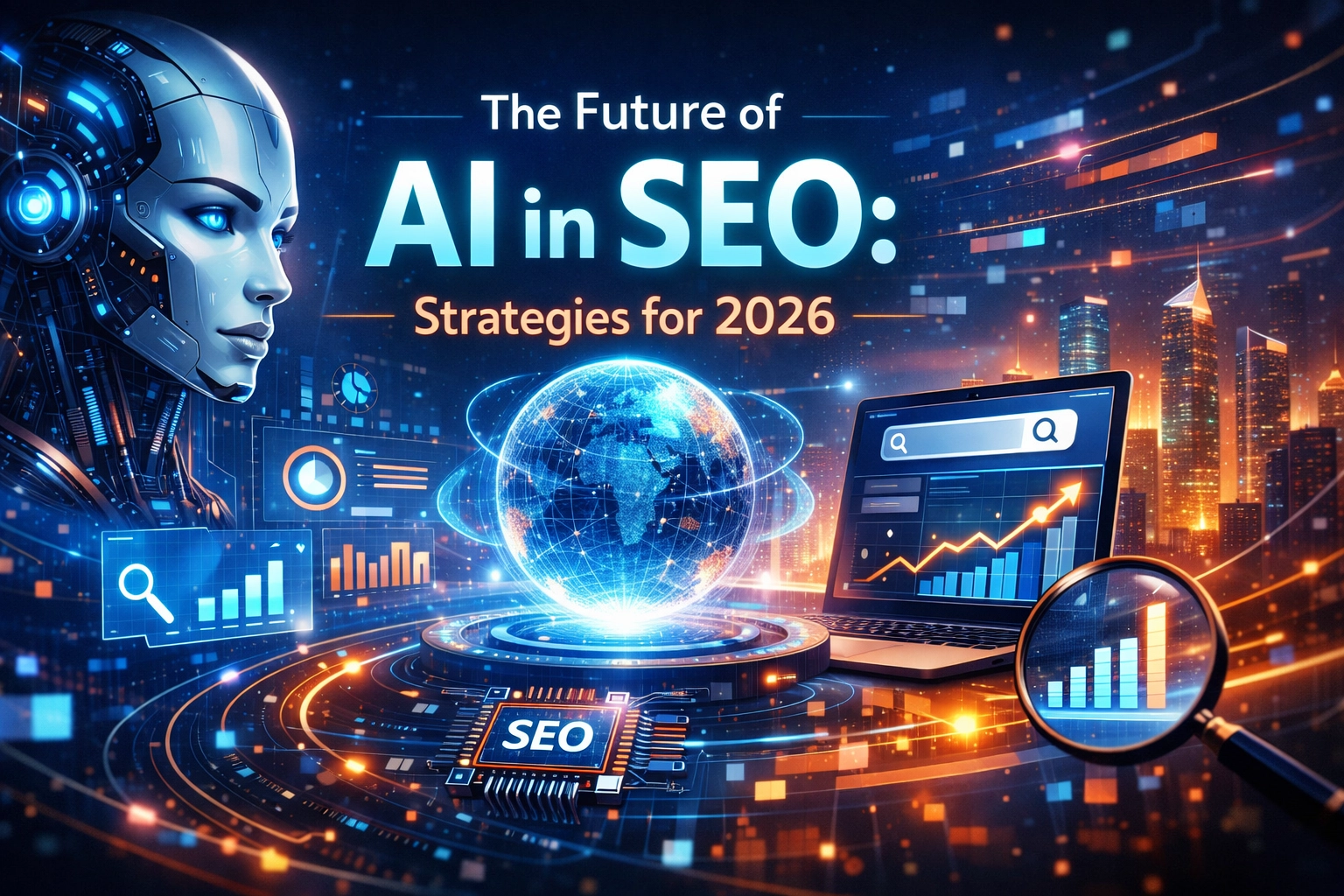
If you’re still checking your 2024 SEO playbook, I’ve got some news: that book belongs in a museum. By March 2026, the search landscape hasn't just "evolved": it’s been completely re-coded. We’ve officially moved past the era where you could just sprinkle some keywords on a page and wait for the Google traffic to roll in.
Today, we’re living in a world of Zero-Click searches, AI Overviews (AIO), and LLM (Large Language Model) optimization. If your brand isn’t being cited by ChatGPT, Gemini, or Perplexity, you’re basically invisible to half your audience.
In this deep dive, we’re going to look at the SEO strategies for 2026 that actually move the needle. No fluff, no "generic tips": just the technical and strategic shifts you need to survive the AI-first era.
The Zero-Click Reality and the Rise of AEO
The biggest shock to the system in 2026 has been the collapse of the traditional Click-Through Rate (CTR). With AI Overviews appearing on nearly 50% of all queries, users are getting their answers directly on the Search Engine Results Page (SERP). Why would someone click your link to find "how to bake a sourdough loaf" when Google has already synthesized the top five recipes into a perfect, interactive step-by-step guide right there?
This shift has birthed a new discipline: AI Engine Optimization (AEO).
While SEO is about ranking #1 in a list of links, AEO is about becoming the source for the AI’s answer. If an AI provides a full answer but cites your website as the primary data source, you’ve won. You might get fewer clicks, but the clicks you do get are from high-intent users who need the deep-dive expertise only your full article can provide.
AI Content vs. Human Content: Passing the "Vibe Check"
In 2026, the internet is flooded with "slop": low-effort, AI-generated content that says a lot without actually saying anything. Search engines have gotten incredibly good at identifying this. If your blog post reads like a generic Wikipedia entry, Google’s Helpful Content System will bury it.
The secret to SEO strategies in 2026 isn't "don't use AI." It's "use AI for the skeleton, but provide the soul yourself."
What "Human" Content Looks Like Now
Google (and users) are looking for E-E-A-T (Experience, Expertise, Authoritativeness, and Trustworthiness) on steroids. AI cannot:
- Go to a physical location and take original photos.
- Conduct an original interview with an industry leader.
- Form an "opinion" based on years of personal failure and success.
- Provide "insider" data that isn't already in its training set.
To rank in 2026, your content needs to include Original Gain. This means providing information that literally does not exist anywhere else on the web. Whether it’s a proprietary case study, a unique data set, or a controversial take on an industry trend, "uniqueness" is your only defense against AI commoditization.
Technical SEO for 2026: Optimization for RAG Systems
Technical SEO used to be about sitemaps and robots.txt. In 2026, it’s about making your site "readable" for Retrieval-Augmented Generation (RAG).
RAG is the process AI engines use to pull real-time data from the web to supplement their existing knowledge. To be "RAG-ready," your site’s technical infrastructure needs to be flawless.
1. The API-First Content Model
LLMs prefer structured data over messy HTML. Many top-tier sites are now using "Content APIs" that allow AI crawlers to pull the raw text and data without having to parse through heavy JavaScript or complex CSS layouts.
2. Semantic HTML and Information Density
The flatter your site architecture, the better. AI crawlers in 2026 are looking for information density. They want to find the answer to a specific sub-query within a clearly defined <div> or <section>. Use semantic tags correctly. Don't just use <div> for everything; use <article>, <aside>, and <section> to help the AI understand the hierarchy of your information.
3. Site Speed (The Core Web Vitals 3.0)
Speed is no longer a "nice to have." In 2026, if your site takes more than 1.2 seconds to be fully interactive, AI crawlers may deprioritize it in favor of faster, leaner sources. LLMs are resource-intensive; they don't want to waste "tokens" waiting for your heavy images to load.

Schema Markup on Steroids: Entity Linking
If there’s one "secret weapon" for SEO strategies in 2026, it’s advanced Schema Markup.
Back in the day, we used Schema just to get those little star ratings in Google. Now, Schema is how you define your "Entity" in the global Knowledge Graph. You need to tell the search engine exactly who you are, what you do, and how you relate to other established entities.
Key Schema Types to Master:
- SameAs: This is crucial. Use the
sameAsproperty to link your website to your official social profiles, your Wikipedia page (if you have one), and your entries in industry databases. This helps AI engines verify that "Brand A" on the web is the same as "Brand A" in their training data. - Person & Organization: Deeply define your authors. Link their Schema to their professional credentials. If your author is an expert, the AI needs to see the digital breadcrumbs that prove it.
- Product & Offer: For e-commerce, 2026 is all about "Merchant Center" integration and structured product data. If your prices, stock levels, and shipping times aren't in your Schema, you won't show up in AI shopping assistants.
| Schema Property | Why It Matters in 2026 |
|---|---|
mentions |
Tells the AI what other topics or brands are discussed in the post. |
citation |
Gives credit to sources, increasing your "Trustworthiness" score. |
isBasedOn |
Connects your content to the original data source or research. |
significantLink |
Directs AI crawlers to the most important resources on your page. |
Beyond Google: Optimizing for the "AI Discovery" Funnel
We have to stop thinking only about Google. In 2026, a significant chunk of B2B and high-level research happens inside ChatGPT, Claude, and Perplexity. These platforms don't use "backlinks" in the traditional sense; they use Brand Citations.
How to get cited by AI Platforms:
- Digital PR: Being mentioned on high-authority news sites (like TechCrunch, Forbes, or niche-specific leaders) is the "backlink" of 2026. AI models are trained on these high-trust data sets.
- Community Presence: AI engines are increasingly crawling "unstructured" social data from places like Reddit, LinkedIn, and specialized forums. If people are talking about your brand on Reddit, the AI will learn that your brand is a "top-of-mind" solution.
- The "TL;DR" Summary: Every long-form article should include a highly structured "Key Takeaways" section at the top. This makes it incredibly easy for an LLM to scrape the essence of your content and credit you as the source.

New Metrics: Killing the "Rankings" Obsession
If your CEO asks, "What position are we for [Keyword]?" tell them that’s the wrong question. In 2026, rankings are personalized and volatile. Instead, track these:
- AI Share of Voice (AI SOV): How often is your brand mentioned when a user asks an AI "What are the best [Product Category]?"
- LLM Referral Traffic: Use your analytics to track traffic specifically coming from
chatgpt.com,perplexity.ai, andgemini.google.com. - Brand Sentiment in AI Answers: Is the AI recommending you as a "budget option" or a "premium leader"?
- Zero-Click Impressions: Use Google Search Console to see how often you’re appearing in AI Overviews, even if you aren't getting the click.
Final Thoughts: The Human Advantage
The future of SEO isn't about beating the machines; it's about providing the human context the machines can't replicate. Technical SEO for 2026 is the "entry fee": you need the Schema, the speed, and the RAG-ready structure just to stay in the game. But the real winners will be those who double down on originality.
If you write content that sounds like everyone else, you’ll be replaced by a snippet. If you write content that provides a unique, expert perspective, you’ll become the source that the snippet cites.
About the Author: Malibongwe Gcwabaza
Malibongwe is the CEO of blog and youtube, a forward-thinking digital agency specializing in the intersection of content marketing and AI. With over a decade of experience in the search industry, Malibongwe focuses on helping small businesses navigate the complex world of modern SEO without the corporate jargon. When he's not dissecting the latest Google algorithm update, he’s exploring the future of decentralized learning and digital brand building.
About the Author