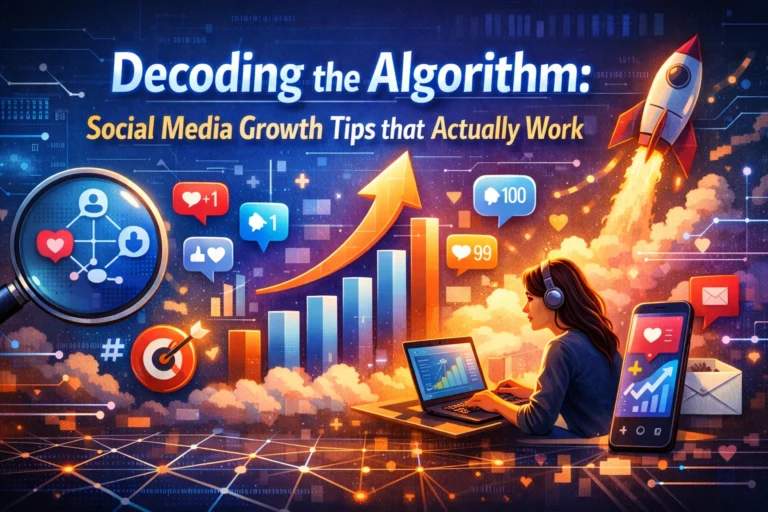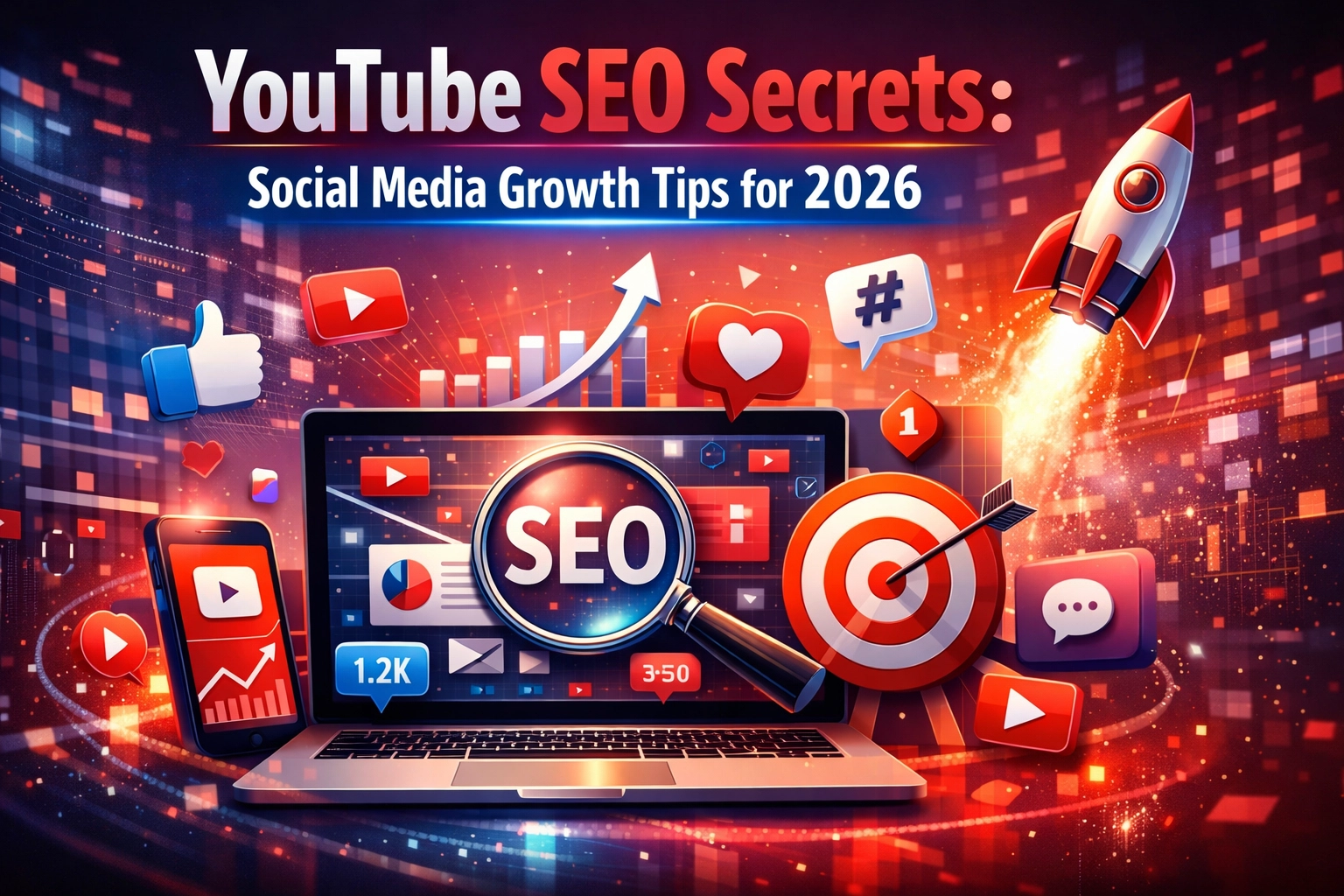
If you’re still trying to grow a YouTube channel using 2022 tactics, you’re likely seeing your views flatline. By 2026, the landscape of video search has shifted. It’s no longer just about stuffing keywords into a description box and hoping for the best. The YouTube algorithm has evolved into a highly sophisticated satisfaction engine.
To win today, you need to understand that YouTube isn't just a video hosting site; it’s the world’s second-largest search engine and a primary driver for anyone looking for actionable social media growth tips. If you want your content to surface in 2026, you have to master the trinity of modern video SEO: Topical Authority, High-Intent Keywords, and CTR (Click-Through Rate) Psychology.
The 2026 Algorithm: From Keywords to Satisfaction
In the past, the algorithm cared mostly about views and watch time. Today, the focus has shifted toward "User Satisfaction." YouTube tracks how long a viewer stays on the platform after watching your video, whether they liked the content enough to engage, and if your video actually answered the search query that brought them there.
In 2026, the algorithm uses advanced AI to "watch" your video. It listens to your audio and analyzes the frames to understand exactly what the video is about. This means your spoken words are just as important for SEO as your written metadata.
High-Intent Keyword Research
Keyword research in 2026 is about finding the gap between what people are asking and what creators are providing. Broad terms like "marketing" are dead ends for new creators. You need to target "High-Intent" keywords. These are specific phrases that signal a viewer is looking for a solution right now.
1. The "Under 30" Rule
When using tools like TubeBuddy or VidIQ, look for keywords with a difficulty score under 30. But here is the 2026 twist: look for keywords where the top-ranking videos have fewer than 500,000 views. This indicates that the topic isn't dominated by "legacy" giants, leaving room for your fresh perspective.
2. Modifiers are Your Best Friend
To capture search traffic, add high-intent modifiers to your primary keywords. Instead of just "Instagram growth," target:
- "Instagram growth for photographers 2026"
- "Step-by-step social media growth tips for beginners"
- "Best way to use AI for YouTube SEO"

Topic Clustering: Building Semantic Authority
One of the biggest mistakes creators make is "random-act-of-content" syndrome. They post a video about SEO one week and a vlog about their cat the next. In 2026, YouTube rewards Topical Authority.
The best way to achieve this is through the Hub-and-Spoke model:
- The Hub Video: Create a massive, 20-minute comprehensive guide (e.g., "The Ultimate Guide to Social Media Growth in 2026").
- The Spoke Videos: Create 5-10 shorter videos that dive deep into specific sections of the hub video (e.g., "How to Optimize TikTok Captions," "LinkedIn Strategy for CEOs").
By linking these videos together in descriptions and using "End Screen" elements to point from the spokes back to the hub, you signal to the algorithm that you are an expert on this specific theme.
Mastering CTR: The Science of the Click
You can have the best SEO in the world, but if nobody clicks, the algorithm will bury your video within 48 hours. CTR (Click-Through Rate) is the gatekeeper of growth.
Thumbnail Psychology in 2026
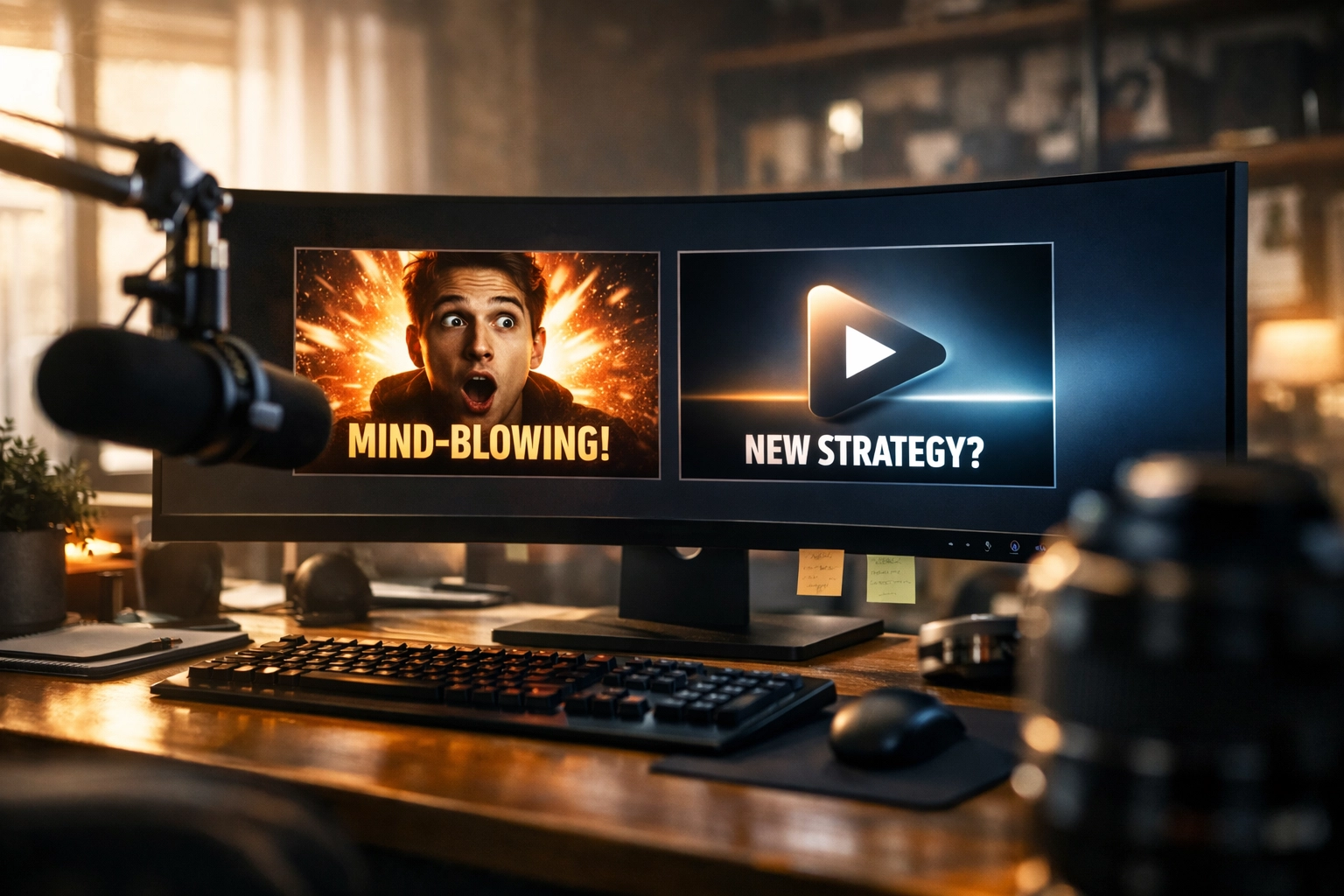
Stop using cluttered thumbnails. The trend in 2026 is "Minimalist Mystery."
- Faces Matter: Humans are hardwired to look at faces, specifically those showing clear emotion (curiosity, shock, or triumph).
- The 3-Word Rule: Don't put your whole title on the thumbnail. Use three words or fewer that create a "curiosity gap." If your title is "How to Grow on YouTube," your thumbnail text should say: "The Only Secret."
- Contrast is King: Use high-contrast colors that stand out against the white/dark mode of the YouTube interface.
Title A/B Testing
In 2026, YouTube's native A/B testing tool for titles and thumbnails is more powerful than ever. You should never settle for one title. Prepare three variations:
- Variation A (Keyword Focus): Social Media Growth Tips: How to Scale in 2026.
- Variation B (Benefit Focus): Get Your First 10k Followers Fast.
- Variation C (Fear of Missing Out): Why Your Social Media is Failing (Fix This).
Run these tests for 48 hours and let the data tell you which one resonates with your audience.
Metadata Optimization for AI and Humans
While the algorithm can "see" your video, your metadata still provides the essential framework.
The 3-Line Description Rule
The first three lines of your description are the most valuable real estate. This is what appears in Google and YouTube search results before the "Show More" button.
- Line 1: Include your primary keyword naturally.
- Line 2: State the primary benefit to the viewer.
- Line 3: Include a strong Call to Action (CTA) or a link to a lead magnet.
Chapter Markers (The SEO Cheat Code)
Always use time-stamped chapters. Not only do they improve user experience, but Google now uses these chapters to display "Key Moments" directly in the main Google Search results. This gives you multiple "entry points" for a single video.
| Chapter Type | Why It Works | SEO Benefit |
|---|---|---|
| Intro/Hook | Grabs attention immediately | Reduces bounce rate |
| The "How-To" Steps | Provides direct answers | Ranks for "how-to" snippets |
| Common Mistakes | Builds trust and authority | Targets "problem" keywords |
| Summary/Next Steps | Increases session time | Encourages playlist clicks |
Playlists as a Growth Engine
Most creators treat playlists as an afterthought: just a way to organize old videos. In 2026, playlists are a primary ranking signal. Why? Because they influence Session Watch Time.
If a viewer watches your video and then leaves YouTube, that’s a "neutral" signal. If they watch your video, then watch three more in your playlist, that is a "gold star" signal. You’ve kept the user on the platform. Create thematic playlists with SEO-optimized titles like "2026 Marketing Strategy for Small Businesses" rather than "My Best Videos."

The Shorts-to-Long Discovery Funnel
YouTube Shorts is the discovery engine of 2026. Use Shorts to target broad, high-volume keywords and introduce yourself to new audiences. However, the real social media growth tips and deep authority-building happen in long-form content.
The winning strategy is to take your long-form video and cut it into 3-5 high-impact Shorts. Use the "Related Video" feature within the Shorts editor to link directly back to the full-length video. This creates a funnel that moves viewers from casual scrolling to deep brand engagement.
Technical Optimization: Schema and Beyond
To truly dominate, you need to think about how your video exists outside of YouTube. Implementing Video Schema Markup on your website (if you embed your videos) tells Google's AI exactly what the content contains.
- FAQ Schema: If your video answers common questions, add FAQ schema to the page where it's embedded.
- BreadcrumbList: Helps AI understand the hierarchy of your content clusters.
- Captions (SRT Files): Never rely solely on auto-generated captions. Upload your own SRT files. This ensures your keywords are indexed accurately and makes your content accessible, which is a significant ranking factor.
Engagement Signals: The 24-Hour Rule
Engagement is a two-way street. In 2026, the speed of your interaction matters. When you post a video, commit to responding to every comment within the first 24 hours. This creates a "velocity signal" for the algorithm, showing that your content is generating active conversation.
Don't just say "Thanks!" Ask a follow-up question. This encourages the viewer to comment again, doubling your engagement metrics and signaling to YouTube that this video is worth promoting to a wider audience.
Final Thoughts for 2026
YouTube SEO is no longer a "set it and forget it" task. It’s an ongoing process of refining your topical authority and staying ahead of user intent. By focusing on high-intent keywords, clustering your content, and obsessing over your CTR, you’ll find that growing a channel in 2026 is more predictable than ever.
Growth doesn't happen by accident; it happens by design. Start implementing these secrets today, and watch your channel become the go-to resource in your niche.
About the Author: Malibongwe Gcwabaza
Malibongwe Gcwabaza is the CEO of blog and youtube and a leading strategist in the intersection of AI and content marketing. With over a decade of experience in digital growth, he focuses on making complex SEO strategies simple and actionable for small business owners and creators. When he isn't analyzing algorithm shifts, he's dedicated to building LearnRise into the world's premier destination for fast, effective skill acquisition.
About the Author