By now, we all know that SEO isn’t what it used to be back in 2020. Heck, it’s not even what it was eighteen months ago. If you’re still out here chasing raw search volume and stuffing keywords into headers like it’s a Thanksgiving turkey, you’re essentially shouting into a void.
In 2026, the game has shifted from "what people are typing" to "what people actually want to achieve." This is the era of search intent. If your content doesn't align with the user's psychological state at the moment they hit "enter," Google (and its AI-driven search generative experiences) will bury your site on page ten.
Let's break down the advanced SEO strategies 2026 requires to master search intent and turn your blog into a conversion machine.
The Death of the Keyword, The Rise of the Goal
For years, SEOs obsessed over "strings." We looked for "SEO strategies" or "best running shoes." But search engines have evolved. They now understand "things" and "intents." When someone searches for "SEO strategies 2026," they aren't just looking for a list of definitions; they are looking for a competitive edge. They are in a state of investigation.
Search intent is the "why" behind a search query. Why did the user pick up their phone? Are they bored? Are they frustrated? Are they ready to swipe their credit card?
If you provide a 2,000-word guide (Informational) to someone who just wants a "Buy Now" button (Transactional), you lose. If you provide a product page to someone who is trying to learn the basics, you also lose. In 2026, relevance is measured by satisfaction, not just keyword density.

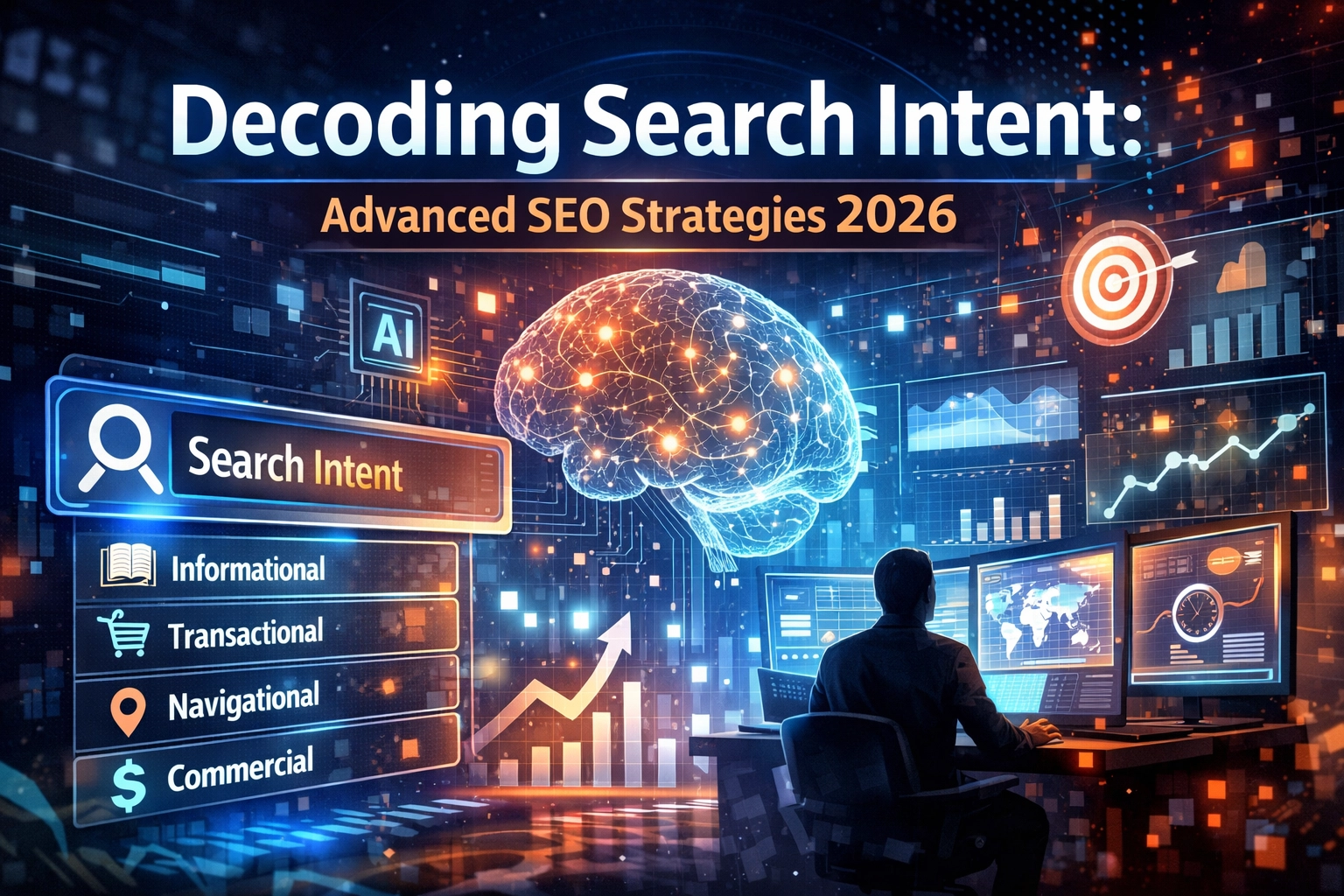
The Four Pillars of Search Intent in 2026
While the core categories of intent haven't changed, the way we optimize for them has. Let’s look at how these look in the current landscape.
1. Informational Intent: The "Teach Me" Phase
Users are looking for answers. They want to learn something or solve a problem.
- Query Examples: "How to optimize for AI search," "What is semantic SEO?"
- 2026 Strategy: Google is looking for "Helpful Content." This means original data, expert insights, and clear, structured answers. Don’t just aggregate what’s already out there. Add a unique perspective. Use tables and bullet points to make the "answer" easy for AI crawlers to find and feature.
2. Navigational Intent: The "Take Me There" Phase
The user already knows where they want to go. They are looking for a specific brand or site.
- Query Examples: "LearnRise login," "YouTube Studio," "Malibongwe Gcwabaza blog."
- 2026 Strategy: Ensure your technical SEO is flawless. Your brand name should be synonymous with your niche so that when people search for your category, your brand is the "shortcut" they take.
3. Commercial Investigation: The "Help Me Choose" Phase
The user is in the market for a solution but hasn't picked a winner yet. They are comparing.
- Query Examples: "Ahrefs vs Semrush 2026," "Best AI writing tools for small business."
- 2026 Strategy: Trust and transparency are king. Use "comparison tables" and honest pros/cons lists. In 2026, users can smell a biased affiliate post from a mile away. Real-world testing and video demonstrations (integrated via YouTube) are essential here.
4. Transactional Intent: The "I’m Ready" Phase
The user has their wallet out. They want to buy, sign up, or download.
- Query Examples: "Hire SEO consultant," "Buy LearnRise premium," "Download SEO checklist."
- 2026 Strategy: Frictionless UX. If your transactional pages take more than two seconds to load or have a confusing checkout process, your SEO efforts are wasted. Optimize for "near me" and "voice purchase" commands.
Why Volume is a Vanity Metric
One of the biggest mistakes small businesses make in their SEO strategies 2026 is prioritizing high-volume keywords over high-intent keywords.
Imagine two keywords:
- "Marketing" – Volume: 500,000/mo. Intent: Vague.
- "SEO audit for SaaS startups pricing" – Volume: 150/mo. Intent: High Transactional.
In the old days, you’d chase the 500k. In 2026, you chase the 150. Why? Because those 150 people are ready to spend money. The 500k are mostly students, bots, or people looking for a definition. High-intent keywords might have lower volume, but their conversion rates are often 10x to 50x higher.
| Metric | High Volume / Low Intent | Low Volume / High Intent |
|---|---|---|
| Traffic | High | Low |
| Bounce Rate | High | Low |
| Conversion Rate | < 0.5% | 5% – 15% |
| ROI | Low / Brand Awareness | High / Revenue Driven |

Mapping Content to the User Journey
To win at SEO in 2026, you need a content map. You can't just throw spaghetti at the wall. You need to align your content with the stages of the funnel.
The Awareness Stage (Top of Funnel – TOFU)
- Goal: Answer the "What" and "Why."
- Content Types: Educational blog posts, "How-to" guides, infographics.
- Intent: Informational.
- Example: "The State of SEO in 2026: What’s Changed?"
The Consideration Stage (Middle of Funnel – MOFU)
- Goal: Answer the "How" and "Who."
- Content Types: Case studies, comparison guides, webinars, expert interviews.
- Intent: Commercial Investigation.
- Example: "How LearnRise Helped 500 Students Master SEO in 30 Days."
The Decision Stage (Bottom of Funnel – BOFU)
- Goal: Answer the "When" and "Where."
- Content Types: Product demos, pricing pages, testimonials, free trials.
- Intent: Transactional.
- Example: "Get Your 2026 SEO Strategy Audit Today."
How Google Evaluates Intent in 2026
Google’s algorithm has become incredibly sophisticated at detecting if a page satisfies intent. It uses what we call "layered signals."
- Click Patterns: If people click your result but immediately hit the "back" button (pogo-sticking), Google knows you didn't meet the intent.
- Dwell Time & Engagement: How long are they staying? Are they scrolling? Are they interacting with your calculators or videos?
- SERP Features: Look at the search results for your target keyword. Does Google show a video carousel? If so, the intent is visual. Does it show a map? The intent is local. If you try to rank a long blog post for a keyword where Google only shows videos, you’re fighting an uphill battle.

Practical Steps: Conducting an Intent Audit
If your traffic is stagnating, it’s time for an intent audit. Here is how we do it at our agency:
- Analyze Your Top Pages: Go into Search Console. Look at the keywords bringing traffic to your top pages. Do those keywords actually match the content on the page?
- Check the SERP: Type your target keyword into Google. Look at the top 3 results. Are they blogs? Are they product pages? Are they tools? If you aren't providing the same type of content, you need to pivot.
- Identify Content Gaps: Are there questions your competitors are answering that you aren't? Use tools like "People Also Ask" to find the sub-intents that users care about.
- Update "Thin" Content: If you have an old post that is just a surface-level overview, go back and add depth. Add expert quotes, recent data from 2025/2026, and interactive elements.
Common Intent Mistakes to Avoid
Even the pros get this wrong sometimes. Watch out for these pitfalls:
- Targeting Transactional Keywords with Informational Content: Don’t write a "History of SEO" post and try to rank it for "Hire SEO Agency."
- Ignoring the "Next Step": Every informational post should have a clear bridge to the next stage of the journey. If they just learned about search intent, offer them an intent-mapping template.
- Ignoring Video: In 2026, search intent is increasingly being satisfied by short-form video. If a query is "how to fix X," a 30-second video often beats a 1,000-word article.
Final Thoughts: The Human Element
At the end of the day, SEO strategies 2026 boils down to one thing: being human. Search engines are trying to mimic human satisfaction. If you write for humans first: solving their problems, answering their questions, and making their lives easier: the algorithms will naturally follow.
Stop trying to "trick" the engine. Start trying to "help" the user. That is the ultimate SEO strategy that will never go out of style.
About the Author: Malibongwe Gcwabaza
Malibongwe Gcwabaza is the CEO of "blog and youtube" and a leading voice in digital education through LearnRise. With over a decade of experience in content marketing and SEO, Malibongwe focuses on simplifying complex digital strategies for small business owners and creators. When he's not decoding the latest Google algorithm update, he’s helping the next generation of digital entrepreneurs build sustainable, intent-driven businesses.
About the Author