Let’s be real: running a small business is exhausting. Between managing operations, dealing with logistics, and trying to keep customers happy, who actually has time to spend four hours a day crafting the "perfect" Instagram aesthetic or writing 2,000-word guides?
If you’ve felt the pressure of the content treadmill, there is a better way. It’s called User-Generated Content (UGC), and it is the single most effective "cheat code" for content marketing for small business today.
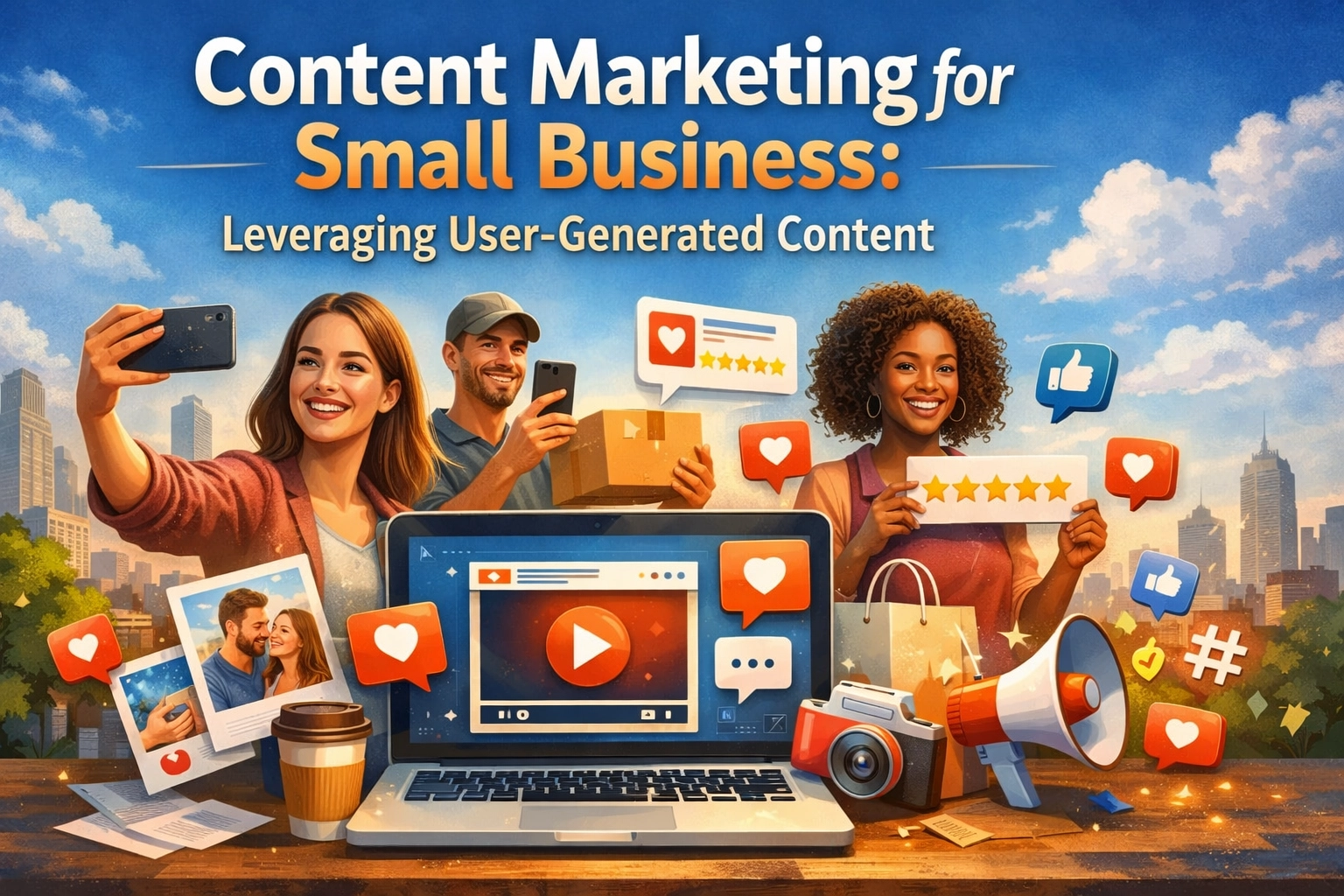
UGC is essentially any content, videos, photos, reviews, tweets, blog posts, created by your customers rather than your brand. Think of it as digital word-of-mouth on steroids. Instead of you telling the world how great your product is (which, let’s face it, everyone expects you to say), your customers do the talking for you.
In this guide, we’re going to dive deep into how you can stop stressing over your content calendar and start building a community that creates your marketing for you.
Why User-Generated Content is Your Secret Weapon
In 2026, consumers are smarter than ever. They can spot a high-production, scripted ad from a mile away, and most of them are hitting the "Skip" button before the first three seconds are up. People don’t want to be sold to; they want to be inspired by people just like them.
1. Authenticity Over Everything
Authenticity is the currency of the modern web. When a real person posts a grainy, unedited video of themselves unboxing your product and showing how it actually works in their messy kitchen, that is gold. It’s relatable. It’s honest. It builds a level of trust that a professional photoshoot simply cannot touch.
2. Cost-Effective Scaling
Content marketing for small business usually fails because of a lack of resources. You don’t have a ten-person creative team. UGC solves this. By encouraging your audience to create content, you essentially gain a global team of creators who work for the price of a "thank you," a shoutout, or the occasional discount code.
3. The SEO Factor
Google loves social proof. When people talk about your brand online, use your branded hashtags, and link back to your site in their own blog posts or social profiles, it sends massive signals to search engines that your business is relevant and trustworthy.

Building the Foundation: Trust and Social Proof
Before you can ask people to create content for you, you have to build a brand they actually want to be associated with. People don’t post about boring companies. They post about experiences that made them feel something.
The Mirror Effect
UGC works because of the "Mirror Effect." When a potential customer sees someone who looks like them, lives like them, and has the same problems as them using your product, they can see themselves using it too.
To leverage this, you need to showcase diversity in the content you share. If you only repost the "perfect" influencers, your everyday customers might feel intimidated to share their own photos. Highlight the real, the raw, and the everyday. This builds a feedback loop of trust: customers see real people, they buy, they feel comfortable sharing, and the cycle continues.
Community Management is the Glue
You can't just collect content and walk away. Community management is the secret sauce. If someone tags your business in a story and you don’t at least "like" it or leave a comment, you’ve killed the momentum.
Small business owners often make the mistake of thinking community management is just "customer service." It’s not. It’s about being a host at a party. You need to be in the comments, cheering people on, answering questions, and making your customers feel like they are part of an inner circle.
Practical UGC Strategies for Small Businesses
Ready to get started? You don’t need a massive budget to launch a UGC campaign. You just need a bit of creativity and a clear "ask."
1. The Branded Hashtag Challenge
This is a classic for a reason. Create a hashtag that is unique to your brand but easy to remember. Don’t just use #MyBusinessName. Use something that describes an action or a feeling.
- Example: If you run a coffee shop, #MyMorningKickstart is better than #JoesCoffeeShopPhotos.
Encourage people to use the tag by featuring the best posts on your main feed or your website.
2. Incentivized Contests
Everyone loves winning. Run a monthly contest where anyone who posts a photo of your product and tags you is entered to win a gift card or a "Product of the Month" bundle. This provides a clear "Why" for the customer to take the time to create content.
3. Product Reviews with a Twist
Instead of just asking for a star rating, ask for a "Photo Review." Most modern e-commerce platforms allow users to upload images with their reviews. These are incredibly powerful for conversion. A customer looking at a shirt is more likely to buy if they see five different body types wearing it in the review section.

How to Design a UGC Campaign That Actually Works
A common mistake in content marketing for small business is being too vague. If you just say "Send us your photos!", you’ll get a lot of nothing. You need to give people a specific brief.
Step 1: Define Your Goal
Do you want more followers? More sales for a specific product? Or just better photos for your website? Your goal will dictate your "ask." If you want to sell a new line of yoga mats, your campaign should focus specifically on "Show us your favorite pose on the new ZenMat."
Step 2: Choose the Right Platform
Where do your customers hang out?
- TikTok/Instagram: Best for short-form video and high-energy visual content.
- X (Twitter): Best for text-based testimonials and quick feedback.
- LinkedIn: Best if you are in the B2B space (e.g., sharing a screenshot of your software in use).
Step 3: Make it Easy
Remove all friction. If they have to fill out a 5-page form to submit a video, they won't do it. A simple tag or a specific hashtag is usually enough.
Step 4: The "Ask"
Don’t be afraid to be direct. Put a call-to-action (CTA) in your email signatures, on your packaging, and in your social bios. "We love seeing our products in the wild! Tag us for a chance to be featured."

Distributing and Amplifying Your UGC
Once the content starts rolling in, don't let it sit in your "Tagged" folder. You need to give it wings.
Repurpose Everything
One great customer video can be used in five different ways:
- Instagram/Facebook Story: Real-time engagement.
- Website Gallery: Put a "See it in action" section on your homepage.
- Email Newsletter: Use customer photos to break up your promotional text.
- Paid Ads: UGC-style ads often have a lower Cost Per Click (CPC) than professional ads because they look like native content.
- Blog Posts: Embed social posts into your blog to provide real-world examples of what you're talking about.
Respect the Creator
This is crucial: Always ask for permission. Even if they tagged you, it is a professional courtesy (and often a legal requirement) to ask, "Hey! We love this photo. Do you mind if we share it on our website and social channels?" Most people will be thrilled, and it builds even more goodwill. Always give credit by tagging their handle.
Measuring Your Success
How do you know if your UGC efforts are paying off? In content marketing for small business, you have to look beyond just "likes."
- Conversion Rate: Are people who visit pages with UGC buying more often than those who don't? (Usually, the answer is a resounding yes).
- Engagement Rate: Are people commenting on and sharing the customer-reposted content more than your branded posts?
- Content Volume: Is the number of people using your hashtag growing month-over-month?
- Cost Savings: Calculate how much you would have spent on a professional photographer to get 20 high-quality images. That’s your direct ROI.
Wrapping It Up
UGC isn't just a marketing tactic; it’s a way of doing business. It’s about moving from a "me vs. them" mindset to a "we" mindset. When you empower your customers to tell your story, you aren't just selling a product: you're building a movement.
Start small. Find one customer who loves what you do, ask them for a photo, and share it with a genuine "thank you." You’ll be surprised at how quickly that spark can turn into a forest fire of community-driven growth.
About the Author
Malibongwe Gcwabaza is the CEO of blog and youtube. With over a decade of experience in the digital landscape, Malibongwe focuses on simplifying marketing strategies for small business owners. He believes that the best marketing doesn't feel like marketing at all: it feels like a conversation. When he isn't helping brands grow, he's likely exploring the latest trends in AI and educational technology.
About the Author