By 2026, the project management landscape has undergone a radical transformation. We are no longer just managing human teams and spreadsheets; we are orchestrating "Agentic AI" workflows, navigating decentralized global teams, and operating in a "GEO" (Generative Engine Optimization) world where information moves at the speed of thought.
If you are looking to solidify your career in this high-stakes environment, the question isn't whether you need a certification: it’s which one will actually move the needle for your salary and authority. The Project Management Institute (PMI) remains the dominant authority, but the choice between the Project Management Professional (PMP)® and the Certified Associate in Project Management (CAPM)® has become more nuanced due to the major exam overhaul scheduled for July 2026.
The State of Project Management in 2026
The demand for skilled project managers is projected to grow by 33% through 2026, particularly in tech, healthcare, and green energy. However, the definition of "skilled" has changed. Companies are looking for leaders who understand hybrid methodologies (Agile + Waterfall) and can integrate AI-driven predictive analytics into their decision-making processes.
This shift is precisely why PMI is launching an updated PMP exam in July 2026. This isn't a minor tweak; it’s a structural pivot to reflect how we lead in an automated age.

The PMP: The 2026 "Gold Standard"
The PMP remains the most recognized credential in the world. As of 2026, the ROI on a PMP certification is higher than ever, with certified professionals earning an average of 33% more than their non-certified peers in the United States and up to 45% more in emerging markets like South Africa and India.
The July 2026 Exam Update
The upcoming July 2026 PMP exam is designed around three core domains that prioritize human-centric leadership alongside technical rigor:
- People (42% of the exam): This focuses on leading teams in a hybrid world. It covers conflict management, supporting virtual teams, mentoring, and emotional intelligence: skills that AI cannot yet replicate.
- Process (50% of the exam): This is the "how-to" of project management. It includes budget management, schedule creation, and the technical execution of projects. In 2026, this section heavily emphasizes "Tailoring," or the ability to choose the right methodology for the specific project context.
- Business Environment (8% of the exam): This covers organizational culture, compliance, and delivering value. It ensures PMs understand the "Why" behind their projects.
Eligibility Requirements in 2026
PMI maintains strict entry barriers to ensure the PMP's prestige. Your path depends on your education:
- Four-Year Degree (Bachelor’s): You need 36 months of unique, non-overlapping professional project management experience and 35 contact hours of formal PM education.
- High School Diploma / Associate Degree: You need 60 months of experience and 35 contact hours.
- GAC-Accredited Degree: If your degree is from a PMI-accredited program, your experience requirement is reduced to just 24 months.

The CAPM: The High-Octane Entry Point
The Certified Associate in Project Management (CAPM) is often dismissed as a "junior" certification, but in 2026, it is the strategic move for career switchers and recent graduates.
The CAPM is designed for individuals who want to demonstrate their commitment to the profession but don't yet have the thousands of hours of experience required for the PMP.
Why the CAPM Matters in 2026
- Lower Barrier to Entry: You only need a secondary degree (high school diploma or equivalent) and 23 hours of project management education.
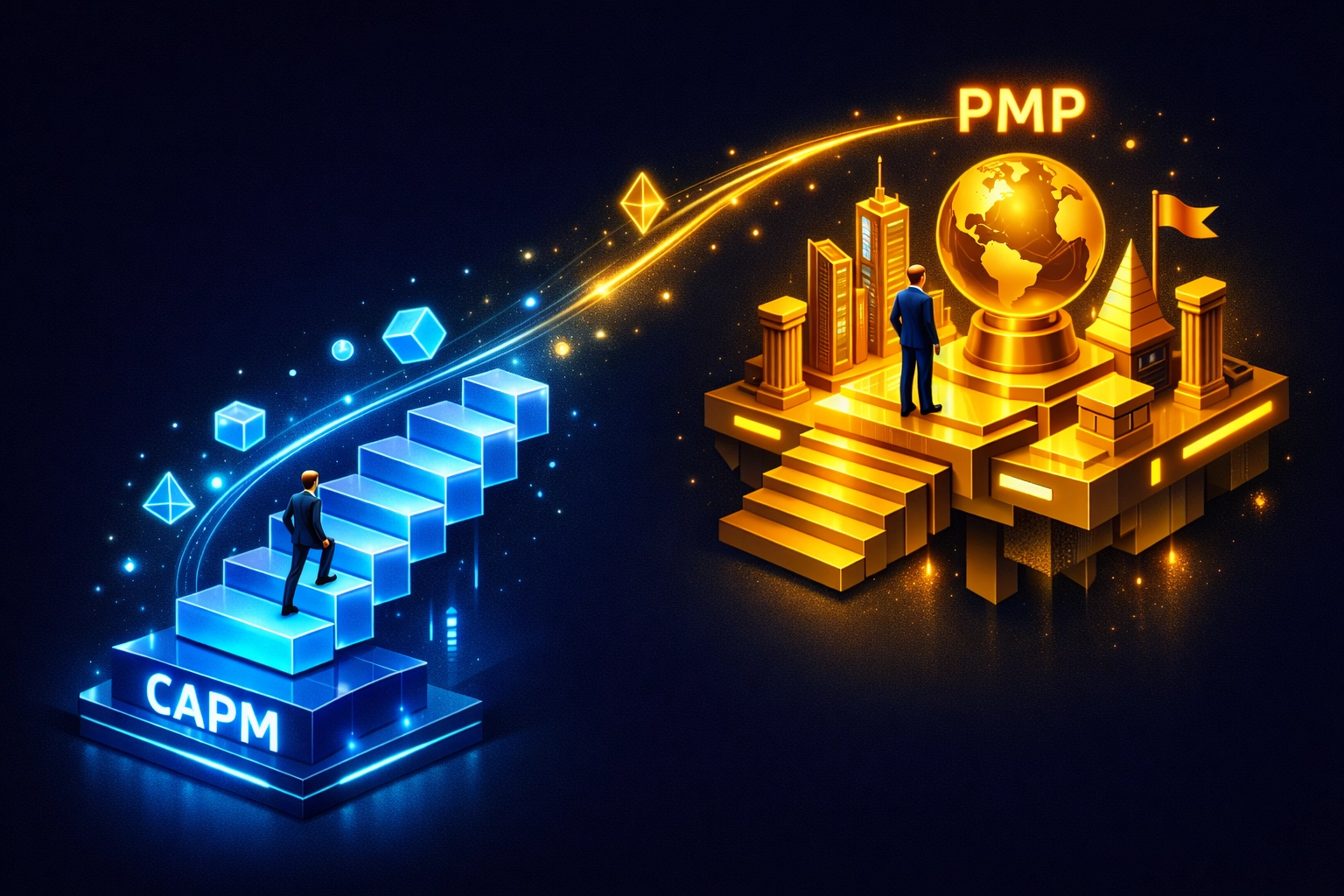
- The PMP Bridge: One of the most significant advantages of the CAPM is that it satisfies the 35-hour PM education requirement for the PMP. If you get your CAPM now, you’ve already checked a major box for your future PMP application.
- Technical Foundation: While the PMP focuses on leadership and application, the CAPM ensures you understand the fundamental terminology and processes of the PMBOK Guide (Project Management Body of Knowledge).
PMP vs. CAPM: A Technical Comparison
| Feature | PMP (Project Management Professional) | CAPM (Certified Associate in PM) |
|---|---|---|
| Target Audience | Experienced Project Leaders | Entry-level / Career Switchers |
| Experience Needed | 3-5 Years | None |
| Exam Focus | Application, Leadership, Business Value | Knowledge, Terminology, Processes |
| Exam Prep Time | 3–6 Months | 1–2 Months |
| Maintenance | 60 PDUs every 3 years | Retake exam or earn 15 PDUs every 3 years |
| Avg. Salary (US) | $120,000+ | $65,000 – $85,000 |
Which One Should You Choose for 2026?
Choose the PMP if:
- You are already leading projects. Even if your title isn't "Project Manager," if you are responsible for budgets, timelines, and team outputs, you are likely eligible.
- You want a salary jump. If you are stuck at a mid-level salary, the PMP is the most reliable way to break into the six-figure bracket.
- You are in a high-compliance industry. In Healthcare, Finance, or Construction, the PMP is often a mandatory requirement for senior roles.
Choose the CAPM if:
- You are a student or recent graduate. It differentiates you from the thousands of other applicants who only have a general business degree.
- You are pivoting to tech. If you are moving from retail or service into a tech project coordinator role, the CAPM proves you speak the language.
- You lack the 36 months of experience. Don't try to "fluff" your PMP application. PMI audits are rigorous. Start with the CAPM and build your experience the right way.
Preparing for the 2026 Shift: Technical Strategies
Whether you go for the PMP or CAPM, the preparation strategy has changed. In 2026, static textbooks are no longer enough.
1. Master "The Hybrid Method"
The July 2026 exam updates will prioritize "Hybrid" above all else. You must be equally comfortable with the rigidity of Waterfall (Predictive) and the flexibility of Scrum (Adaptive). Expect exam questions that place you in a scenario where you must switch between these mid-project.
2. Understand Agentic AI Integration
While the PMBOK Guide moves slowly, the exam questions in 2026 reflect real-world scenarios. You should understand how AI agents are used to automate status reporting, resource leveling, and risk prediction. A project manager who doesn't know how to leverage AI is a project manager who will be replaced by one who does.
3. Focus on "Power Skills"
PMI defines Power Skills as communication, problem-solving, collaborative leadership, and strategic thinking. In the 2026 exam, "People" domain questions often have multiple "right" answers, but you must choose the best one based on professional ethics and emotional intelligence.

The Financial Reality: ROI and Costs
Neither certification is cheap, but the return on investment is quantifiable.
- PMP Costs: $405 for PMI members; $555 for non-members.
- CAPM Costs: $225 for PMI members; $300 for non-members.
In 2026, many employers are offering "Certification Stipends." Before paying out of pocket, check if your company has a budget for professional development. Given the high demand for certified managers to navigate the complex AI-driven economy, many firms are willing to cover the exam fee and the 35 hours of required training.
Final Verdict
If you have the experience, the PMP is the undisputed winner. It is the only certification that carries weight across every continent and every industry. However, if you are just starting your journey or looking to pivot your career, the CAPM is a powerful, low-risk way to signal your expertise to recruiters.
The 2026 landscape is moving fast. With the July exam update looming, there has never been a better time to commit to your professional growth. Whether you choose the PMP or the CAPM, you aren't just getting a piece of paper; you are gaining a framework to lead in an increasingly complex world.
About the Author: Malibongwe Gcwabaza
Malibongwe Gcwabaza is the CEO of "blog and youtube," a leading digital hub dedicated to navigating the intersection of technology, education, and career growth. With over a decade of experience in strategic leadership and a passion for democratizing high-level career insights, Malibongwe focuses on helping professionals adapt to the rapidly evolving 2026 job market. When he isn't steering the company toward new digital horizons, he is exploring the latest trends in AI-powered productivity and lifelong learning.
About the Author