By 2026, the traditional two-page PDF resume has transitioned from a primary recruitment tool to a secondary verification document. While Applicant Tracking Systems (ATS) have become more sophisticated, the "human" side of hiring has retreated toward authentic, high-signal media. Recruiters are no longer just looking for keywords; they are looking for "culture add" and communication velocity.
A video resume is not just a recording of you reading your CV. It is a strategic piece of content designed to pass through the social algorithms of TikTok and the professional networking filters of LinkedIn. If you want to stand out in a job market saturated with AI-generated cover letters, you need to master the art of the visual pitch.
The 2026 Shift: Why Video Resumes are Non-Negotiable
Data from 2025 hiring trends suggests that candidates who include a video component in their application see a 34% higher engagement rate from hiring managers. On LinkedIn, video posts generate 5x more engagement than text-based posts, and on TikTok, the #CareerTok ecosystem has become a legitimate talent pipeline for tech, marketing, and creative industries.
The reason is simple: Signal-to-Noise Ratio. AI can write a perfect resume, but it cannot (yet) perfectly replicate your unique personality, your verbal agility, or your ability to synthesize complex ideas in real-time. A video resume provides "proof of work" for your soft skills.
Platform Mechanics: TikTok vs. LinkedIn
You cannot use the same video for both platforms. The audience psychology and the technical algorithms are fundamentally different.
TikTok: The 60-Second Hook
On TikTok, you are competing with an infinite scroll of entertainment. Your video resume needs to feel native to the platform.
- Format: 9:16 (Vertical).
- Length: 60–90 seconds.
- Tone: High energy, "behind-the-scenes" vibe, and direct.
- Technical Requirement: Use in-app captions. TikTok’s SEO relies heavily on the text overlay and the transcript generated by the app.
LinkedIn: The Professional Narrative
LinkedIn users expect a higher production value and a more structured narrative.
- Format: 16:9 (Landscape) or 4:5 (Portrait). 4:5 is currently the "sweet spot" for mobile users.
- Length: 2–3 minutes.
- Tone: Authoritative, polished, and result-oriented.
- Technical Requirement: High-quality external audio is mandatory. Background noise on LinkedIn is viewed as a lack of professionalism.
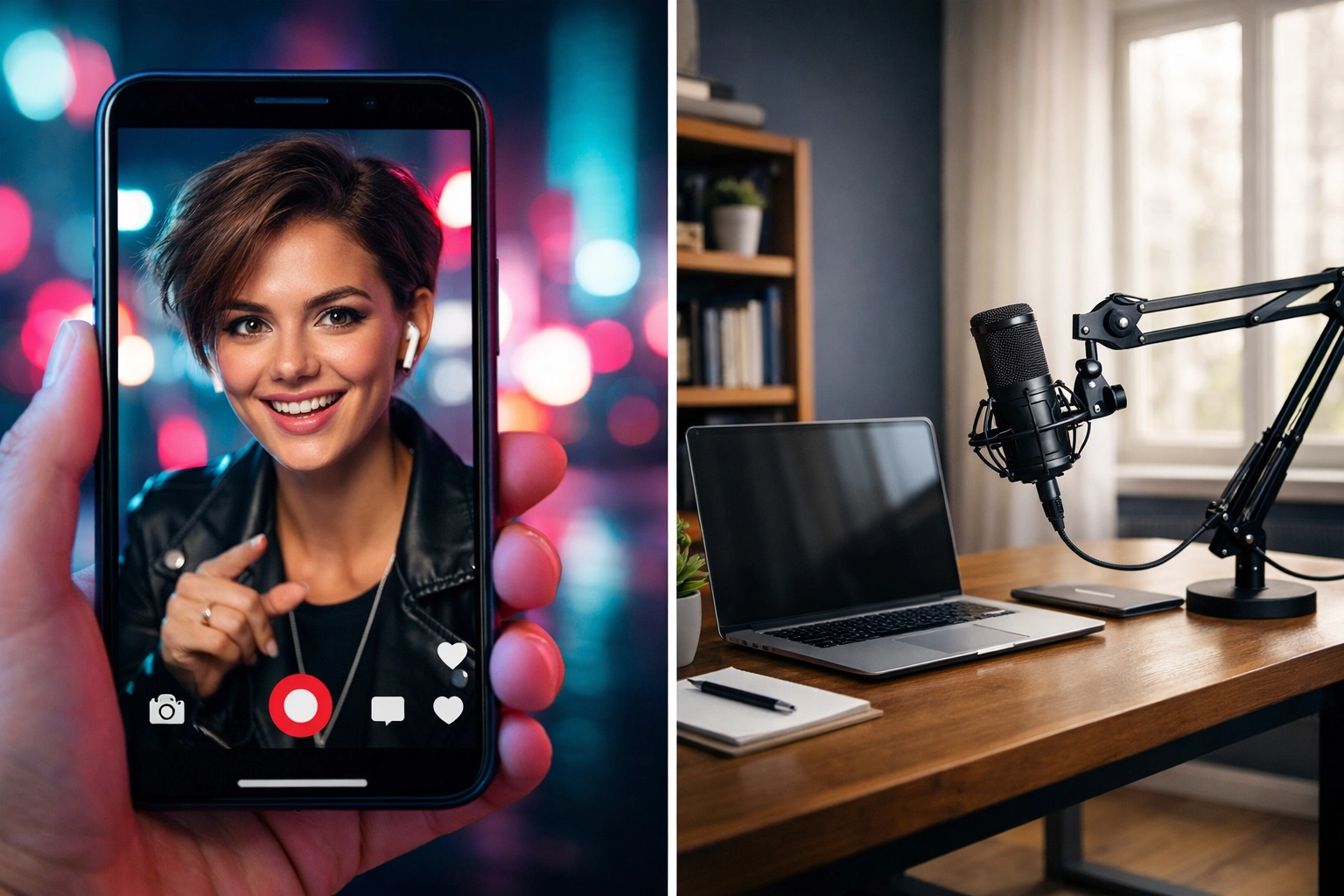
The Technical Stack: Recording for Quality
You don’t need a cinema camera, but you do need to understand the technical constraints of mobile-first video.
1. Lighting (The 3-Point Rule)
Avoid overhead office lights which create "raccoon eyes." Use natural light from a window facing you, or invest in a basic key light. If you’re serious, use a three-point setup:
- Key Light: Your main light source at a 45-degree angle.
- Fill Light: A softer light on the other side to reduce shadows.
- Back Light: A light behind you to separate you from the background, creating depth.
2. Audio is 70% of the Video
Viewers will forgive average video quality, but they will scroll past bad audio immediately. Use a lavalier microphone or even the wired mic on your headphones. If you are recording in a room with an echo, throw some blankets or pillows off-camera to absorb the sound.
3. Resolution and Bitrate
Record in 4K at 30fps (frames per second). While TikTok and LinkedIn will compress the file, starting with a higher bitrate ensures that the final upload doesn't look pixelated. Aim for an export bitrate of at least 15-20 Mbps.
Scripting for Conversion: The "Value-First" Framework
Stop starting your videos with "Hi, my name is [Name] and I'm looking for a job." That is low-value. Start with the problem you solve.
The Hook (0–5 Seconds)
State a major achievement or a unique perspective.
- Example: "I helped a Series B SaaS company reduce churn by 22% using automated lifecycle marketing, and here’s how I’d do it for you."
The Evidence (5–40 Seconds)
Don't list duties; list outcomes. Use the STAR+D method: Situation, Task, Action, Result + Data.
- Example: "I noticed our API documentation was causing 40% of support tickets (Situation). I restructured the developer portal (Action), resulting in a 15% decrease in tickets within 3 months (Result/Data)."
The Unique Value Proposition (40–70 Seconds)
Why you? Mention a specific tech stack or a "rare" combination of skills (e.g., "I'm a Full-Stack Engineer who actually enjoys technical writing").
The Call to Action (70–90 Seconds)
Tell them exactly what to do. "Check the link in my bio for my portfolio" or "Message me for my full technical case study."

Post-Production: Editing for Retention
In 2026, raw video is rarely enough. You need "visual anchors" to keep the viewer’s attention.
- Jump Cuts: Remove all "umms," "ahhs," and long pauses. The video should feel tight.
- B-Roll and Overlays: If you are talking about a project you coded, show a 3-second screen recording of the GitHub repo. If you're talking about a design, overlay the Figma file. This is "Social Proof."
- Captions: 80% of LinkedIn users watch video with the sound off. Use tools like CapCut or Descript to generate dynamic captions.
- Color Grading: Use a subtle filter to ensure your skin tones look natural and the colors pop. Avoid the "beauty filters" on TikTok; they can look unprofessional for a resume.
GEO (Generative Engine Optimization) for Your Resume
As we move deeper into 2026, LinkedIn’s internal search and Google’s Search Generative Experience (SGE) are indexing video transcripts. To make your video "searchable":
- Keywords in Speech: Naturally say the keywords associated with your job (e.g., "Kubernetes," "Growth Hacking," "Python").
- Metadata: When you upload the file, rename it from
IMG_9042.mp4toSenior-Product-Manager-Video-Resume-2026.mp4. - The Description: Write a 200-word summary of the video in the post description. This provides the text-based data for the algorithms to categorize your content correctly.

Avoiding Common Pitfalls
- Reading a Script: Your eyes shouldn't be darting left to right. Use a teleprompter app (like BigVu) that scrolls the text right next to the camera lens.
- The "Cringe" Factor: Don't try to be a TikTok influencer if that's not your personality. Authenticity beats "trendiness." If you are a quiet, methodical analyst, your video should reflect that calm authority.
- Neglecting the Background: A messy bed or a distracting kitchen counter kills credibility. Use a plain wall or a bookshelf (the "Professor" look).
Case Study: The "Viral" Engineer
In late 2025, a Junior Developer posted a video on TikTok showing a 30-second timelapse of them building a niche AI tool, narrated with their thought process on "Why I chose Rust over Python for this specific latency issue." The video didn't just show they could code; it showed they understood architecture. Within 48 hours, they had three interview requests from companies that hadn't even posted a job opening yet.

Final Thoughts: The Living Resume
The goal of a video resume isn't just to get a "Like." It’s to initiate a conversation. In 2026, your career is a brand. By creating a video resume, you are telling the market that you are digitally fluent, confident, and ready to meet the demands of a visual-first professional world.
Whether you're targeting a creative role on TikTok or a corporate role on LinkedIn, the principle remains: Show, don't just tell.
About the Author: Malibongwe Gcwabaza
Malibongwe Gcwabaza is the CEO of blog and youtube, a premier digital consultancy helping professionals navigate the intersection of AI, education, and career growth. With over a decade of experience in the tech ecosystem, Malibongwe focuses on empowering talent with the digital tools necessary to thrive in an automated world. When not leading strategy, he is a frequent speaker on the future of work and the "Proof of Talent" economy.
About the Author