If you are running an e-commerce store and still sending the same weekly newsletter to every person on your list, you aren't just leaving money on the table: you’re actively pushing customers toward your competitors. In 2026, scaling a digital brand isn't about how many emails you can send; it’s about how many relevant conversations you can automate.
When you transition from a small shop to a high-growth brand, your needs change. You move past basic "welcome" sequences and enter the world of predictive analytics, cross-channel synchronization, and hyper-segmentation. To do that, you need a tech stack that doesn't buckle under the pressure of 100,000+ subscribers.
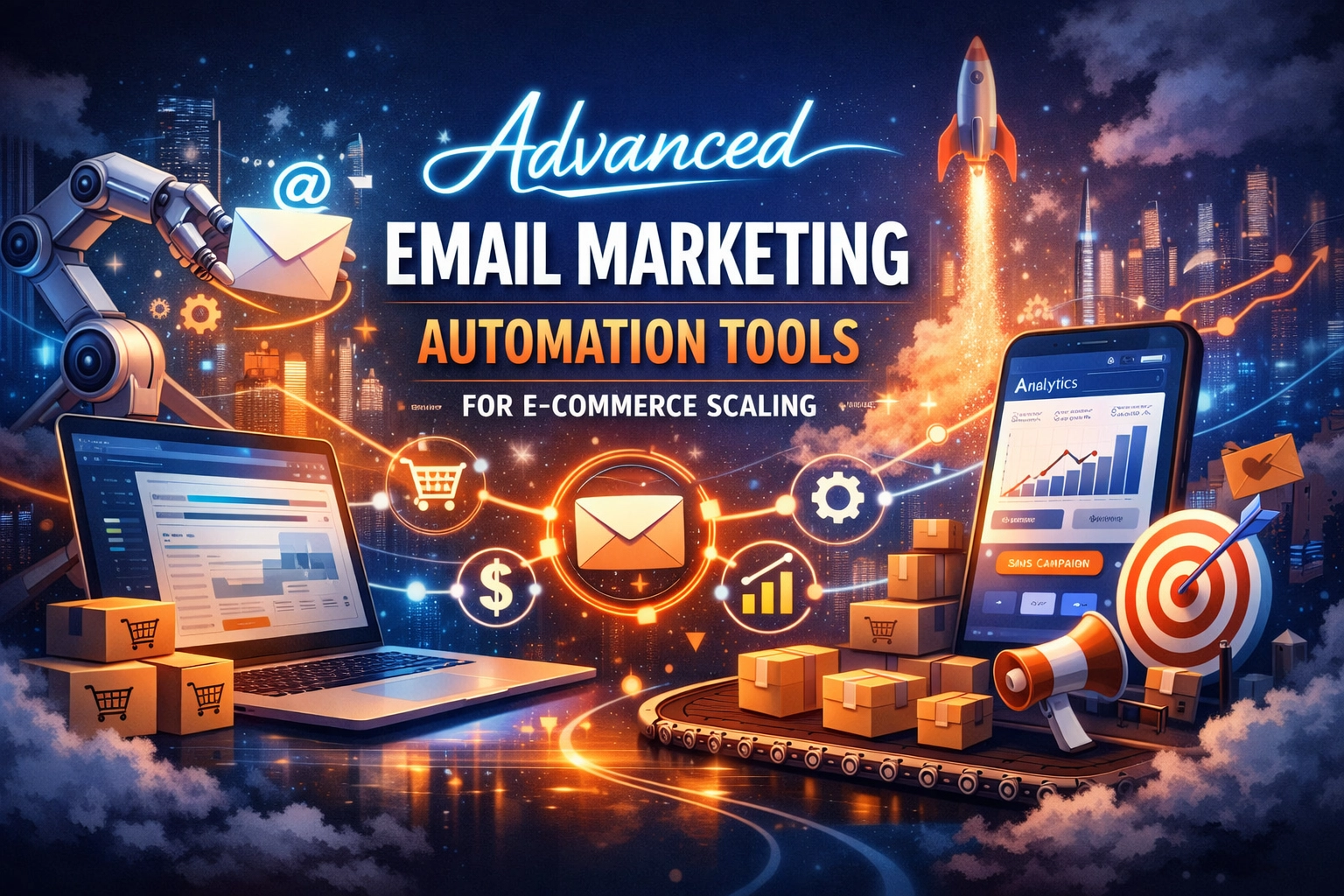
Here is a deep dive into the advanced email marketing automation tools and strategies required to scale your e-commerce business effectively.
Why Basic Tools Fail at Scale
Most entry-level email platforms are built for simplicity. They work great when you have a thousand subscribers and a single product line. But once you hit the "scaling phase," three major problems emerge:
- Data Fragmentation: Your email tool doesn't talk to your customer service tool, which doesn't talk to your loyalty program. You end up sending "Buy Now" emails to people who currently have an open complaint ticket.
- Linear Thinking: Simple tools use "if/then" logic that is too rigid. Scaling requires "behavioral" logic that adapts to the customer’s zig-zagging journey across mobile, desktop, and social.
- Deliverability Degradation: As your list grows, ISPs (Gmail, Outlook) look closer at your engagement. If you are blasting uninterested users, your entire sender reputation tanks.
To fix this, we look at tools that treat your email list like a living, breathing database rather than a static spreadsheet.
The Heavy Hitters: Top Email Marketing Automation Tools for 2026
1. Klaviyo: The Data Powerhouse
Klaviyo has become the industry standard for Shopify and high-growth e-commerce for a reason. It isn't just an email sender; it’s a Unified Data Platform (UDP).
What makes it "advanced" for scaling is its ability to pull in every single touchpoint: web visits, specific product views, past purchase amounts, and even predicted future spend.
- Predictive Analytics: Klaviyo’s AI can predict a customer's next order date and their total Customer Lifetime Value (CLV). This allows you to trigger "Win-back" flows before the customer actually churns.
- Dynamic Product Recommendations: Instead of showing "New Arrivals," you can show "Items you specifically will like based on your size and color preference."
2. ActiveCampaign: The Workflow Specialist
While Klaviyo is king of data, ActiveCampaign is the king of complex automation. If your e-commerce brand involves a longer sales cycle (like high-end furniture or custom jewelry), you need a built-in CRM.
- Conditional Split Testing: You can A/B test entire automation paths, not just subject lines. You can see if a "3-day delay" results in more sales than a "5-day delay" for your specific audience.
- Site Tracking: It tracks what users do on your site and can trigger emails based on how many times they visited a specific category page without buying.
3. Omnisend: The Multi-Channel Pro
Scaling in 2026 means realizing that some people just don't open emails. They live on SMS or WhatsApp. Omnisend excels at "surround sound" marketing.
- Integrated Workflows: You can build a flow that sends an email, waits 24 hours, checks if it was opened, and if not, sends a highly targeted SMS or a Push Notification.
- Pre-built Segments: It offers 16+ specific e-commerce segments out of the box (High-spenders, Lapsed customers, etc.), which saves hours of manual setup when you are trying to scale fast.
Advanced Workflows You Need to Implement
Scaling isn't just about the tool; it’s about the logic you build inside it. If you only have a Welcome Flow and an Abandoned Cart Flow, you are only using 10% of the power of these email marketing automation tools.
The RFM Segmented Flow
RFM stands for Recency, Frequency, and Monetary value. Advanced scaling involves creating flows for:
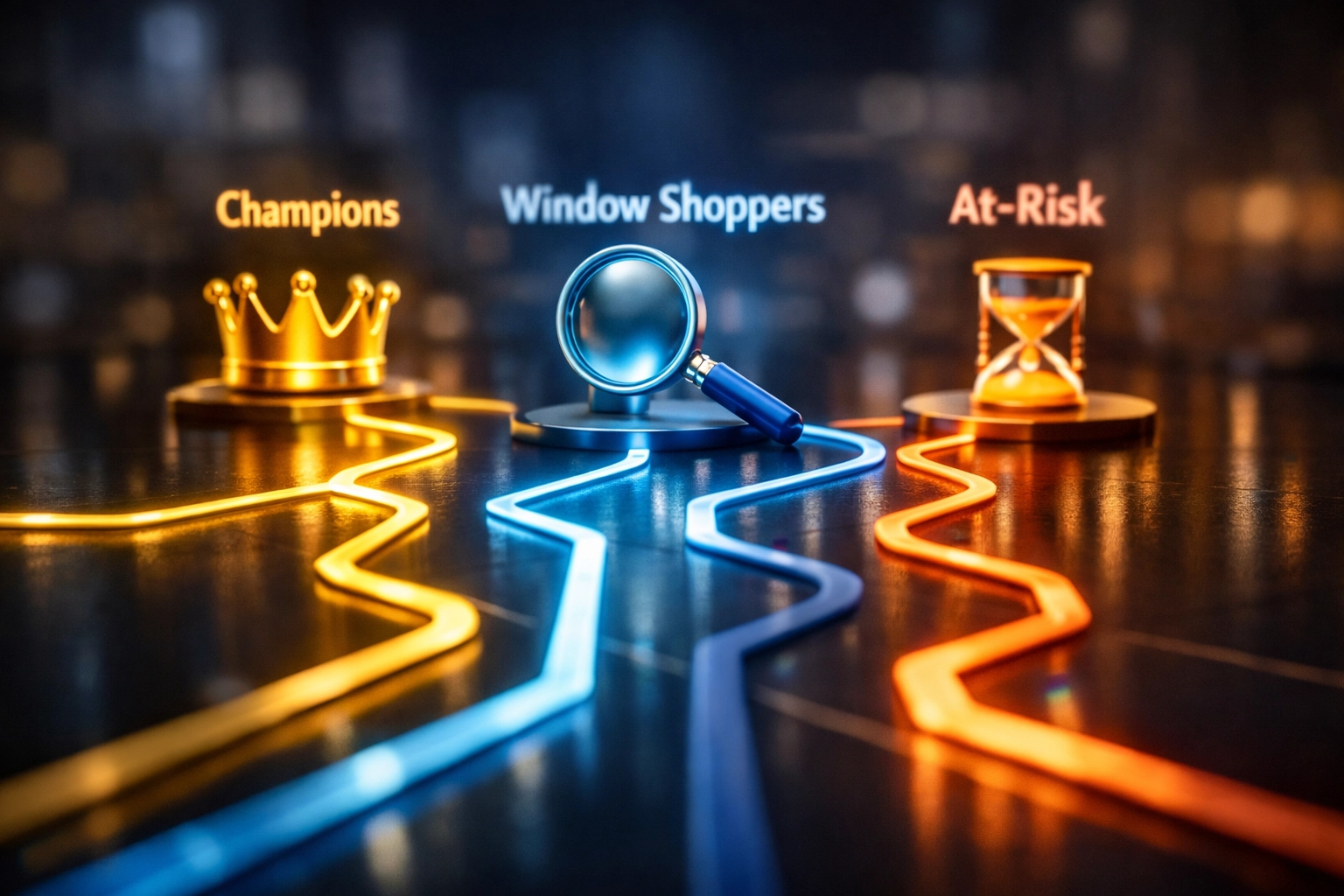
- The Champions: Your top 5% of spenders. They shouldn't get discounts; they should get early access and "insider" updates.
- At-Risk Stars: People who used to spend a lot but haven't visited in 90 days. These people get the "heavy hitter" discounts to bring them back.
- The Window Shoppers: High engagement (lots of clicks) but zero purchases. They need social proof and "How it’s made" content, not just "Buy this" banners.
The Replenishment Flow
If you sell consumables (skincare, supplements, coffee), a replenishment flow is your highest ROI automation. By using the "Average Days Between Orders" data from your tool, you can trigger an email 5 days before they are likely to run out. This turns one-time buyers into subscription-like revenue without the friction of a formal subscription.
Predictive Analytics: The Secret to High LTV
The difference between a $1M brand and a $10M brand is how they handle Customer Lifetime Value (LTV). Advanced email marketing automation tools now use machine learning to give you "Smart Send Times."
Instead of sending your blast at 9:00 AM EST because that’s the "industry standard," the tool looks at every individual subscriber's history. If John usually opens emails at 11:00 PM while scrolling in bed, the tool holds his email and delivers it exactly then.
Furthermore, Churn Probability scores allow you to identify customers who are about to leave your ecosystem. Scaling is as much about plugging the leaks in your bucket as it is about pouring more water (traffic) in.
Technical Essentials for Scaling Deliverability
As you scale your list to hundreds of thousands, your technical setup becomes your greatest asset or your biggest liability.
- Dedicated IP vs. Shared IP: Once you are sending over 200,000 emails a month, you should consider a dedicated IP. This ensures that your deliverability isn't affected by some other "spammy" brand on the same server.
- BIMI and DMARC: You need to verify your brand. Having your logo show up in the inbox (BIMI) increases open rates by up to 10% because it builds immediate trust.
- List Hygiene Automations: Set up a "Sunset Flow." If someone hasn't engaged in 120 days, send them one final "Are you still there?" email. If they don't click, delete them. It hurts to see the subscriber count go down, but it makes your "open rates" and "inbox placement" skyrocket.
Choosing the Right Stack for Your Growth Stage
If you are stuck choosing between these email marketing automation tools, look at your primary goal for the next 12 months:
- "I want the best data and Shopify integration": Go with Klaviyo. It is the most expensive, but the ROI from the data insights usually covers the cost.
- "I want to automate complex sales funnels": Go with ActiveCampaign. Their visual builder is the most intuitive for complex "web-like" journeys.
- "I want a simple, all-in-one SMS and Email tool": Go with Omnisend. It’s built specifically for e-commerce and feels less "corporate" than some of the other giants.
The Human Element in Automation
Even with the best tools, scaling requires a human touch. Your automations should sound like a person, not a machine. Use "Plain Text" emails occasionally in your flows: especially for the Welcome or VIP sequences. They feel more personal and often have higher click-through rates than heavily designed HTML templates.
Scaling your e-commerce brand is a marathon, not a sprint. By leveraging advanced automation, you stop being a "sender" and start being a "value provider."
About the Author: Malibongwe Gcwabaza
Malibongwe Gcwabaza is the CEO of LearnRise and a seasoned strategist in the digital growth space. With a focus on simplifying complex marketing technologies, he helps entrepreneurs bridge the gap between "good ideas" and "scalable systems." When he’s not deep in data analytics, he’s exploring the latest in AI-driven content and e-commerce trends.
About the Author