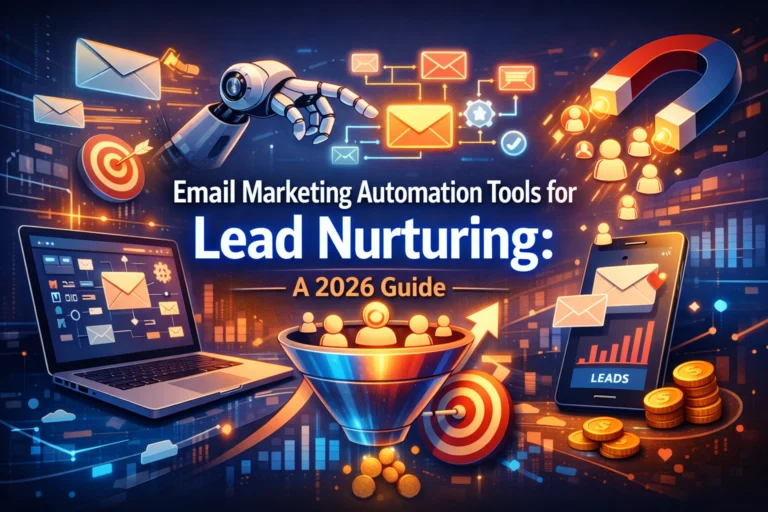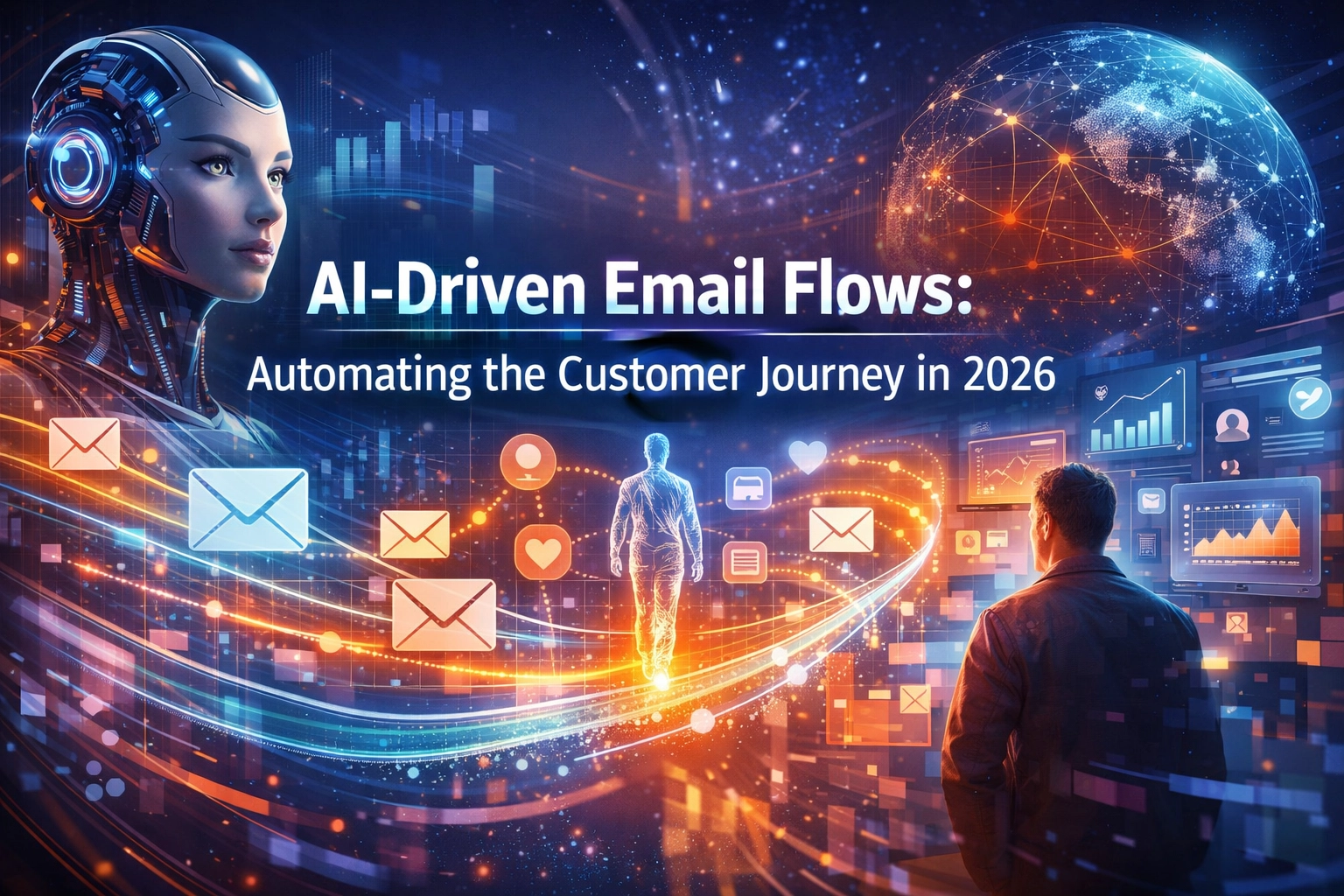
If you’re still sending out "blast" emails to your entire list and hoping for the best, you’re essentially living in the Stone Age. By 2026, the game has shifted completely. We’ve moved past simple "if-this-then-that" logic and entered the era of hyper-personalized, AI-driven email flows that feel less like marketing and more like a helpful concierge service.
The reality of the modern inbox is that it’s crowded, it’s noisy, and it’s increasingly guarded by AI filters. To break through, your email strategy needs to be smarter than the algorithms trying to block it. We’re talking about systems that interpret customer behavior in real-time, predict what they want before they even know they want it, and deliver it at the exact moment they’re most likely to click.
Here is how you master AI-driven email flows to automate your entire customer journey this year.
What Does "AI-Driven" Actually Mean in 2026?
A few years ago, "automation" meant you set a timer. You’d send a welcome email on Day 1, a case study on Day 3, and a discount code on Day 7. It was rigid, and it often missed the mark because it didn't account for what the user was actually doing.
In 2026, AI-driven flows are fluid. They use machine learning to design, segment, and optimize sequences on the fly. Instead of a linear path, the customer journey looks more like a spiderweb of possibilities. If a subscriber spends ten minutes on your pricing page but doesn't buy, the AI recognizes that "intent signal" and triggers a specific flow. If they haven’t opened an email in three weeks, the system doesn't just keep shouting; it pivots to a re-engagement strategy or switches the channel to a push notification.
These systems analyze millions of data points across your website, social media, and previous email interactions to ensure that every touchpoint is contextual. It’s about moving from "sending emails" to "orchestrating experiences."

The "AI vs. AI" Battlefield: Navigating the Modern Inbox
One of the biggest shifts we’re seeing right now is what experts call the "AI versus AI" battlefield. It’s not just marketers using AI; it’s the providers too. Gmail, Apple Mail, and Outlook now use intelligent inboxes that summarize your emails before the user even opens them.
If your email is a wall of generic text, the recipient's AI assistant might summarize it as: "Promotional offer for shoes you already looked at." The user doesn't even have to open it to know they want to delete it.
To win this fight, your email marketing automation tools need to produce content that provides genuine value. AI filters are now sophisticated enough to detect "engagement bait" and low-quality, mass-generated AI fluff. The winners in 2026 are the ones using AI to be more human, not less. This means using data to create highly specific, helpful content that recipient AI systems flag as "Important" or "Personal."
Mapping the Automated Journey
To build a high-converting flow, you need to understand the four primary stages of the customer journey and how AI handles them differently than a human ever could.
1. The Acquisition and Onboarding Phase
The moment someone joins your list, the clock starts. In the past, we had a generic "Welcome" series. Now, AI identifies high-potential prospects based on how they arrived at your site.
If they signed up via a technical whitepaper, the AI-driven flow starts with deep-dive technical content. If they signed up through a "Quick Start" video, the flow is visual and action-oriented. Behavioral triggers adapt the messaging in real-time. If a user completes the first three steps of your onboarding in one hour, the AI doesn't wait three days to send the next email: it strikes while the iron is hot.
2. The Predictive Nurture Cycle
This is where the real magic happens. Predictive nurturing uses algorithms to track interactions across all your digital properties.
Let’s say you run an educational platform like Learnrise. If a student is consistently looking at Python tutorials but ignoring design content, the AI stops sending design updates. It starts sequencing follow-ups with relevant Python case studies, advanced coding tips, and specific course recommendations. The goal is to guide the contact toward a "qualified opportunity" without ever making them feel like they're being sold to.

3. Conversion and Abandonment Recovery
We all know the "Abandoned Cart" email. It’s a classic. But in 2026, it’s much more than a "You forgot something!" reminder.
AI-driven flows analyze why the cart was abandoned. Did they bail at the shipping cost? The AI triggers a flow with a shipping discount. Did they leave after looking at the "Returns Policy"? The AI sends a testimonial-heavy email focusing on your "No-Hassle Guarantee."
By interpreting the specific friction point, your email marketing automation tools can solve the problem in real-time, drastically increasing recovery rates compared to the generic reminders of the past.
4. Retention and Advocacy
Most companies stop once the sale is made. That’s a massive mistake. Post-purchase automation is where you build loyalty.
AI monitors usage patterns. If a customer buys a software subscription but hasn’t logged in for five days, a retention flow kicks in to offer a 1-on-1 demo. If they are a power user, the flow shifts toward an advocacy program, inviting them to join an inner circle or leave a review. This level of "personalization at scale" allows you to manage millions of customers with the intimacy of a boutique shop.
Send-Time Optimization: No More Guessing
"When is the best time to send an email?" is a question that used to have a standard answer: Tuesday at 10:00 AM.
In 2026, that answer is: "Whenever that specific person is looking at their phone."
AI algorithms now analyze individual metrics: open rates, click-throughs, and even phone unlock patterns: to determine a unique send time for every single subscriber on your list. Your system might send an email to Sarah at 7:15 AM because she checks her mail over coffee, while John gets the same email at 9:30 PM because he’s a night owl. This isn't just a "nice to have"; it's the difference between being at the top of the inbox or buried under fifty other notifications.

Interactive Emails: The "Inbox-as-a-Browser" Trend
One of the coolest things happening right now is the rise of interactive email formats. We’re moving away from emails that just "link out" to a website.
With AI-driven flows, consumers can now play mini-games, complete detailed surveys, or even shop and checkout directly within the email itself. This reduces friction and keeps the user engaged in a controlled environment. By integrating these interactive elements into your automated flows, you’re providing a frictionless experience that feels futuristic and high-end.
The Power of Zero-Party Data
As third-party cookies have phased out, the data we use to fuel our AI has changed. We are now leaning heavily on zero-party data. This is information that users willingly share with you: like their preferences, goals, and challenges: often through interactive quizzes or preference centers within your email flows.
AI-driven flows are the perfect vehicle for collecting this. A "Choose Your Own Adventure" email sequence can ask the user what they want to learn next, and the AI then uses that data to rewrite the rest of the journey. This creates a feedback loop where the more a user interacts with your emails, the more relevant those emails become.
| Feature | Traditional Automation | AI-Driven Flows (2026) |
|---|---|---|
| Segmentation | Manual tags and lists | Dynamic behavioral clusters |
| Send Time | Scheduled for everyone | Individualized per subscriber |
| Content | Static templates | Generative & contextual |
| Optimization | A/B testing (Manual) | Continuous self-optimization |
| Data Source | Third-party cookies | Zero & First-party data |
Scalability Without the Headache
The most significant benefit for business owners and CEOs is the ability to scale without increasing headcount. In the past, if you wanted to run fifty different niche campaigns, you needed a massive marketing team to write, design, and manage them.
With the right email marketing automation tools, you can send personalized, high-converting messages to millions of customers simultaneously. The AI handles the heavy lifting of data analysis and content variations, allowing your core team to focus on high-level strategy and creative direction.
Final Thoughts
The "customer journey" is no longer a straight line; it's a living, breathing conversation. By implementing AI-driven email flows, you’re ensuring that your brand stays relevant in an increasingly automated world.
Stop thinking about your email list as a "list" and start thinking of it as a collection of individuals who deserve a personalized experience. Use the data you have, lean into the power of AI, and watch your engagement (and your revenue) soar.
Author Bio:
Malibongwe Gcwabaza is the CEO of blog and youtube, a leading digital strategist focused on the intersection of AI and human-centric marketing. With over a decade of experience in the tech space, Malibongwe helps businesses navigate the complexities of automation to build deeper connections with their audiences. When he’s not deconstructing the latest AI trends, he’s exploring the future of content creation on Learnrise.
About the Author