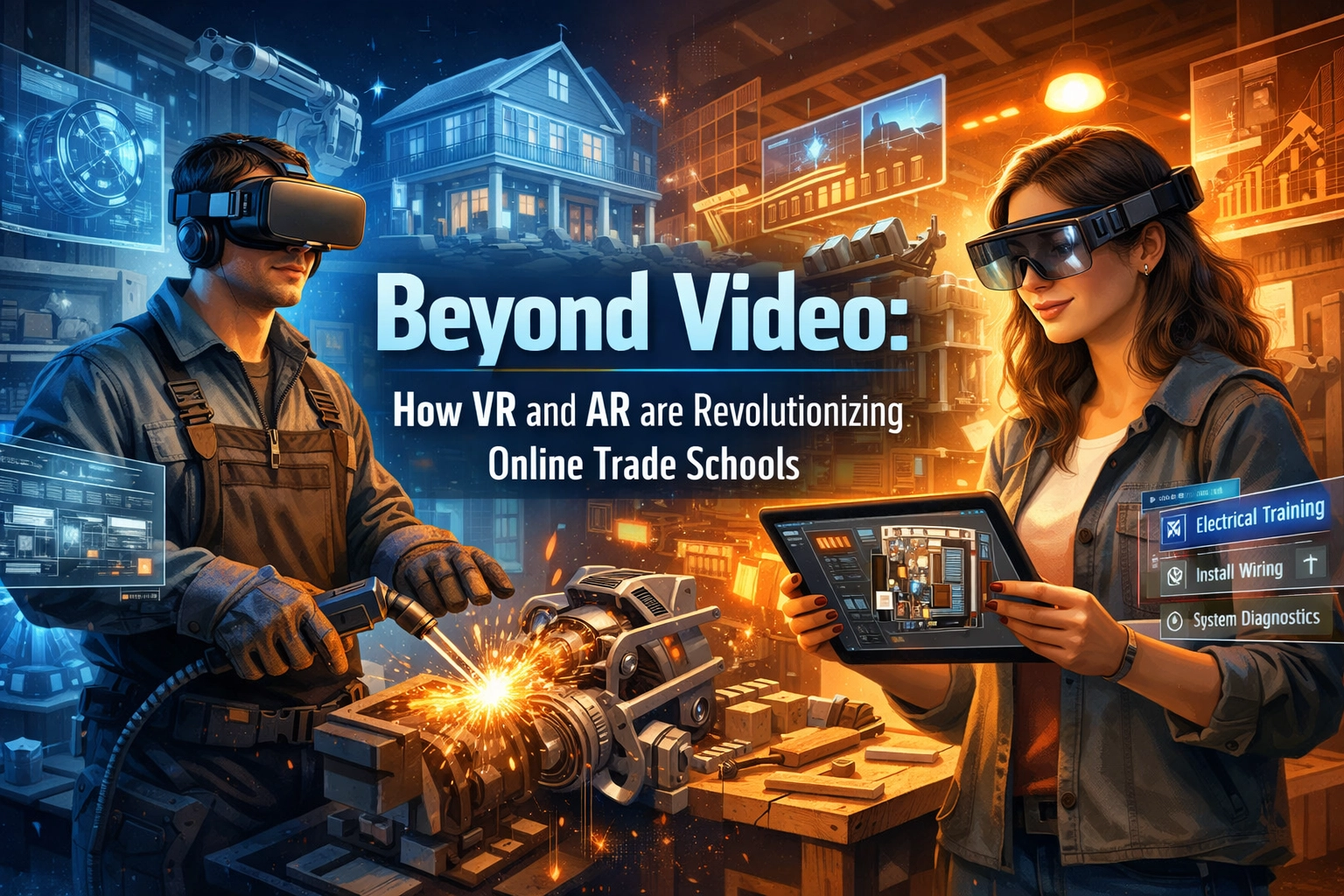
By 2026, the old argument that "you can't learn a trade online" has been thoroughly dismantled. For decades, online education for blue-collar professions was limited to "Video-Based Learning" (VBL). You watched a master plumber on a 2D screen, took a multiple-choice quiz, and hoped for the best when you finally picked up a pipe wrench. It was passive, disconnected, and frankly, insufficient for high-stakes technical work.
Today, the "Spatial Learning" revolution has replaced the video era. Virtual Reality (VR) and Augmented Reality (AR) have turned the home office into a high-fidelity workshop. We aren't just watching anymore; we are doing. This shift isn't just about cool headsets; it’s about a fundamental change in cognitive load management, muscle memory development, and the democratization of elite technical training.
The Retention Gap: Why 2D Video Failed the Trades
In traditional vocational training, the "Cone of Experience" (a model developed by Edgar Dale) suggests that we remember about 10% of what we read and 20% of what we hear/see in a video. However, we retain up to 90% of what we do.
In 2024 and 2025, trade schools realized that producing 4K videos wasn't closing the skills gap. Students could describe how to wire a three-way switch, but their hands lacked the "spatial intelligence" to do it under pressure. VR solves this by placing the student in a 1:1 digital twin of a construction site. When a student in a VR environment physically reaches out to grab a multimeter, their brain encodes that movement as a real-world experience.
The Rise of the "Digital Sandbox"
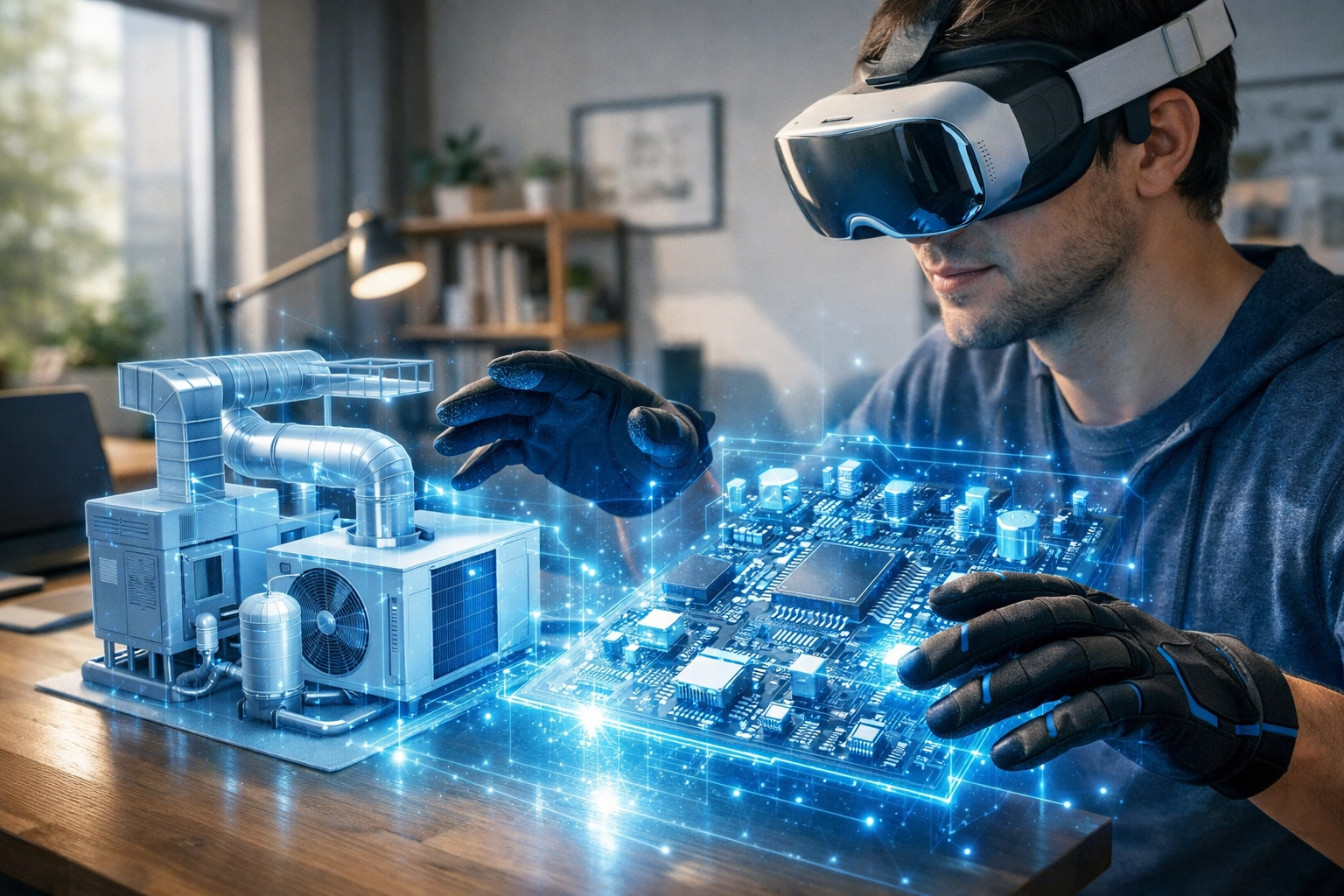
The most significant technical leap in 2026 is the maturity of haptic feedback and spatial anchors. In the past, VR felt "floaty." Now, using advanced controllers and haptic gloves, a student learning HVAC repair can feel the slight vibration of a failing compressor or the resistance of a stuck valve.
1. Electrical and Industrial Maintenance
In the electrical trade, mistakes are lethal. VR allows students to experience a "virtual arc flash" if they fail to follow lockout-tagout (LOTO) procedures. This psychological impact creates a "safety-first" instinct that a video tutorial simply cannot replicate.
Technical platforms like Interplay Learning have pioneered "skill-mill" environments where students troubleshoot complex industrial circuit boards. By the time a student touches a live 480V panel in the real world, they have already performed the procedure 50 times in a simulated environment with zero risk of injury.
2. Precision Welding and Metallurgy
Welding is perhaps the most "physical" of all trades. It requires a specific travel speed, work angle, and arc length. Modern VR welding simulators use motion tracking to monitor these variables within a fraction of a millimeter.
The software provides a "ghosting" overlay: a visual guide that shows the student exactly where their torch should be. As the student improves, the "ghost" fades away. Research from 2025 showed that students who trained with VR-integrated curricula reached AWS (American Welding Society) certification standards 25% faster than those using traditional methods alone.
AR: The Ultimate "Job-Site Whisperer"
While VR is for the classroom, Augmented Reality (AR) is for the field. AR doesn't replace the world; it enhances it.
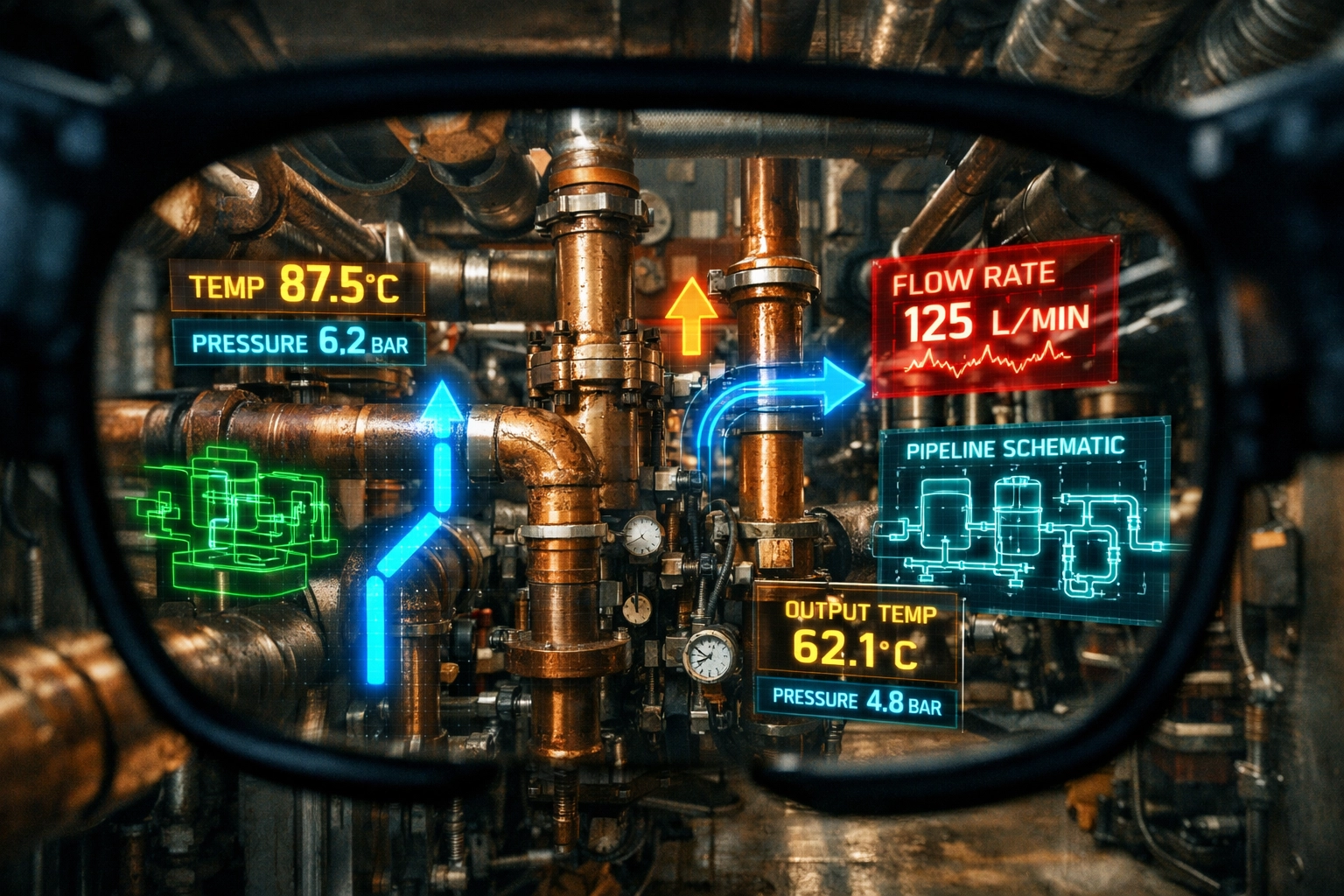
In 2026, many online trade programs include AR-compatible kits. Imagine a student standing in front of their home furnace. Through an AR headset (or even a high-end smartphone), the system identifies the model and overlays a 3D wiring diagram directly onto the physical machine.
"See What I See" Mentorship
One of the highest-paying sectors in the current market is "Remote Expert Assistance." A junior technician on a remote site in South Africa can wear AR glasses, allowing a master technician in London to see exactly what they see. The master can "draw" in the junior’s field of vision, circling the specific bolt that needs tightening or highlighting the leaking gasket. This "Education 3.0" model blends learning with earning, effectively turning every job site into a classroom.
The Data-Driven Edge: AI-Powered Feedback Loops
The real "secret sauce" of 2026 trade schools isn't just the visuals: it's the telemetry. Every movement a student makes in a VR simulation is recorded as data.
- Biometric Monitoring: Systems now track a student's heart rate and eye-tracking. If a student's heart rate spikes during a simulated gas leak, the AI instructor knows they need more stress-management training.
- Micro-Correction: If a carpentry student is consistently holding a saw at a 3-degree tilt, the system detects this instantly and provides a haptic pulse in the glove to correct the posture.
- Predictive Competency: Schools are now using "Competency Scores" rather than grades. You don't "pass" a module; you achieve a 98% accuracy rating in a simulated environment, which is then verified on a blockchain-based credential.
The ROI of Immersive Online Trade Schools
For students and institutions, the shift to VR/AR is a financial no-brainer.
- Lower Overhead: Traditional trade schools require massive warehouses, expensive machinery, and constant refills of consumables (lumber, wire, welding rods). A VR lab requires a headset and a subscription.
- Accessibility: A student in a rural area can now access the same high-tier curriculum as someone in a major tech hub.
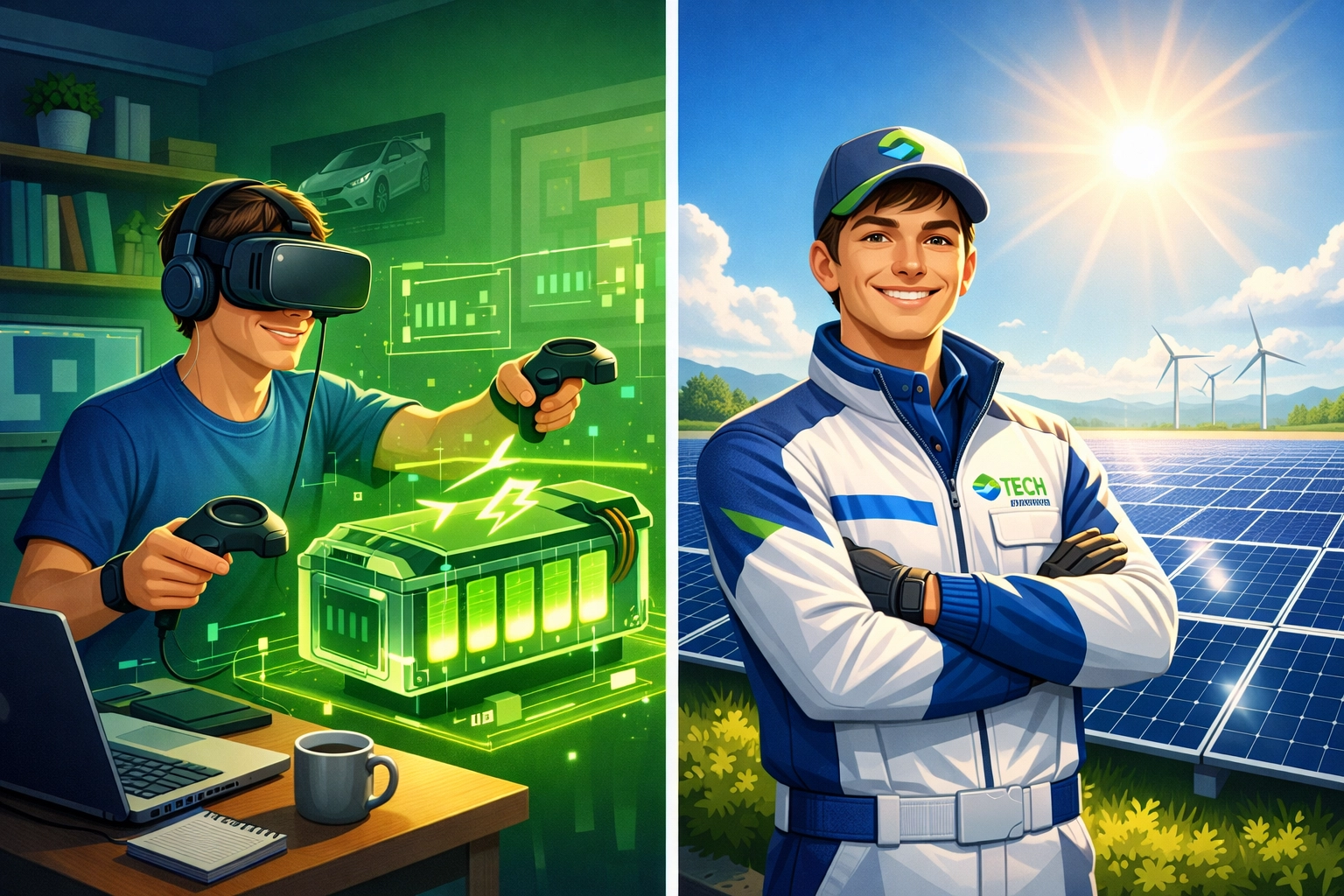
- High-CPC Specializations: Specializing in "Solar Grid Integration" or "EV Battery Diagnostic" via VR-heavy programs leads to some of the highest-paying roles in 2026, often starting at $85,000–$110,000 annually.
Challenges and the Path Forward
Despite the progress, we aren't at 100% immersion yet. "Haptic Latency" (the delay between touching something and feeling it) still exists in lower-end hardware. Furthermore, the "smell" of a trade: the scent of burning ozone in electrical work or a refrigerant leak: is still difficult to simulate affordably, though "olfactory VR" kits are beginning to enter the enterprise market.
However, the most significant hurdle is no longer the technology: it's the mindset. Industry veterans are often skeptical until they put on the headset. Once they see a student perform a complex diagnostic flawlessly on their first day of physical lab work, the skepticism evaporates.
Conclusion: The New Standard for 2026
The transition from 2D video to VR/AR is the single most important advancement in vocational history. It has turned "online learning" from a secondary option into a gold standard. Whether you are looking to pivot careers into renewable energy or want to master precision machining, the virtual workshop is open 24/7.
In this new era, the "hands-on" experience starts long before you ever step foot on a job site. The future of work is spatial, and the future of training is already here.
About the Author: Malibongwe Gcwabaza
CEO of learnrise.blog
Malibongwe Gcwabaza is a forward-thinking leader in the EdTech space, specializing in the intersection of AI, spatial computing, and vocational training. With over a decade of experience in digital transformation, Malibongwe has been a vocal advocate for "Skill-Based Hiring" and the decentralization of traditional education. Under his leadership, blog and youtube has become a primary resource for professionals navigating the complex "Education 3.0" landscape. He believes that technology's greatest gift is the ability to provide elite-level mastery to anyone, anywhere, regardless of their geographic or financial starting point.

About the Author