![[HERO] Email Marketing Automation Tools: Boosting ROI in 2026](https://cdn.marblism.com/v120tPKoRVo.webp)
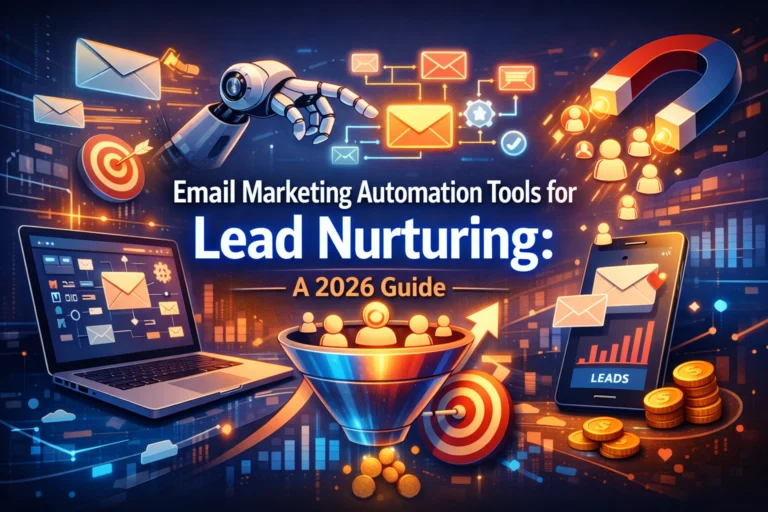
If you’re still thinking of email marketing as a “send and pray” newsletter blast, you’re essentially leaving money on the table. By 2026, the gap between businesses using basic email tools and those leveraging high-level email marketing automation tools has become a canyon.
We aren’t just talking about “Hi [First_Name]” tags anymore. We’re talking about predictive AI that knows when your customer is about to run out of coffee beans and sends a discount code exactly two hours before they usually start browsing for more. This is the era of the hyper-personalized, automated customer journey.
In this guide, we’re going deep into how to use the latest automation tools to skyrocket your ROI, focusing on the heavy hitters: advanced segmentation, predictive analytics, and sophisticated journey mapping.
The Evolution of Email Automation in 2026
The primary goal of email marketing in 2026 is relevance. With inbox filters becoming smarter and consumer attention spans getting shorter, being “relevant” is the only way to stay out of the spam folder. Automation tools have shifted from being simple “if-this-then-that” engines to full-blown decision-making hubs.
The return on investment (ROI) in email marketing remains the highest among digital channels, often cited at $36 to $45 for every $1 spent. However, hitting those numbers requires moving past the basics. You need tools that don’t just send emails, but orchestrate experiences.
Top Email Marketing Automation Tools for 2026
Choosing the right tool depends on your business model. Here’s a breakdown of the current leaders in the market and why they matter for your ROI.
1. ActiveCampaign: The Automation Heavyweight
ActiveCampaign continues to be the gold standard for businesses that want a visual, powerful automation builder. Its strength lies in its predictive sending feature. Instead of sending a blast at 9:00 AM for everyone, ActiveCampaign analyzes each individual subscriber’s historical data and delivers the email at the specific time that person is most likely to open it.
- Best for: Mid-sized businesses and B2B companies.
- Key ROI Feature: Real-time behavior-triggered automations that move leads through a CRM pipeline automatically.
2. Klaviyo: The eCommerce Specialist
If you run an online store, Klaviyo is almost non-negotiable. It integrates deeply with platforms like Shopify and WooCommerce to pull in granular purchase data. In 2026, Klaviyo’s predictive AI can forecast a customer’s “next purchase date” and “lifetime value,” allowing you to spend more on high-value customers and less on those likely to churn.
- Best for: eCommerce brands.
- Key ROI Feature: Dynamic product feeds that show customers exactly what they looked at on your site, right inside the email.
3. Brevo (formerly Sendinblue): The Budget-Friendly Powerhouse
Brevo has democratized high-end automation. It offers a generous free tier and an entry-level price point that includes CRM features and SMS marketing. For startups, Brevo provides a way to build complex logic branches without the enterprise price tag.
- Best for: Small businesses and cost-conscious startups.
- Key ROI Feature: Mid-flow A/B testing, allowing you to test different email paths within a single automation to see which converts better.
4. Saleshandy & Lemlist: The Outreach Kings
For cold outreach and B2B lead generation, these tools are indispensable. They specialize in deliverability and high-volume personalization. Lemlist, for example, allows you to use AI to generate custom intro lines for 450+ million verified professionals, ensuring your cold emails feel like warm introductions.
Strategic Pillar 1: Advanced Segmentation
The days of segmenting by “Location” or “Gender” are over. In 2026, ROI is driven by behavioral and psychographic segmentation.
RFM Analysis
One of the most effective ways to segment is through RFM analysis:
- Recency: When did they last buy/click?
- Frequency: How often do they engage?
- Monetary: How much have they spent?
Your automation tool should automatically tag users based on these metrics. For example, a “VIP” segment would be someone with high scores in all three. You can then trigger a specific automation that offers them early access to new products, bypassing the need for heavy discounts.
Psychographic Triggers
Modern tools allow you to segment based on “intent.” If a user clicks on three different articles about “Advanced Python,” your tool should automatically tag them as an “Expert Developer.” From that moment on, they should never receive a “Python for Beginners” email again. This level of precision prevents “list fatigue” and keeps engagement rates high.

Strategic Pillar 2: Predictive Analytics
Predictive analytics is the secret sauce for boosting ROI in 2026. It uses machine learning to look at the past and predict the future. Here is how you should be using it:
Churn Prediction
Top-tier tools can now flag subscribers who are “at risk” of unsubscribing or stopping their purchases before it actually happens. By identifying a drop-off in engagement patterns, the tool can trigger a “Win-back” sequence automatically. Offering a specialized “We miss you” incentive at the exact moment their interest wanes can save thousands in lost revenue.
Predictive Spend
Instead of treating all customers equally, use predictive analytics to identify “High Future Value” customers. These are people whose behavior mimics your top 1% of spenders. You can then automate a higher level of “white-glove” service for them, such as direct access to a personal shopper or exclusive content, ensuring you maximize the ROI of your most profitable segments.
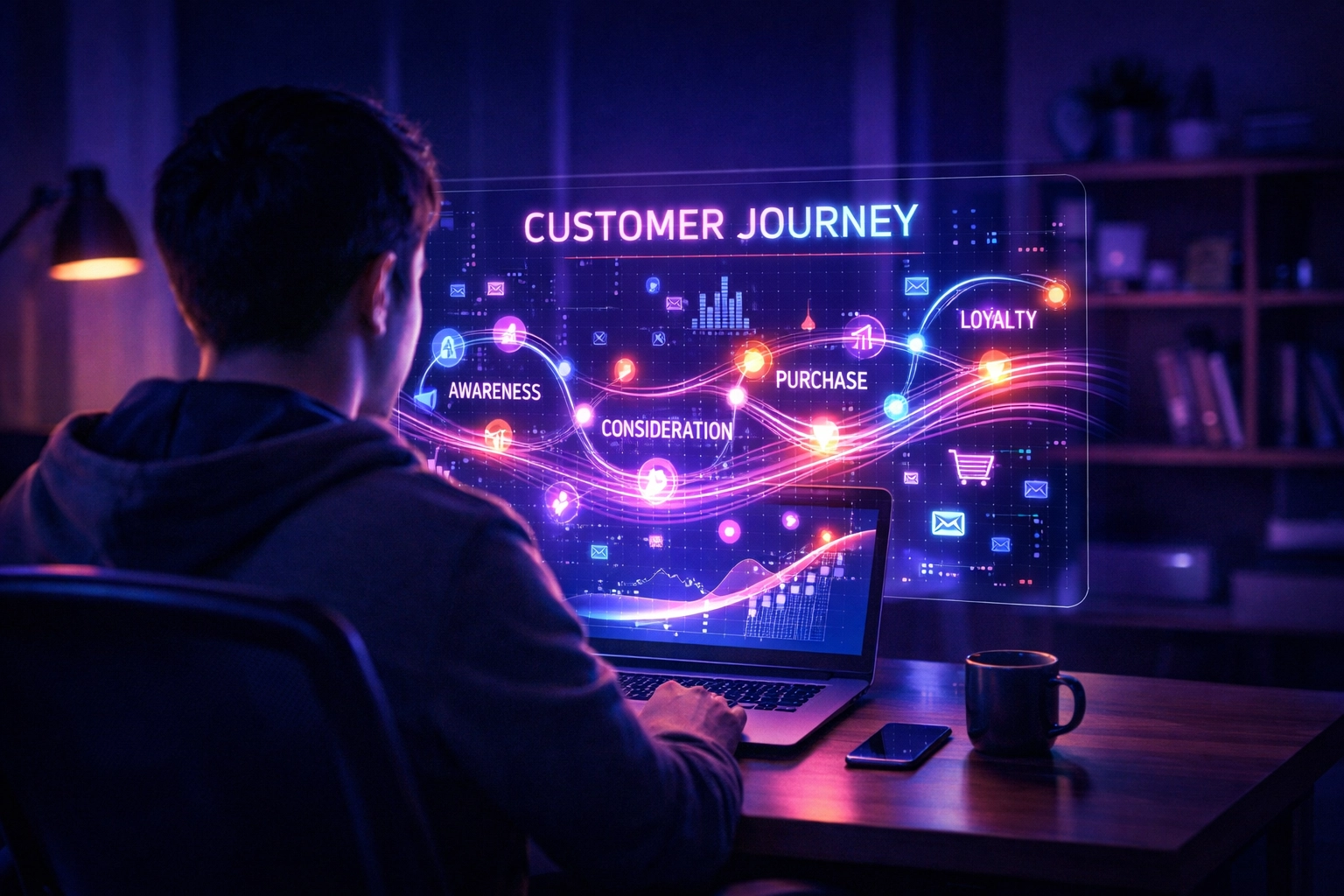
Strategic Pillar 3: Personalized Customer Journeys
A “customer journey” isn’t a straight line; it’s a web. In 2026, your automation needs to be able to handle “branching logic” that reacts to every move a customer makes (or doesn’t make).
The Multi-Channel Orchestration
An automated journey shouldn’t stop at email. If a customer doesn’t open an important “Abandoned Cart” email within 4 hours, your automation tool should be able to:
- Check if they have opted into SMS.
- If yes, send a quick text reminder.
- If no, trigger a retargeting ad on social media via an integration (like ActiveCampaign’s Facebook Custom Audiences sync).
This multi-channel approach ensures your message gets through, regardless of which platform the customer is currently on.
Conditional Content
This is a game-changer for ROI. Conditional content allows you to send one email that looks different to every person who opens it.
- Subscriber A (Interested in Hiking) sees a hero image of a mountain.
- Subscriber B (Interested in Yoga) sees a hero image of a studio.
Both get the same sale announcement, but the visual context is personalized. This significantly increases click-through rates (CTR) because the content feels tailor-made.

Measuring ROI: Beyond the Open Rate
To truly understand how your email marketing automation tools are performing, you need to look at the right data. In 2026, “Open Rates” are a vanity metric (largely due to privacy changes like Apple’s Mail Privacy Protection). Instead, focus on:
Practical Steps to Get Started
If you’re feeling overwhelmed by the tech, start small but start smart.
- Clean Your Data: Automation is only as good as the data it’s fed. Before setting up complex flows, ensure your tags and custom fields are organized.
- Map One Journey: Pick your most important path: usually the “Welcome Sequence.” Map out 5-7 emails that provide value, introduce your brand, and eventually lead to a sale.
- Implement One “Win-Back” Flow: Set up a simple automation that triggers when a customer hasn’t purchased in 60 days. This is often the quickest way to see an immediate ROI boost.
- Trust the AI (But Verify): Use predictive sending and AI-generated subject lines, but always A/B test them against your own copy.

Final Thoughts
Email marketing automation tools are no longer just about saving time; they are about generating precision-engineered revenue. By 2026, the businesses that win are the ones that treat every subscriber as an individual, using data to predict needs and automation to meet them.
If you aren’t using these advanced features yet, now is the time to audit your current stack. Whether it’s the predictive power of ActiveCampaign or the eCommerce depth of Klaviyo, the right tool will pay for itself ten times over if you use it to its full potential.
About the Author