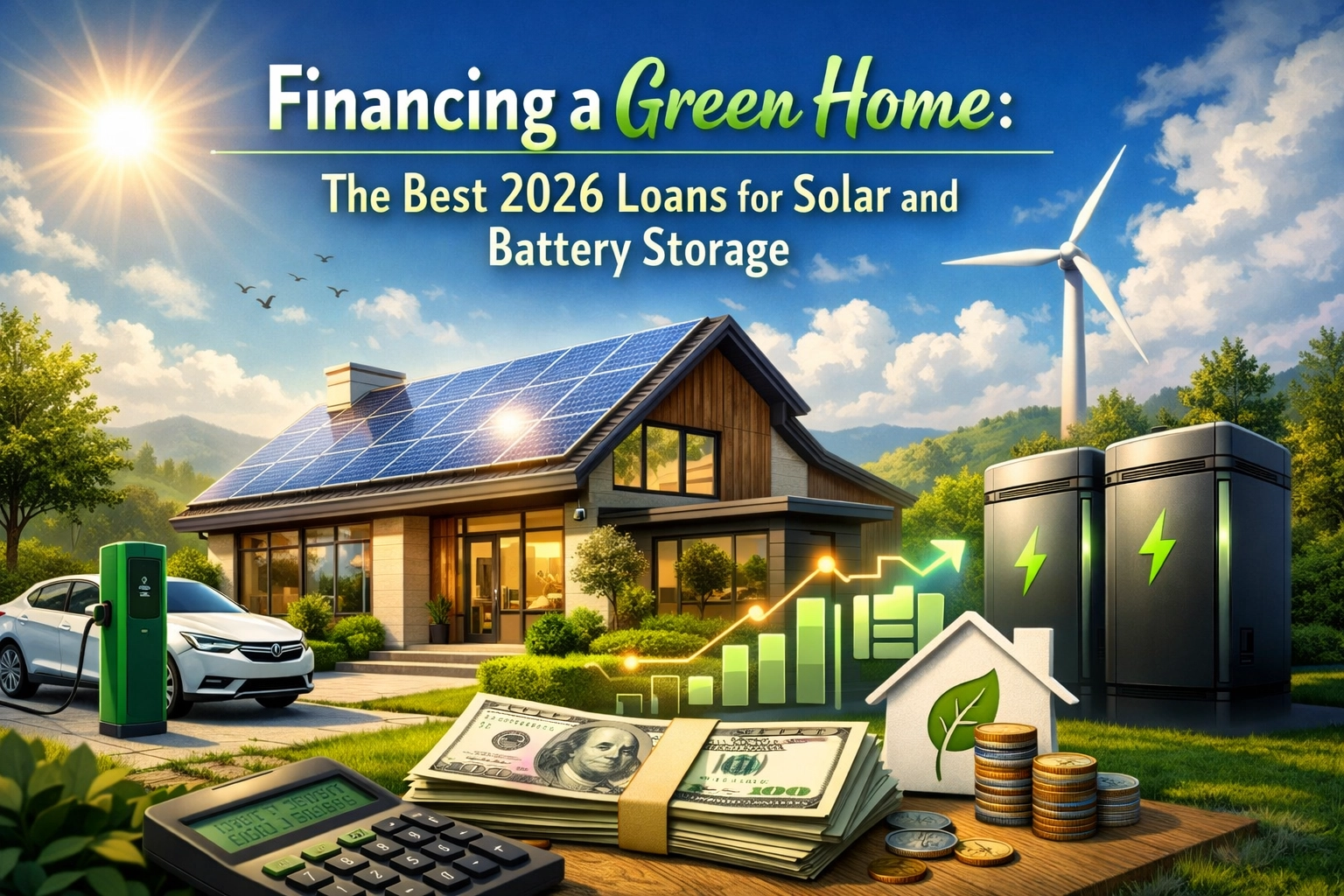
By mid-2026, the conversation around home energy has shifted from "Is solar worth it?" to "How do I finance a fully autonomous energy system?" With utility rates in some regions climbing by 15% annually over the last two years, the home is no longer just a shelter: it’s a micro-utility. But here is the catch: building a high-performance green home that includes both high-efficiency solar arrays and massive battery storage (like the 2026-gen solid-state home batteries) requires a serious capital stack.
Gone are the days when a simple $15,000 rooftop installation would cut it. Today's integrated systems, capable of "load shifting" and "grid arbitrage," often price out at $40,000 to $85,000. If you don't have that sitting in a high-yield savings account, you need to understand the 2026 lending landscape. The good news is that Fannie Mae, Freddie Mac, and private "Green Banks" have overhauled their products to treat energy improvements as primary equity builders rather than secondary upgrades.
The Big Two: Fannie Mae HomeStyle vs. Freddie Mac GreenCHOICE
If you are buying a home or looking to do a massive overhaul on your current property, the "Big Two" conventional programs are your best bet. These aren't just personal loans; they are integrated into your primary mortgage, which means you get mortgage-level interest rates (typically much lower than a solar lease or a standard personal loan).
Fannie Mae HomeStyle Energy
This remains the gold standard for green financing in 2026. The HomeStyle Energy mortgage allows borrowers to finance up to 15% of the "as-completed" appraised value of the home for energy-efficient upgrades.
The "as-completed" part is the secret sauce. In the past, banks would only lend based on what the house was worth today. In 2026, Fannie Mae allows the appraiser to factor in the projected value of the home after the solar and battery storage are installed. If you’re buying a $600,000 home and adding an $80,000 energy system, and the appraiser says the finished product is worth $680,000, you can wrap that entire $80,000 into your 30-year fixed mortgage.
Freddie Mac GreenCHOICE
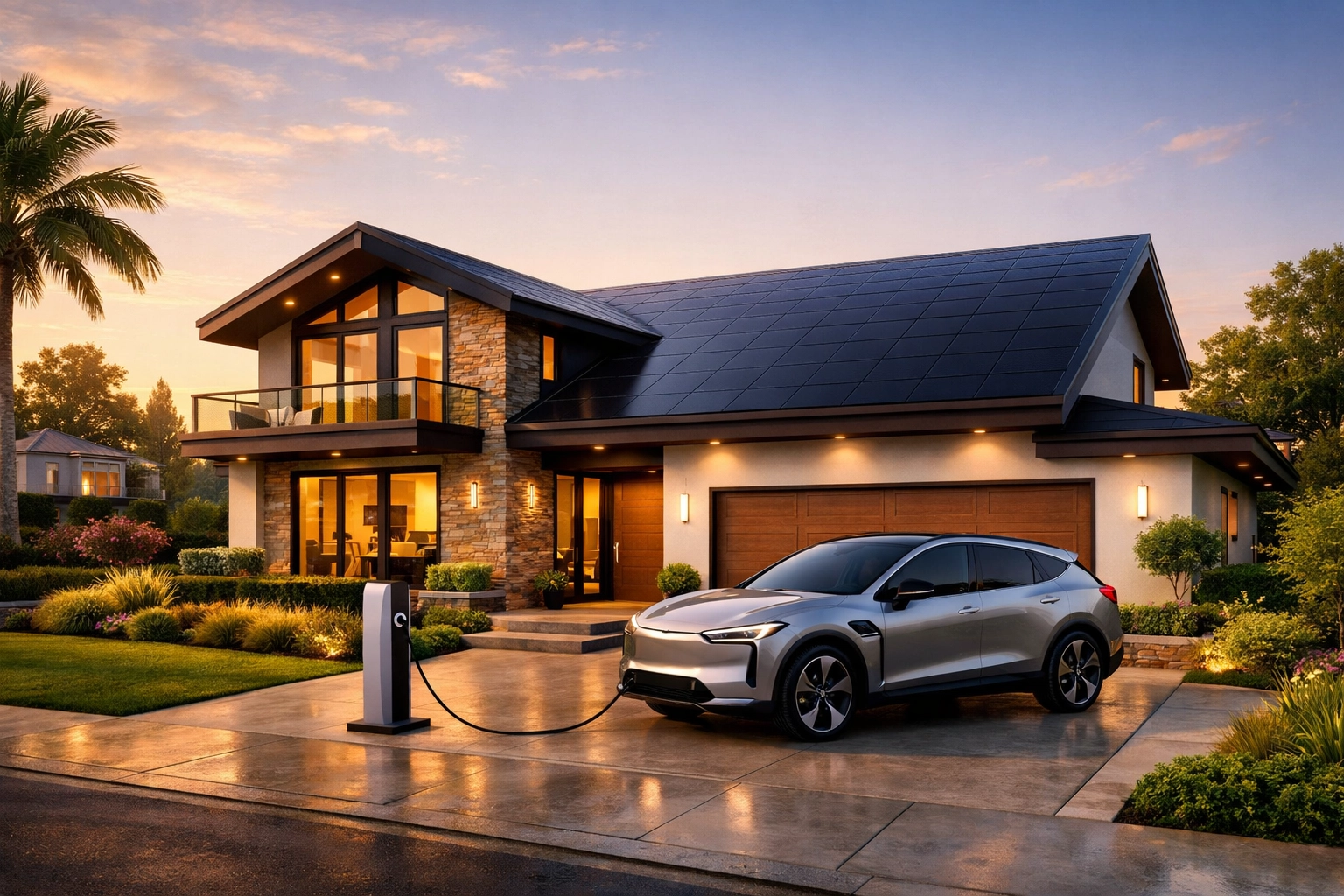
Freddie Mac’s offering is very similar to Fannie’s but has slightly different nuances regarding the types of debt it can pay off. In 2026, GreenCHOICE is particularly popular for homeowners who already have high-interest solar leases or PACE (Property Assessed Clean Energy) loans. You can use a GreenCHOICE refinance to fold those high-interest "satellite" debts into your primary mortgage, effectively slashing your monthly payments by moving the debt from a 12% APR personal loan to a 5-6% APR mortgage.
The FHA Energy Efficient Mortgage (EEM): Good for Entry-Level, Bad for Storage?
The FHA EEM has always been the "accessible" option because of its low down payment requirements (3.5%) and lower credit score thresholds (down to 580 in some cases). However, it has a significant bottleneck that hasn't quite kept up with 2026 technology costs.
The FHA typically caps energy improvements at 5% of the property’s value, up to a maximum of about $8,000. While $8,000 was great for insulation and a smart thermostat in 2018, it barely covers the labor for a modern 20kWh battery backup system today. If you are looking at a full-scale solar + storage "green" renovation, the FHA EEM likely won't provide enough liquidity unless you are pairing it with other state-level rebates.
The Rise of the "Green Bank" and Credit Union Cooperatives
Beyond the federal programs, 2026 has seen a massive surge in "State Green Banks." These are quasi-public institutions designed specifically to fund the energy transition. Unlike traditional banks, Green Banks understand the ROI of a battery system.
For example, many Northeast and West Coast credit unions now offer "Solar+Storage" loans that feature:
- Performance-Based Terms: Your interest rate might drop if your system hits certain efficiency milestones.
- No-Money-Down Secured Loans: They use the solar equipment itself as collateral rather than your home's equity.
- Rebate Bridging: These lenders will often "float" you the amount of your federal tax credit (currently at 30% under the extended Inflation Reduction Act provisions) for 12–18 months interest-free, allowing you to pay down the principal once your tax refund hits.
Technical Insight: Why Battery Storage Changes the Loan Math
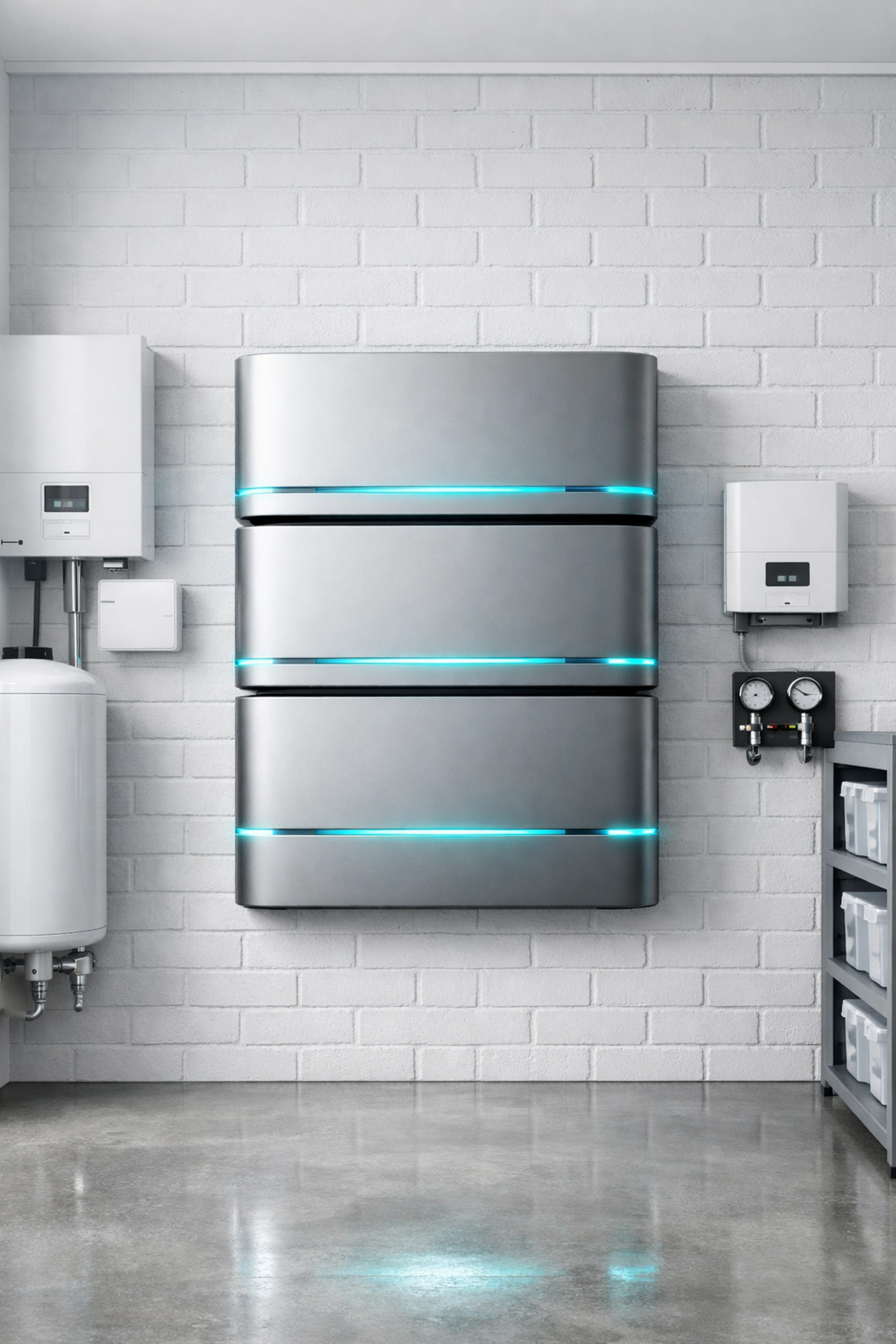
When you are talking to a lender in 2026, you need to speak the language of "Value Add." Lenders are becoming more comfortable with battery storage because of VPPs (Virtual Power Plants).
In 2026, many homeowners are enrolling their financed batteries into VPP programs where the utility company "rents" a portion of the battery's capacity during peak demand. This can generate $500 to $1,500 in annual revenue for the homeowner. When applying for a loan, savvy borrowers are presenting these projected earnings as "supplemental income" to help qualify for higher loan amounts. This is a technical nuance that didn't exist a few years ago: your home energy system is now a revenue-generating asset, not just a cost-saving one.
Don't Get "Low-Balled": The Importance of the Green-Certified Appraiser
One of the biggest hurdles in financing a green home in 2026 is the appraisal gap. If your appraiser doesn't understand the difference between a 2022-era lead-acid battery and a 2026-era solid-state system, they will under-value your home.
When using Fannie Mae or Freddie Mac programs, you have the right to request an appraiser who holds a "Green Addendum" certification from the Appraisal Institute. This ensures they use the "Income Approach" to valuation: calculating exactly how much money the solar and battery system will save the owner over 25 years and adding a portion of that net present value to the home’s price.
Data from 2025 shows that homes with properly appraised solar + storage systems sold for a 6.7% premium compared to non-green homes. On a $500,000 house, that's $33,500 in "invisible" equity that a standard appraiser might miss.
Step-by-Step Strategy for 2026 Green Financing
- Get a HERS Rater First: Before talking to a bank, get a Home Energy Rating System (HERS) report. This is the "Carfax" for your home’s energy. Most green loans require this to prove the upgrades will actually work.
- Comparison Shop Wholesale Brokers: Don't just go to your local branch. Work with a wholesale broker who has access to "Green Specialty" desks at major lenders.
- Audit the "Escrow Holdback": Many of these loans work via an escrow holdback. The bank gives you the money to buy the house, holds the "green" portion in an account, and releases it to the contractor once the solar panels are on the roof and the battery is commissioned.
- Maximize the ITC: Ensure your loan structure allows for a large principal payment in year two without a "re-casting" fee. This lets you dump your 30% federal tax credit into the loan to shorten the term.
The Bottom Line
Financing a green home in 2026 is no longer a "niche" financial move: it is a hedge against energy inflation. By leveraging the 15% value-add potential of the Fannie Mae HomeStyle Energy loan or the flexibility of specialized Green Banks, you can transform a standard property into a self-sustaining asset. The key is to ensure your appraisal reflects the technical reality of your hardware. A battery isn't just a box in the garage; in 2026, it's the heart of your home's financial value.
About the Author: Malibongwe Gcwabaza
CEO of blog and youtube
Malibongwe Gcwabaza is a leading voice in the intersection of residential technology and sustainable finance. With over a decade of experience in digital asset management and real estate strategy, Malibongwe focuses on how emerging technologies; from AI-driven energy grids to decentralized finance; impact the modern homeowner. He is dedicated to making complex financial shifts simple and actionable for the next generation of property owners. Under his leadership, blog and youtube has become a primary resource for high-quality, data-driven insights into the 2026 economy.
About the Author