From Blog to Academy: The 2026 Blueprint for Building a Scalable Online Learning Platform
![[HERO] From Blog to Academy: The 2026 Blueprint for Building a Scalable Online Learning Platform](https://cdn.marblism.com/-QmvZkscvCa.webp)
The era of “passive income” via simple blog ads and basic affiliate links is largely over. In 2026, the internet is flooded with AI-generated noise, making high-quality, structured education the only real way to command attention and authority. If you’ve spent years building a blog, you aren’t just a writer; you are sitting on a mountain of raw curriculum.
Transitioning from a blogger to an educator is the most logical step for scaling. But building an “Academy” isn’t just about putting your blog posts behind a paywall. It requires a shift in infrastructure, mindset, and technology. This guide breaks down the 2026 blueprint for turning your content into a scalable, AI-integrated learning powerhouse.
1. The Mindset Shift: From Content Creator to Educator
The biggest hurdle isn’t technical; it’s psychological. As a blogger, your goal is often “reach” and “engagement.” As an educator, your goal is “transformation.”
A blog post provides information. An academy provides a result. When you start building your platform, you have to stop asking “What can I write about?” and start asking “What can my students do after they finish this module?”
In 2026, learners are increasingly skeptical of “guru” courses. They want structured, evidence-based learning. This means your Academy needs to offer a clear roadmap, feedback loops, and a way to prove that the student has actually mastered the skill.
2. Choosing Your Architecture: LMS vs. LXP
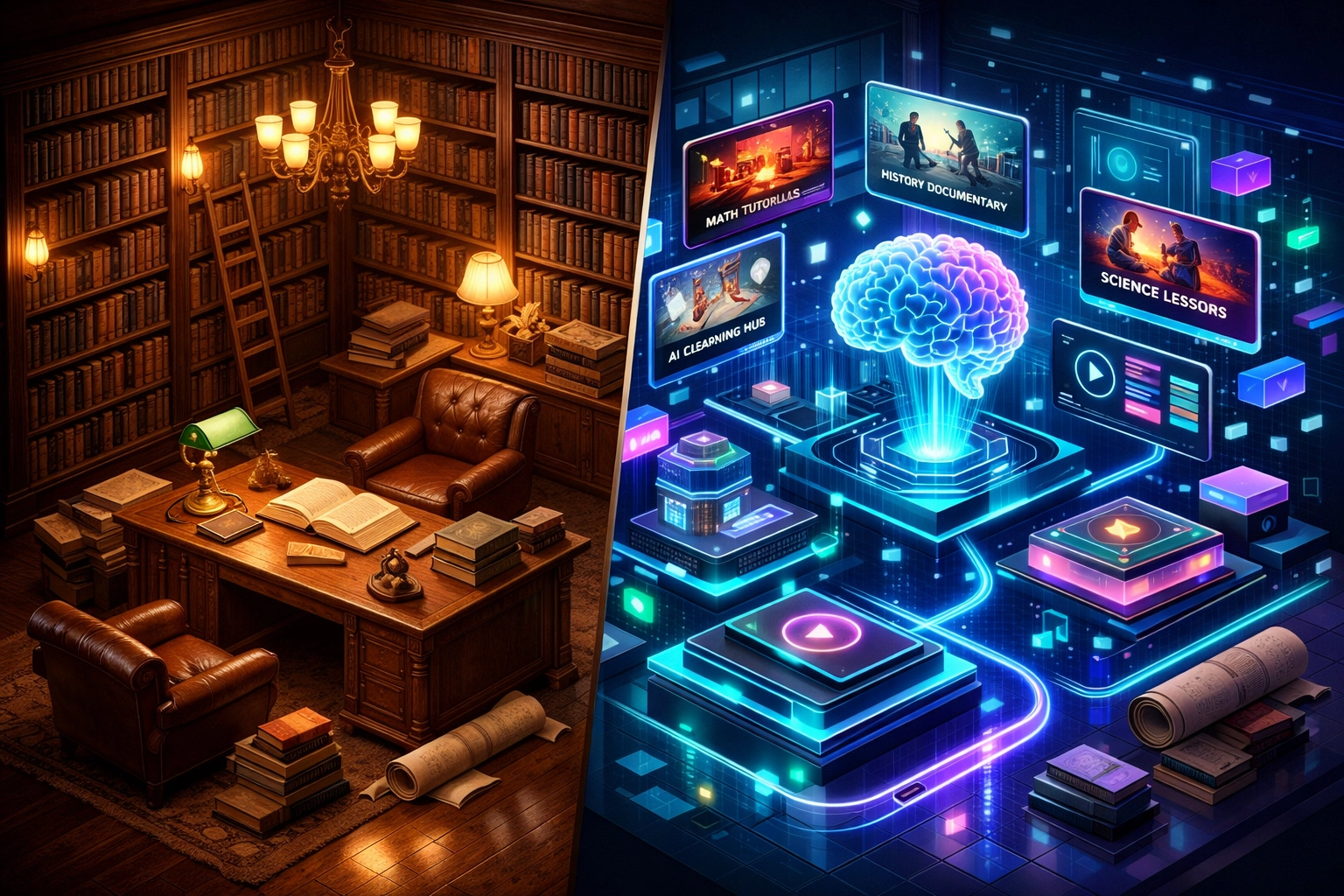
For years, the standard was the Learning Management System (LMS). Think of an LMS like a digital filing cabinet: it holds your videos, PDFs, and quizzes in a neat, linear order.
However, the 2026 market has shifted toward the Learning Experience Platform (LXP). If an LMS is a filing cabinet, an LXP is Netflix. It’s an AI-driven, personalized ecosystem that recommends content based on the learner’s specific gaps, past performance, and career goals.
Why you should consider an LXP for 2026:
- Hyper-Personalization: Using AI to surface the exact lesson a student needs when they are struggling.
- Interoperability: It connects with other tools (like Slack, GitHub, or CRM systems) to track “learning in the flow of work.”
- Skills Intelligence: It doesn’t just track “completion”; it maps specific skills the learner is acquiring.
3. Integrating AI-Powered Personalization
If your 2026 academy treats every student exactly the same, it will fail. Personalization is no longer a “nice to have.” You need to implement Agentic AI tutors.
These are not basic chatbots. These are AI agents that have access to your entire course library. When a student asks a question at 2 AM, the AI tutor shouldn’t just give a generic answer; it should say, “I noticed you struggled with the Python lesson yesterday; here is a simplified breakdown of how it applies to the project you’re currently working on.”
Key AI Features to Implement:
- Predictive Analytics: Identify “at-risk” students who haven’t logged in for three days and automatically send a personalized encouragement or a simplified lesson to get them back on track.
- Generative Summarization: Automatically create “TL;DR” summaries of your 20-minute videos for students who prefer reading.
- Adaptive Testing: If a student passes a quiz easily, the system should automatically skip the “beginner” content and move them to advanced modules.
4. The Tech Stack: 2026 Comparison Table
Choosing the right software is where most bloggers get stuck. Here is a breakdown of the current landscape:
| Feature | Legacy LMS (e.g., WordPress Plugins) | Modern SaaS (e.g., Kajabi/Teachable) | Enterprise LXP (e.g., Degreed/Custom Build) | ||
|---|---|---|---|---|---|
| Setup Difficulty | High (Requires maintenance) | Low | Medium to High | ||
| Scalability | Limited by hosting | High | Unlimited | ||
| AI Integration | Basic/Manual | Built-in (Standard) | Advanced/Agentic | ||
| Community Tools | Third-party (Slack/Discord) | Basic Built-in | Deeply Integrated | ||
| Best For | Tech-savvy DIYers | Solo-preneurs | Scalable Academies & B2B | ||
5. Transitioning Content: From Posts to Curriculum
You don’t need to write 50 new lessons. You likely already have the “Lego blocks” in your blog archives. The secret is re-atomization.
- Audit your Top 20%: Which blog posts drive 80% of your traffic? These are your “Core Modules.”
- Add the “Doing” Element: For every blog post you convert into a lesson, add a practical exercise. If it’s a blog post about SEO, the lesson needs an SEO checklist and a real-world site audit task.
- Implement Micro-credentials: Instead of one massive “Masterclass,” break it into “Stackable Credentials.” In 2026, learners love badges they can share on LinkedIn. Use blockchain-verified certificates (like those via Accredible or OpenBadges) to give your academy instant professional weight.

6. Building a “Community of Practice” (Not Just a Forum)
The “lonely learner” problem is the reason most online courses have a 5-10% completion rate. To scale, you must move toward Cohort-Based Learning (CBL).
A cohort is a group of students who go through the material at the same time. In 2026, the most successful academies are using AI to facilitate these groups.
- AI Matchmaking: The platform automatically groups students with similar experience levels or in complementary time zones.
- Synchronous + Asynchronous: You offer recorded “evergreen” content, but supplement it with live, AI-transcribed Q&A sessions once a week.
- Peer Review Systems: Build a system where students must grade two other students’ work before they can move to the next module. This creates a self-sustaining ecosystem where the “community” does the heavy lifting of instruction.
7. Monetization and the “Freemium-to-Academy” Funnel
Your blog stays free. It remains your primary SEO engine. However, the path to the academy should be seamless.
- The “In-Post” Upsell: Don’t just use banners. Use AI to detect the intent of the reader. If they are reading a deeply technical post, offer a “Deep Dive” module for $49.
- Subscription vs. One-Time: In 2026, the “All-Access” subscription is winning. It provides predictable recurring revenue for you and continuous value for the learner.
- B2B Licensing: Once your academy has enough content, stop selling to individuals only. Sell “Team Licenses” to companies. This is where real scalability lives. A company paying for 50 employees to access your “Content Strategy Academy” is much easier to manage than 50 individual customers.

8. Data Infrastructure: The Learning Records Store (LRS)
To truly scale, you need to understand your data. Most bloggers look at “Page Views.” Academy owners look at Learning Analytics.
Implement a Learning Record Store (LRS) using the xAPI standard. Unlike traditional tracking, xAPI captures everything:
- “Student X watched 40% of the video and then opened the related PDF.”
- “Student Y performed the task in the external software (e.g., Figma) and completed the assignment.”
This data allows you to see exactly where students are getting confused. If 60% of students drop off at Module 4, you don’t need a new marketing strategy; you need to rewrite Module 4.
Final Thoughts
Building a scalable online learning platform in 2026 is about moving from “information” to “instruction.” It requires a robust technical foundation (LXP), a commitment to AI-driven personalization, and a focus on community-driven results.
Your blog was the foundation. Your Academy is the skyscraper. Stop giving away all your expertise for pennies in ad revenue: structure it, scale it, and start teaching.
About the Author: Malibongwe Gcwabaza
Malibongwe Gcwabaza is the CEO of blog and youtube, a digital media consultancy specializing in helping creators bridge the gap between content production and digital education. With over a decade of experience in the digital space, Malibongwe focuses on scalable business models and the integration of emerging AI technologies in the creator economy. When he’s not strategizing the next big platform pivot, he’s exploring the intersection of community building and automated learning systems.
About the Author