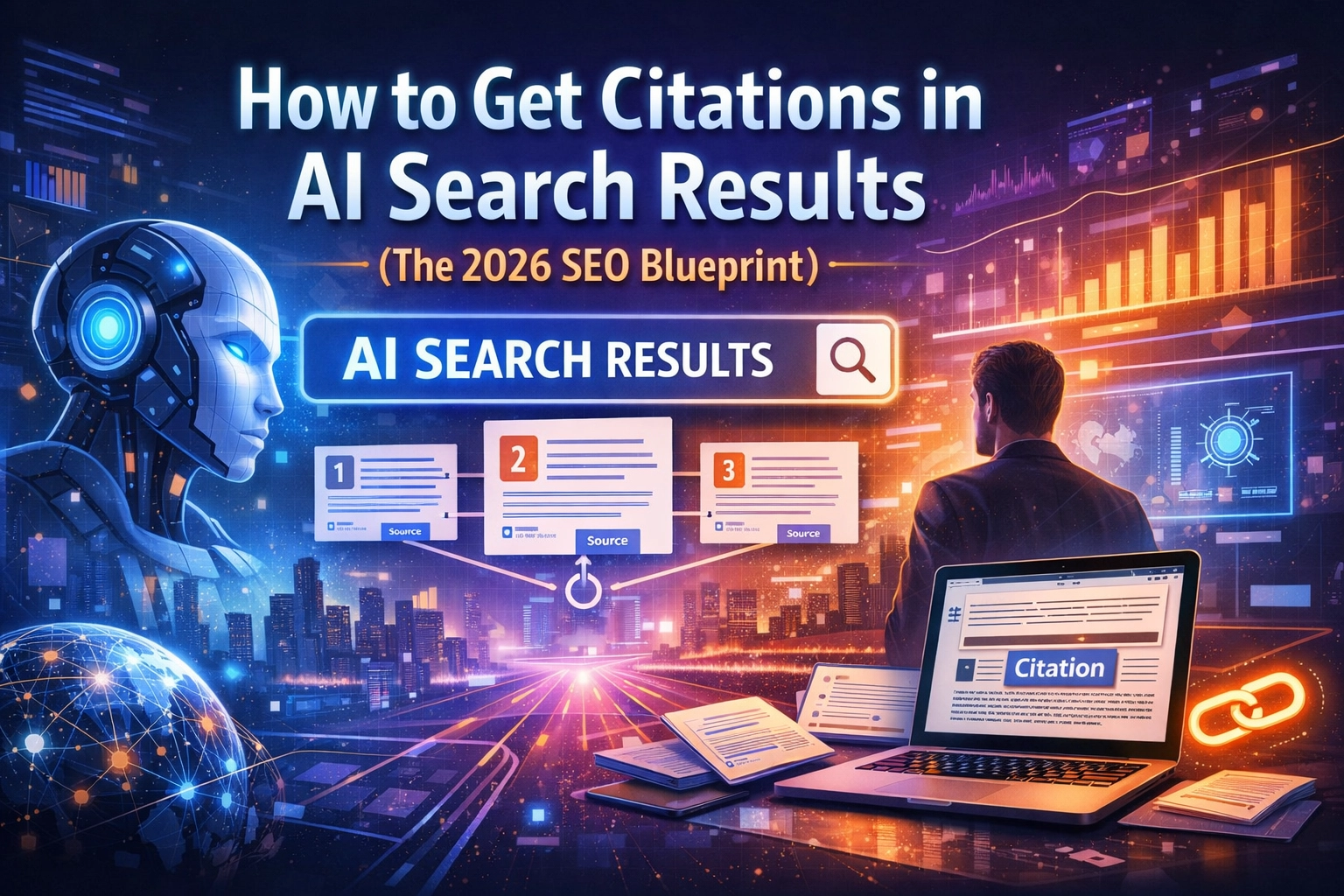
By 2026, the SEO landscape has officially fractured. The days of fighting for the "blue link" at position number one are largely over. Today, the real battleground is the AI Overview: the summarized response at the top of Google, Bing, and Perplexity that answers a user's query before they even think about clicking a website.
If your brand isn’t cited as a source within that summary, you’re effectively invisible. Data from late 2025 suggests that AI-generated summaries have caused a 34% to 46% drop in traditional click-through rates. However, there’s a silver lining: when an AI does cite you, the traffic that reaches your site is significantly higher in intent and closer to a conversion.
This is the era of Generative Engine Optimization (GEO). To survive, you need to move beyond keywords and start optimizing for "Model Influence." Here is your technical blueprint for securing citations in the AI search results of 2026.
The Shift from Keywords to Entities
Traditional SEO was built on the relationship between keywords and backlinks. AI search is built on the relationship between Entities and Attributes.
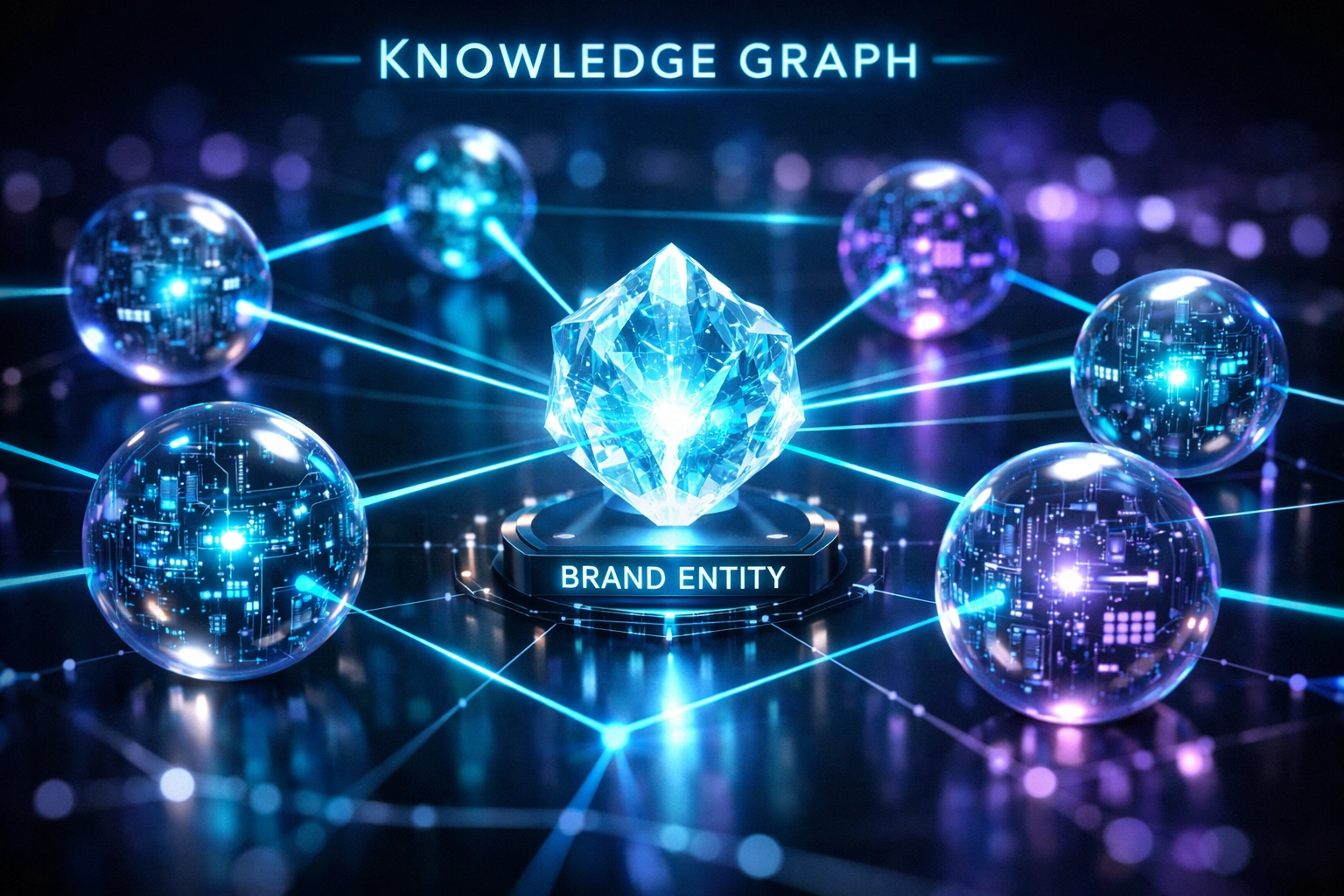
An entity is a well-defined object or concept: your brand, a specific product, or a technical process. AI models like Gemini and GPT-5 don't just "read" your text; they attempt to map your content into a knowledge graph. If the AI cannot confidently link your content to a known entity, it will never cite you as an authority.
Technical Implementation: Schema 2.0
In 2026, basic "Article" schema isn't enough. You must use advanced JSON-LD to define the relationships between your content and established entities.
- SameAs: Use this property to link your brand to its Wikipedia page, LinkedIn profile, and official industry registries.
- MainEntityOfPage: Explicitly state the primary entity your page discusses.
- Mentions: List the other entities (competitors, software, concepts) your article covers to help the AI understand the context of your expertise.
The "Experience" Multiplier in E-E-A-T
Google’s search quality evaluator guidelines have leaned heavily into the "E" for Experience. In an age where AI can churn out generic "How-To" guides in seconds, search engines are desperate for content that proves a human actually did the work.
AI search engines prioritize citations that contain:
- First-person data: "In our tests of 500 websites, we found…"
- Unique visual evidence: Original charts, screenshots of proprietary workflows, or video demonstrations.
- Contrarian Insights: AI models are trained on the "average" of the internet. If you provide a well-reasoned, data-backed argument that goes against the generic consensus, the AI is more likely to cite you as an "alternative perspective."
The Data-First Content Strategy
To win citations, you must become a primary source. Instead of writing "10 Tips for Better SEO," conduct a survey or a technical experiment. When you publish original findings, AI models see you as a "Root Source." When other sites summarize your findings (and they will), the AI tracks the citation trail back to you.
Optimizing for "Linguistic Mirroring"
AI models answer questions in a specific structure. They typically follow a Claim -> Evidence -> Citation format. To get your content picked up, you need to mirror this structure.
The "Nugget" Method
Break your long-form content into "Information Nuggets." Each section should start with a clear, declarative sentence that answers a specific question.
- Bad: "There are many ways to think about AI citations, and one of the most important things to consider is how you structure your data."
- Good: "To secure an AI citation, content must be structured in a Claim-Evidence format, as LLMs prioritize 'fact-dense' sentences for their summaries."
By writing in a way that is easy for a Large Language Model (LLM) to parse and extract, you lower the "computational cost" for the AI to include your site as a reference.

Digital PR: The New Backlink
In the old world, a link from a random blog helped your rank. In 2026, AI models weight citations based on the Global Trust Score of the referring domain. LLMs are trained on massive datasets like Common Crawl. If your brand is mentioned frequently in authoritative publications (The New York Times, Wired, niche-specific journals), the AI develops a "high-probability" association with your brand and the topic.
This is where Digital PR intersects with SEO. You aren't just looking for a "dofollow" link; you are looking for a Brand Mention in a context that the AI views as authoritative.
Monitoring Share of Model (SoM)
Forget tracking your "Average Position." You should be tracking your Share of Model. Use tools like Semrush’s AI Toolkit or Siftly.ai to see how often your brand appears in generated answers for your target queries compared to your competitors. If your SoM is low, it’s a sign that your brand doesn't have enough "Entity Authority" in the model's training set.
Technical Requirements for 2026
To be eligible for AI citations, your site's technical foundation must be flawless. AI "crawlers" (like GPTBot or Google-Other) are more aggressive than traditional bots.
- Sovereign Cloud or High-Speed Hosting: If your server takes 3 seconds to respond, the AI agent will move to a faster source. Latency is the enemy of citation.
- API-First Content: Ensure your content is easily accessible via headless CMS structures. AI agents prefer clean Markdown or JSON over cluttered HTML with heavy JavaScript.
- Fragment Identifiers: Use HTML ID tags (
#section-name) for every major header. This allows AI engines to deep-link directly to the specific paragraph that answers the user's question.

Case Study: The $1,000/Day AI Citation
Consider a fintech blog that shifted from "General Advice" to "Live Rate Tracking." By implementing a real-time data table with clear Schema markup, they became the "source of truth" for Gemini’s queries regarding "current mortgage rates in South Africa."
Even though their total organic traffic decreased by 20%, their conversion rate tripled. Why? Because every user who clicked through from the AI Overview was already informed by the AI that this specific blog had the most accurate data. They weren't "browsing"; they were "buying."
Measurement and Adaptation
The GEO landscape moves faster than traditional SEO. A model update (like moving from GPT-4.5 to GPT-5) can change citation patterns overnight.
- Audit your top 20 pages weekly: Check if they are still appearing in AI Overviews.
- Watch for "Hallucination Gaps": If an AI is giving wrong information about your niche, create a page that explicitly corrects that error with data. AI models are programmed to minimize hallucinations; if you provide the "correction," you will almost certainly be cited as the fix.
The Bottom Line
Getting cited in AI search results isn't about "gaming the system." It’s about being the most authoritative, clear, and technically accessible source of information on the internet. If you provide original data, structure it for machine readability, and build genuine brand authority, the AI will have no choice but to point users toward you.
About the Author: Malibongwe Gcwabaza
Malibongwe Gcwabaza is the CEO of blog and youtube, a digital strategy firm specializing in the transition from traditional search to Generative Engine Optimization. With over a decade of experience in high-growth tech sectors, Malibongwe focuses on how AI agents and LLMs are reshaping the global economy. He is a frequent speaker on "Digital Sovereignty" and the future of the "one-person business" in the 2026 market.

Quick Checklist for AI Citation Success:
- Is your JSON-LD Schema defining Entity relationships (not just page types)?
- Does your article contain original data or "first-hand experience" evidence?
- Are your headings structured as clear questions or declarative claims?
- Have you used fragment identifiers (#) for deep-linking?
- Is your server response time under 500ms for AI crawlers?
- Are you tracking "Share of Model" alongside traditional rankings?
About the Author