By March 2026, the traditional search engine results page (SERP) as we once knew it has effectively dissolved. The "ten blue links" are a relic of the past. Today, users don't just search; they ask. Whether it’s through Google’s Gemini-powered AI Overviews, Perplexity’s cited answers, or ChatGPT’s SearchGPT interface, the goal of a digital presence has shifted.
We are no longer optimizing for a ranking; we are optimizing for a citation. This is the era of Generative Engine Optimization (GEO). If your content isn’t being synthesized into the AI’s primary response, you are essentially invisible to 70% of modern web traffic.
The Technical Shift: From Indexing to Retrieval-Augmented Generation (RAG)
To understand GEO, you have to understand how AI search engines work. Unlike traditional Google bots that crawled and indexed keywords to match them against queries, 2026-era engines use a process called Retrieval-Augmented Generation (RAG).
When a user asks a complex question: for example, "What are the tax implications of a multi-stream solopreneur business in South Africa compared to the UK?": the AI doesn't just look for those keywords. It searches for "chunks" of authoritative data that it can pull into its context window. It then rewrites that information into a coherent answer and adds a small footnote or link to the source.
GEO is the process of making your content the most "pullable" and "trustworthy" chunk of data in that ecosystem.

1. Structure Your Content for AI Extraction
AI models are sophisticated, but they are also designed for efficiency. They prefer content that is logically partitioned. In 2026, the "wall of text" is an SEO death sentence.
The "Data Anchor" Method
To win the GEO game, you need to use clear headers and scannable hierarchies. But go deeper: use Data Anchors. These are bolded, factual statements followed by supporting evidence.
- Bad: "We think that GEO is going to be very important for most businesses this year because of how AI is changing things."
- Good: "Generative Engine Optimization (GEO) increases brand visibility by an average of 40% in AI-driven search results, according to 2025 industry benchmarks."
When an AI crawler sees a definitive statement backed by a statistic, it recognizes it as a high-value "fact candidate" for its generated response.
Bulleted Syntheses
Always include a summary box or a bulleted list at the start or end of major sections. AI models frequently "scrape" these lists to build their own response summaries. If you provide the summary for them, they are more likely to use your phrasing and cite you as the source.
2. Establish "Entity Clarity" via JSON-LD
In the world of GEO, your brand is an "Entity." For an AI to cite you, it needs to be 100% sure who you are and what you do. Confusion leads to exclusion.
This is where advanced Schema Markup (JSON-LD) becomes your most powerful technical tool. In 2026, we aren't just using "Article" or "Organization" schema. We are using "SameAs" and "About" properties to link our content to established nodes in the Global Knowledge Graph.
If you are writing about high-CPC financial topics, your schema should explicitly link your author profile to your LinkedIn, your professional certifications, and other authoritative publications you’ve written for. This builds "EEAT" (Experience, Expertise, Authoritativeness, and Trustworthiness) at a machine-readable level.

3. Optimizing for Conversational Queries (The 23-Word Rule)
Research shows that by mid-2026, the average search query has lengthened significantly. Traditional SEO focused on 3-4 word keywords. AI search queries now average 23 words.
Users are asking nuanced, multi-part questions: "I'm a graphic designer moving into AI creative direction; what specific Python libraries should I learn to automate my workflow, and how will this affect my billable hours?"
To rank for this, your content must:
- Anticipate the Follow-up: Don’t just answer the primary question. Address the "What's next?"
- Use Natural Language Processing (NLP) Friendly Phrasing: Avoid jargon for the sake of jargon. Use clear, descriptive language that mirrors how an expert would explain a concept to a peer during a coffee break.
- Direct Answer Format: Use the first 2-3 sentences under a subheader to directly answer the question implied by that header.
4. The Power of Original Data and "Unique Perspectives"
AI models are trained on the internet. If your blog post is just a rehash of existing information, the AI already "knows" it and doesn't need to cite you. It will just generate the answer from its internal weights.
To get the citation: and the click: you must provide something the model doesn't have: Originality.
- Proprietary Data: Conduct a survey, run an experiment, or analyze your own internal metrics. If you have a chart that says "We tested 100 prompts and found that X outperforms Y by 22%," the AI must cite you to be accurate.
- Counter-Intuitive Insights: AI is biased toward the "average" opinion. If you provide a well-reasoned, contrarian take on an industry trend (e.g., "Why Prompt Engineering is actually a dead-end skill"), the AI search engine may include your view as a "alternative perspective," giving you a prime spot in the AI Overview.

5. Authority Branding: Beyond the Backlink
In 2026, backlinks still matter, but they have been superseded by Brand Mentions. If your brand name is frequently mentioned in the same context as "top-tier SEO strategy" across Discord servers, Reddit, and niche forums, AI models begin to associate your entity with that topic.
This is "Off-Page GEO." You need to ensure your brand is being discussed in the places where AI training data is harvested.
- Niche Forums: Be active on platforms like Reddit or specialized industry Discords.
- Podcasts: Transcripts of popular podcasts are a major source for AI knowledge. Being a guest on a show where you discuss your technical expertise is a high-level GEO move.
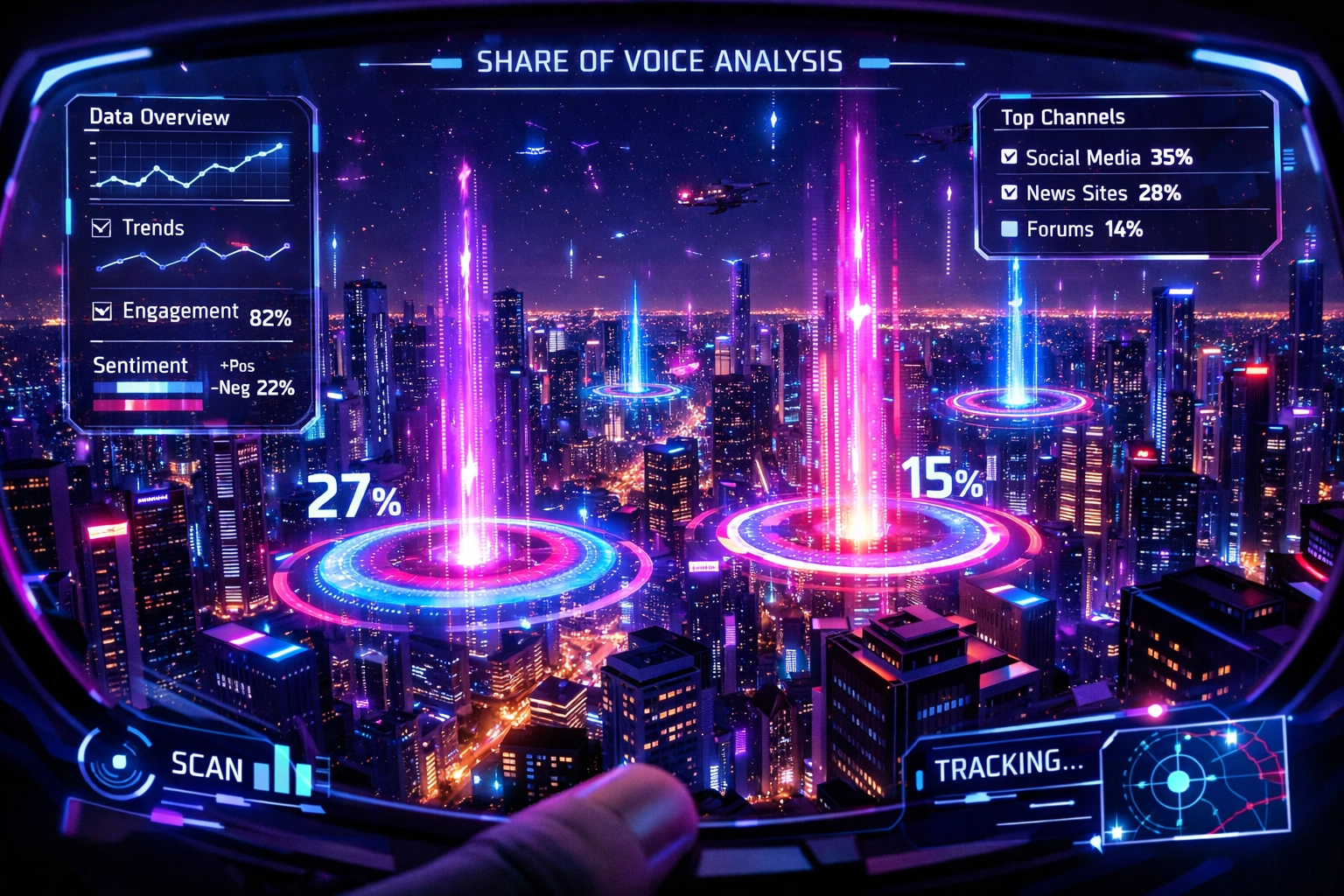
6. Measuring Success: The "Share of Voice" Metric
How do you know if your GEO strategy is working? Traditional tools like Google Search Console are being updated, but the real metric in 2026 is Share of Voice (SoV) in AI Overviews.
You should be tracking:
- Citation Rate: What percentage of queries in your niche feature a link to your site?
- Sentiment Alignment: Is the AI describing your brand the way you want it to?
- Direct Referral Traffic from AI: Tools like Perplexity and SearchGPT provide "Referrer" data. Watch this closely. If your "organic" traffic is dropping but your "referral" traffic from AI engines is spiking, you are winning.
The Future: Agentic SEO
As we move toward the end of 2026, we are seeing the rise of "Agentic SEO." This is where users have personal AI agents that "scout" the web for them. Your website shouldn't just be readable by humans; it should be "negotiable" by agents.
Ensure your site’s robots.txt and AI permissions are updated. Blocking all AI crawlers might protect your copyright, but it will also ensure your business stays a secret from the world's most popular search interfaces.
Conclusion: Adapt or Fade Away
The transition from SEO to GEO is the most significant change in digital marketing since the invention of the search engine itself. By focusing on technical structure, entity clarity, and original, data-driven insights, you position your brand as a foundational source of truth for the AI engines that now gatekeep the internet.
Stop trying to "rank #1." Start trying to be the only source the AI trusts to answer the question.
About the Author: Malibongwe Gcwabaza
Malibongwe Gcwabaza is the CEO of blog and youtube, a leading digital strategy firm specializing in the intersection of AI, content automation, and search evolution. With over a decade of experience in technical SEO and emerging tech, Malibongwe helps businesses navigate the shift from traditional search to generative discovery. He is a frequent speaker at global tech summits and a consultant for Fortune 500 companies looking to future-proof their digital footprint in an AI-first world.
About the Author