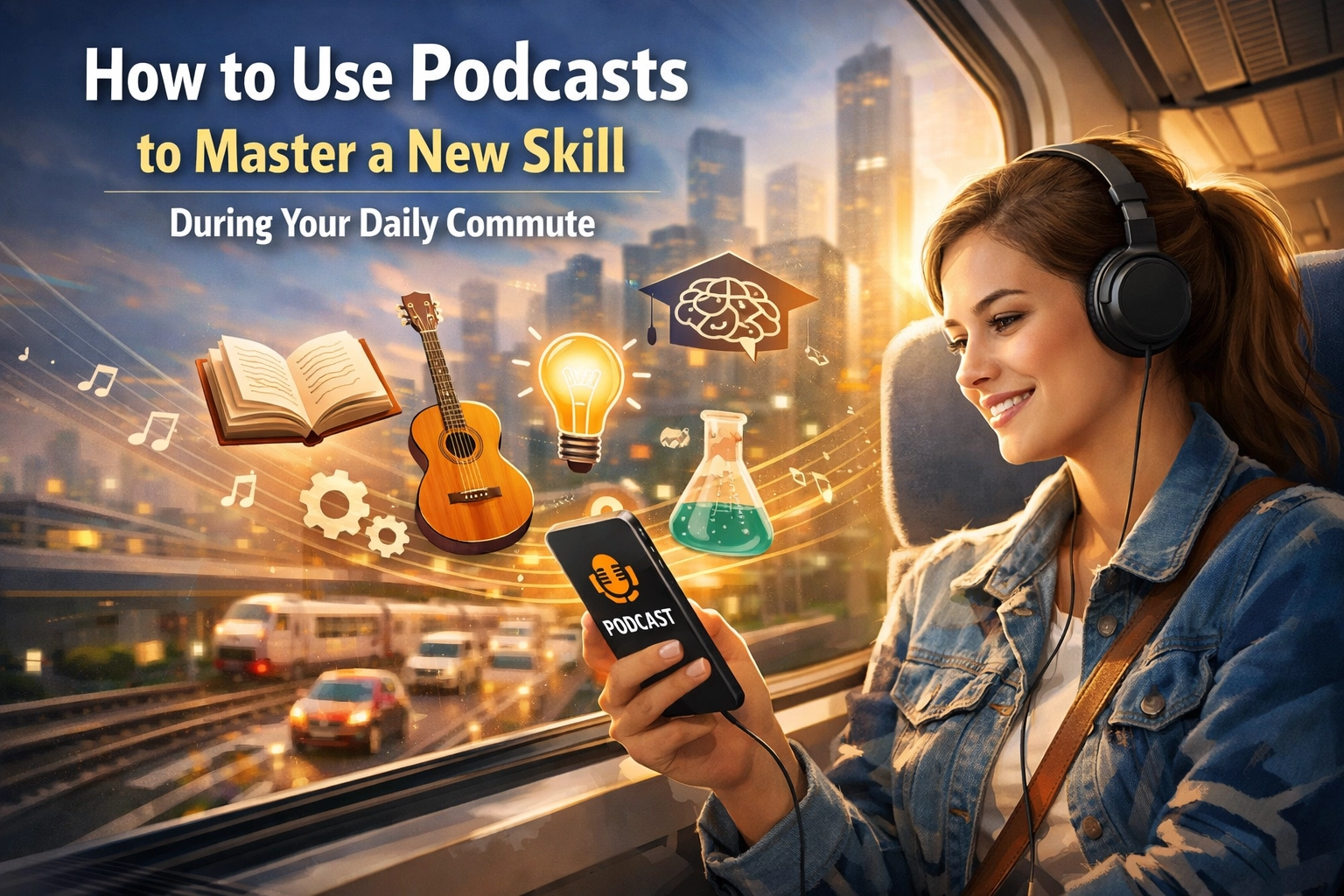
The average professional spends approximately 200 to 300 hours a year commuting. In the traditional sense, this is "dead time", a period of low-grade stress navigated through radio ads or the same Spotify playlist you’ve heard since 2024. However, if you are looking to pivot your career into AI, master a new language, or understand the intricacies of blockchain governance, your car or the subway is actually a mobile lecture hall.
In 2026, the barrier to "mastery" isn't access to information; it’s the ability to filter and retain it. Using podcasts for skill acquisition requires more than just hitting "play." It requires a structured, technical approach to audio consumption that moves from passive listening to active encoding.
The Neurobiology of the "Commute Academy"
To understand why podcasts are effective, we have to look at how the brain functions during repetitive tasks. Driving a familiar route or sitting on a train triggers the brain’s "Default Mode Network" (DMN). This is a state where the brain is on autopilot for the physical task but remains highly receptive to internal thought and external narrative.
By layering a high-density information source (a technical podcast) over a DMN-active task (commuting), you bypass the "resistance" many feel when sitting down at a desk to study. Data from 2025 learning habit studies suggest that "distributed practice", learning in small chunks over time, leads to 40% higher retention rates than "massed practice" (cramming). Your daily commute is the perfect vessel for distributed practice.

Step 1: Curating a Tiered Syllabus
You cannot learn Python by listening to a general "Tech Trends" podcast. You need to categorize your audio feed into three distinct tiers based on the cognitive load they require:
Tier 1: Narrative and Context (Low Cognitive Load)
These podcasts provide the "why" and the "who." They are great for the first five minutes of your drive when you're navigating heavy traffic.
- Examples: Freakonomics Radio, How I Built This, or The Daily.
- Goal: Build a mental map of the industry you are trying to enter.
Tier 2: Conceptual Frameworks (Medium Cognitive Load)
These episodes dive into specific theories, mental models, or high-level technical shifts.
- Examples: The Tim Ferriss Show (specifically technical interviews), The AI Alignment Podcast, or Masters of Scale.
- Goal: Understand the "how" behind the skill.
Tier 3: Technical Deep Dives (High Cognitive Load)
These are "audio-manuals." They might involve code-along descriptions, mathematical logic, or complex regulatory frameworks.
- Examples: Software Engineering Daily, Data Skeptic, or The Huberman Lab (for biological/performance skills).
- Goal: Learn the "what", the actual nuts and bolts of the skill.
Step 2: The 2026 Tech Stack for Audio Retention
In 2026, simply listening is the amateur's way. To master a skill, you need a technical workflow to capture "Aha!" moments without taking your hands off the wheel or your eyes off the road.
AI-Powered Transcription and Indexing
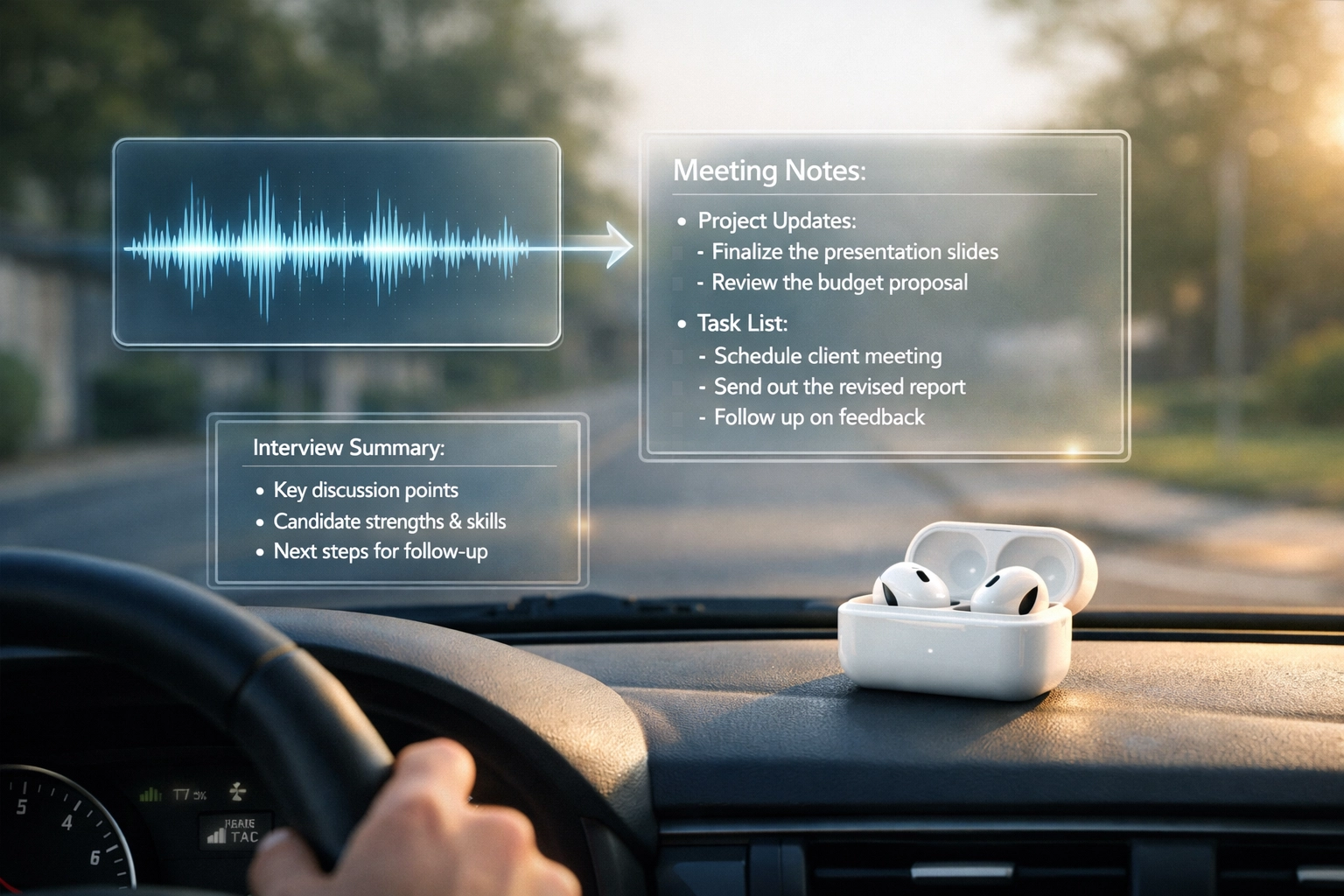
Don't use standard podcast apps like Apple Podcasts or Spotify if you’re serious about learning. Use tools like Snipd or Airr. These apps allow you to "snip" a segment of audio by tapping your headphones or using a steering wheel command.
- The Workflow: When the host explains a concept like "RAG (Retrieval-Augmented Generation)," you trigger a snip. The AI automatically transcribes that 60-second clip and syncs it to your Notion or Obsidian workspace.
Voice-to-Text Integration
If you have a thought or a question while listening, use a hands-free assistant. "Hey Gemini, take a note: Research the difference between Llama 3 and GPT-5 architecture mentioned in the podcast."
By the time you arrive at the office, you have a curated list of research topics that originated from your commute.
Step 3: Bridging the "Passive-Active" Gap
The biggest criticism of learning via podcasting is that it is passive. You aren't "doing." To turn a podcast into a mastery tool, you must implement a Commute-to-Keyboard pipeline.
The 10-Minute Reflection Rule
When you park your car or exit the train, do not immediately jump into your work emails. Spend 10 minutes in your notes app (using voice-to-text if necessary) summarizing the three most important points from the episode. This is "Active Recall": the single most effective way to move information from short-term to long-term memory.
Spaced Repetition via Audio
If you are learning a language or highly technical definitions, use a "Leitner System" for your podcasts. Re-listen to Tier 3 episodes exactly 48 hours after the first listen, and then again 7 days later. Data shows that this specific interval combats the "Ebbinghaus Forgetting Curve," ensuring that the technical details stick.
Matching Content to Commute Duration
A technical mismatch can ruin your learning momentum. If your commute is 15 minutes, trying to listen to a 3-hour Lex Fridman episode will leave you frustrated.
- Short Commutes (5–15 mins): Focus on "Micro-learning." Podcasts like The Indicator or Quick and Dirty Tips are designed for this. Alternatively, listen to the "Summary" version of longer podcasts provided by AI tools.
- Medium Commutes (20–40 mins): This is the sweet spot for The Daily Stoic or specialized industry updates. You can finish exactly one "thought" or one "lesson."
- Long Commutes (45+ mins): This is your "University Lecture" time. Dive into the deep technical stuff. Use the length to get into a "flow state" of listening.

Overcoming the "Distraction" Factor
Learning while commuting is technically a form of multi-tasking. While the DMN helps, safety is paramount.
- Variable Speed: Most high-level learners listen at 1.5x or 2.0x speed. However, for new skills, research suggests 1.2x is the limit before retention drops significantly. If the topic is technical, stay at 1.0x.
- Sound Quality: Invest in active noise-canceling (ANC) headphones (if on public transit) or a high-quality car audio interface. Cognitive load increases when the brain has to "fill in the gaps" of poor audio quality, leaving less energy for actual learning.
Case Study: From Retail to Junior Data Analyst in 6 Months
Consider "Sarah," a retail manager in 2025 who used her 45-minute commute to master Data Science.
- Month 1-2: Listened to Data Science Imposter to understand the career landscape (Tier 1).
- Month 3-4: Listened to Linear Digressions to understand the math and logic (Tier 2).
- Month 5-6: Used Snipd to capture specific Python library mentions in Talk Python to Me (Tier 3), which she then practiced on her laptop for 30 minutes every evening.
Sarah didn't find "extra time" to learn; she simply reclaimed the 7.5 hours a week she was already spending in her car.
Final Thoughts: The Compounding Interest of Audio
Mastery is a game of volume. If you listen to one hour of educational content every workday, you are consuming 260 hours of high-level instruction per year. That is equivalent to roughly six college-level courses. In an era where AI is shifting the job market every few months, the ability to turn "transit time" into "training time" isn't just a life hack: it's a career necessity.
Stop listening to the news. The news will be the same tomorrow. Start listening to the skills that will make your "tomorrow" look different.
About the Author: Malibongwe Gcwabaza
Malibongwe Gcwabaza is the CEO of blog and youtube and a leading voice in the "New Education" movement. With a background in executive leadership and digital strategy, Malibongwe focuses on how professionals can leverage emerging technologies: from Agentic AI to advanced neuro-learning techniques: to stay competitive in a rapidly evolving global economy. He believes that the future of work belongs to those who treat every "gap" in their day as an opportunity for growth.
About the Author