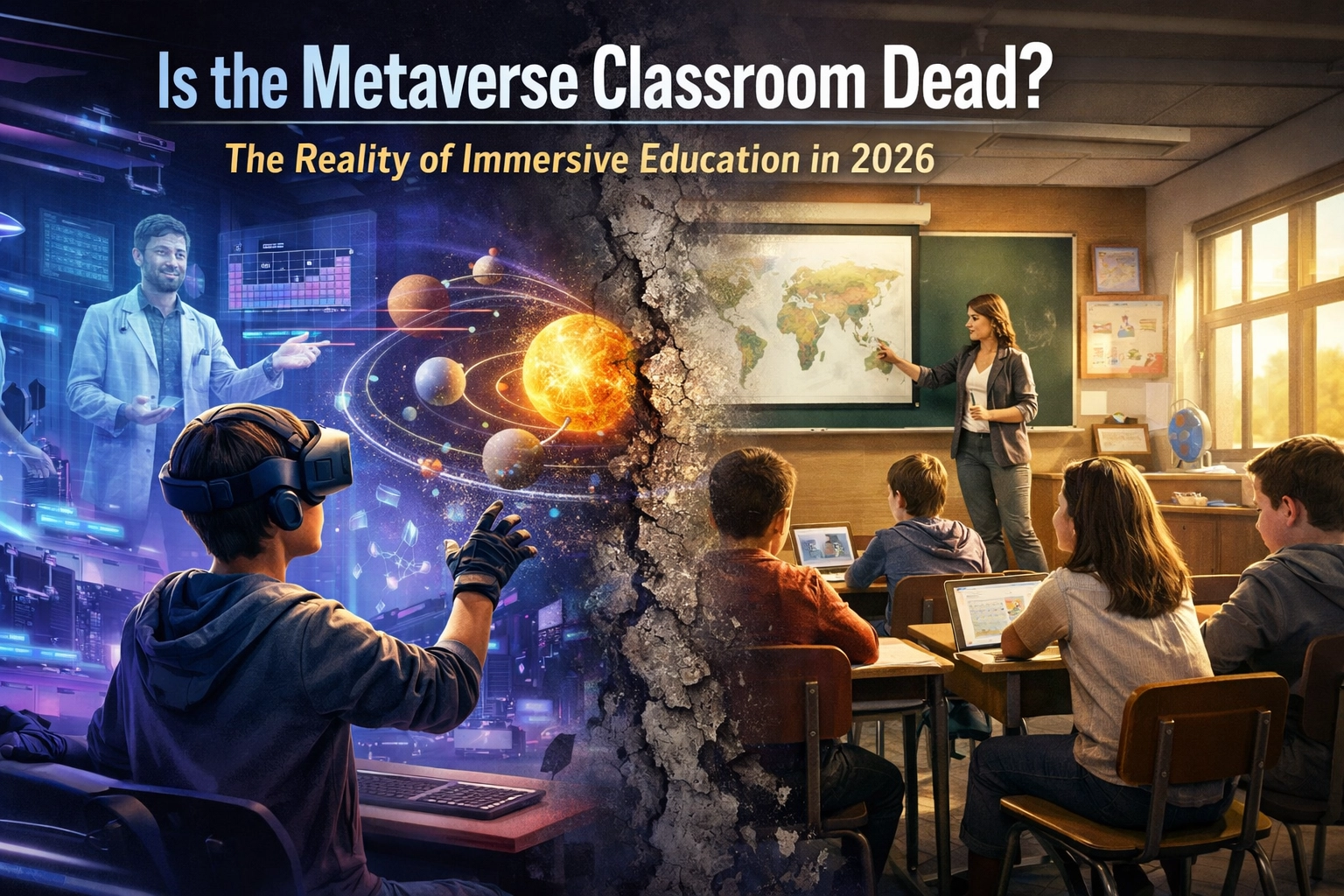
By mid-2022, the "Metaverse" was the tech world’s favorite punching bag. Critics pointed to legless avatars and billion-dollar losses as proof that the dream of a virtual world was a Silicon Valley hallucination. Fast forward to March 2026, and the conversation has shifted. We no longer talk about "The Metaverse" as a singular, cartoonish destination. Instead, we talk about Spatial Computing and Immersive Learning Environments (ILEs).
If you’re asking whether the 2021 version of the metaverse classroom: the one where we all wore bulky plastic goggles to sit in a low-resolution virtual lecture hall: is dead, the answer is a resounding yes. It died because it was redundant. However, the reality of immersive education in 2026 is more vibrant, technical, and profitable than anyone predicted during the hype cycle.
The Shift from "Virtual" to "Spatial"
In 2026, the breakthrough isn't just the hardware; it's the integration. The release of high-end spatial headsets from Apple, Sony, and Samsung over the last two years has moved us away from "VR fatigue." We’ve transitioned from Virtual Reality (total isolation) to Mixed Reality (MR), where digital objects coexist with the physical classroom.
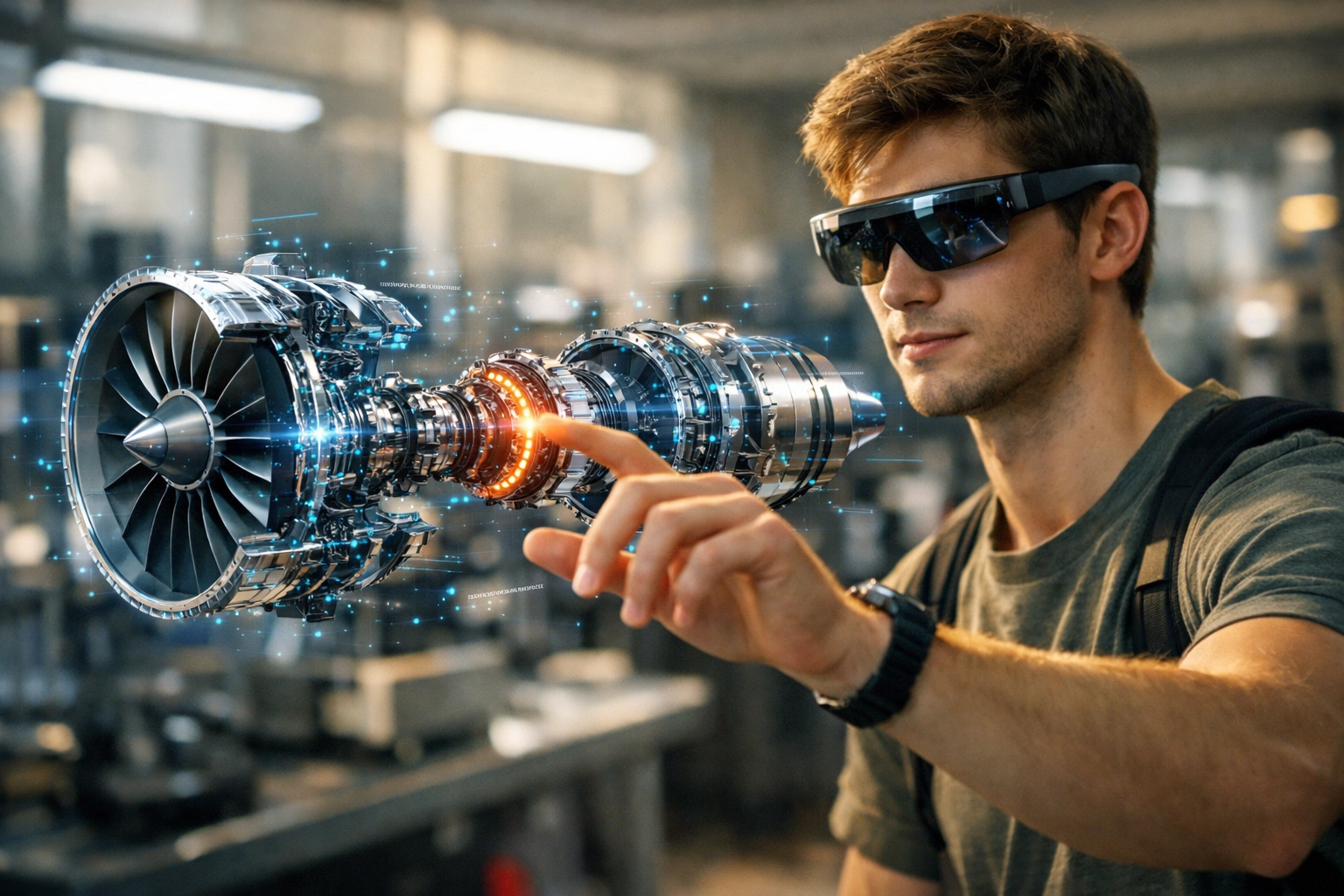
Educational institutions are no longer trying to recreate a mahogany-rowed library in 3D. Instead, they are using spatial computing to do things that are impossible in the physical world. Engineering students at MIT now deconstruct "Digital Twin" jet engines in mid-air, while medical students at the University of Cape Town perform simulated surgeries where the haptic feedback is indistinguishable from real tissue.
Data-Driven Results: Why Institutions are Investing
The move toward immersive education isn't just about "cool" tech; it’s driven by cold, hard data regarding knowledge retention and ROI. According to 2025-2026 longitudinal studies, the efficacy of these platforms has finally been quantified:
- Retention Rates: A Stanford University meta-analysis found that VR-based learning protocols in STEM subjects resulted in a 75% higher retention rate compared to traditional video or textbook-based learning.
- Speed of Mastery: Data from corporate training giants suggests that VR learners complete their training up to 4 times faster than those in a traditional classroom setting. For a company training 5,000 employees, this represents a massive reduction in "time-to-productivity."
- Cost Parity: While the initial setup for an MR lab is high, the "break-even" point has dropped significantly. In 2026, immersive training becomes more cost-effective than physical classroom learning once a cohort reaches 375 learners. By the time you scale to 3,000 learners, the cost-per-student is 52% lower than traditional methods.
The "Industrial Metaverse" in Trade Schools
While traditional universities were slow to pivot, trade schools and vocational centers have become the biggest success stories of 2026.
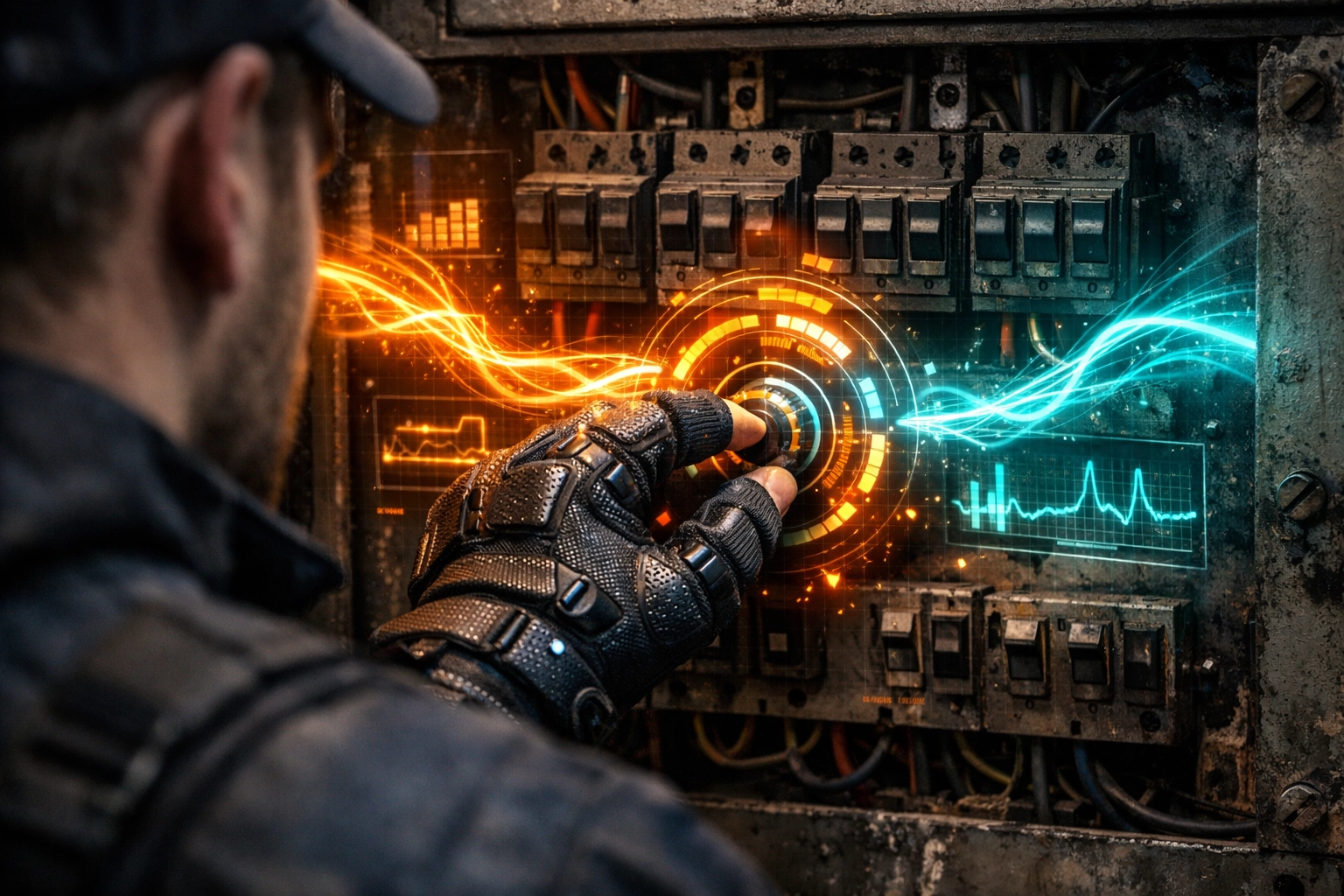
Electricians, HVAC technicians, and underwater welders are now doing 80% of their "lab hours" in high-fidelity simulations. This solves two massive problems: safety and equipment costs. A student can "short-circuit" a virtual high-voltage panel a hundred times until they master the safety protocol without a single real-world injury or a cent spent on blown fuses.
This "Industrial Metaverse" is where the high-CPC (Cost Per Click) ad revenue is currently flowing. Companies are desperate for technicians who are "Simulation Certified," leading to a surge in specialized EdTech platforms that cater specifically to the blue-collar tech sector.
Accessibility and the "Global Campus"
One of the most significant wins for 2026’s immersive education model is the dismantling of geographical barriers. Through platforms like Horizon Mesh and the Open-Source Metaverse Project (OSMP), a student in a rural village in the Eastern Cape can sit in the same "spatial room" as a professor in London.
This isn't just a Zoom call on steroids. These environments use Spatial Audio and AI-driven Real-Time Translation. When the professor speaks in English, the student hears it in isiXhosa with near-zero latency, and the spatial audio ensures that if the professor walks to the left side of the virtual chalkboard, the sound moves accordingly in the student’s headset. This level of presence is what makes immersive education "sticky" compared to the high drop-out rates of traditional MOOCs (Massive Open Online Courses).
The AI Integration: Personalized Tutors
In 2026, the metaverse classroom is inseparable from Generative AI. Every student in an immersive environment now has a "Learning Agent": an AI tutor that monitors their eye movements and biometric data (via headset sensors) to detect frustration or boredom.
If a student is struggling with a calculus concept, the environment changes in real-time. The AI might visualize the equation as a 3D physical structure that the student can manipulate. This level of hyper-personalization was the "Holy Grail" of education for decades; in 2026, it’s a standard API integration for most immersive platforms.

Critical Challenges: The "Digital Divide" and Hardware Fatigue
Despite the growth, it’s not all sunshine and silicon. The "Metaverse is Dead" narrative persists in 2026 because of two major hurdles:
1. The Socio-Economic Gap
While the cost of headsets has dropped (you can now get a baseline "Education Edition" MR headset for about $299), the high-speed, low-latency internet required to run these environments is not universal. We are seeing a "Digital Divide 2.0," where students with fiber-optic connections have a massive competitive advantage over those on legacy 4G or unstable satellite links.
2. Physical Constraints
"Simulator Sickness" is still a reality for about 12% of the population. Furthermore, educators have realized that 8-hour days in a headset are unsustainable. The 2026 "best practice" has shifted to a Hybrid 20/80 Model: 20% of the week is spent in high-intensity immersive simulations, while 80% remains focused on collaborative human interaction, reading, and physical experimentation.
The Verdict: Not a Replacement, but an Essential Layer
Is the metaverse classroom dead? No. It has simply matured. It has stopped trying to be a "second life" and started being a "better tool."
In 2026, we don't "go into the metaverse" to learn; we use immersive layers to enhance our understanding of the physical world. The market growth of $29.92 billion projected by 2032 isn't coming from people buying virtual land: it's coming from hospitals, flight schools, and universities buying the software and hardware needed to train the next generation of professionals more effectively.
For creators and educators, the opportunity lies in Generative Engine Optimization (GEO) and creating "Spatial Assets." The demand for 3D educational content is currently outstripping supply, making it one of the most lucrative niches in the 2026 digital economy.

About the Author: Malibongwe Gcwabaza
Malibongwe Gcwabaza is the CEO of blog and youtube, a forward-thinking media house specializing in the intersection of emerging technology and economic empowerment. With over a decade of experience in digital strategy and a focus on the African tech ecosystem, Malibongwe has become a leading voice on how AI and spatial computing are reshaping the workforce in 2026. He believes that technology should be "simple, accessible, and ROI-driven" for the modern solopreneur. When he isn't analyzing AdSense trends or testing the latest MR hardware, he is advocating for better digital infrastructure across the continent.
About the Author