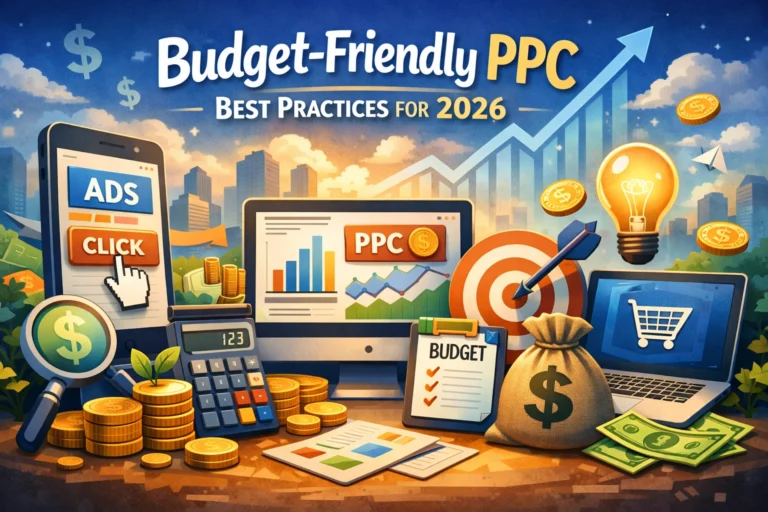
If you’re still treating your PPC campaigns like it’s 2018, you’re likely burning money. Back then, we obsessed over "Exact Match" like it was a holy relic. We thought if we could just find that one perfect phrase, the sales would roll in forever. But as we move through 2026, the game has fundamentally changed. The algorithms are smarter, the users are more unpredictable, and the sheer volume of "noise" on the internet is at an all-time high.
Keyword targeting in 2026 isn't just about the words people type; it’s about why they’re typing them. We’ve moved from rigid matching to intent-based targeting. If you want to keep your Cost Per Acquisition (CPA) low and your Return on Ad Spend (ROAS) high, you need to understand the psychology behind the search bar.
The Death of Rigid Matching: Why Intent is King
In the past, Google and Bing would look for a direct string of text. Today, AI-driven search engines use semantic understanding to figure out what a user actually needs. This is a massive shift.
For example, if someone searches for "emergency power fix," they aren't looking for a blog post about how electricity works. They have a blown fuse or a downed line, and they need a technician now. In 2026, your PPC strategy needs to reflect this. Your ad copy shouldn't just repeat the keyword; it should solve the problem. Instead of "We Do Power Fixes," your headline should be "Electrician at Your Door in 30 Minutes."

Focusing on intent allows you to capture high-value traffic that your competitors might miss because they’re too busy bidding on generic, high-volume terms that don't actually convert.
A Modern Framework for Keyword Research
You can't rely on a single tool anymore. To build a robust keyword list for 2026, you need to pull data from multiple "watering holes."
- Auto Campaign Mining: Run "catch-all" auto campaigns with a small budget. These are essentially your research labs. They’ll surface search terms you never would have thought of.
- Marketplace Analytics: Use Amazon Brand Analytics or similar tools. People search differently when they are on a shopping platform versus a general search engine. This gives you a direct look at "buyer intent" language.
- Reverse Engineering Competitors: Use tools to see what keywords your competitors are consistently bidding on. If they’ve been bidding on a term for six months, it’s probably profitable.
- Google Trends and External Search Data: PPC doesn't exist in a vacuum. If a certain topic is spiking on social media, it will hit the search bars within hours.
The Power of Long-Tail Keywords
While everyone is fighting over "running shoes," the real profit is in "breathable trail running shoes for wide feet." These long-tail keywords have lower competition, lower CPCs, and: most importantly: significantly higher conversion rates. By the time someone is that specific, they’ve already decided to buy; they just need to find the right store.
The Tiered Bidding Strategy: Exact, Phrase, and Broad
Organizing your campaigns is half the battle. In 2026, we recommend a layered approach. You shouldn't treat all match types the same. Each has a specific job to do in your ecosystem.
| Match Type | Role in 2026 | Bidding Priority |
|---|---|---|
| Exact Match | Scaled performance for proven winners. | Highest. These are your "bread and butter" terms. |
| Phrase Match | Scaled variations and new discoverability. | Medium. Allows for flexibility while keeping guardrails. |
| Broad Match | Pure discovery and large-scale data collection. | Low. Use this to find new trends without overspending. |

The goal is to move keywords "up the ladder." You discover them in Broad, validate them in Phrase, and once they prove they can convert at a profit, you move them to Exact Match with a higher bid to dominate the top-of-page placement.
Weekly Bid Audits: The Pulse of Your Campaign
Set it and forget it is a myth. Even with AI bidding, you need human oversight. A weekly audit is the minimum requirement to ensure your budget isn't being siphoned off by low-quality clicks.
When to Increase Bids
If a keyword has a low Advertising Cost of Sale (ACOS) and is consistently hitting its targets, feed it more. Most people stop when they reach their target, but if a keyword is profitable, you should be testing the limits of its volume. Increase the bid by 10-15% and see if the conversion rate holds.
When to Decrease Bids
If a keyword has high spend but zero conversions over a 30-day window, it’s time to cut it or significantly lower the bid. Don't let "ego keywords" (terms that sound cool but don't sell) ruin your margins.
Placement Analysis
Are you paying too much for "Top of Search"? Sometimes, being in position 2 or 3 offers a much better ROAS than fighting for position 1. Review your placement reports to see where your conversions are actually coming from. Often, the "cheaper" sidebar or bottom-of-page placements can be surprisingly effective for certain niches.

The "Negative" Goldmine: Saving Your Budget
In 2026, what you don't bid on is just as important as what you do. Negative keywords are your best friend. Every time you see a search term in your report that is irrelevant, add it to your negative list immediately.
Common culprits include:
- "Free" (unless you actually offer something for free)
- "Cheap" (if you are a luxury or premium brand)
- "Jobs" or "Hiring" (unless you are a recruiter)
- "Review" or "How to" (if you are looking for buyers, not researchers)
By aggressively filtering out the noise, you ensure that every dollar of your budget is aimed at someone with a credit card in their hand, not someone just browsing the web.
Quality Over Volume: The 100 vs. 1,000 Rule
It is a common mistake to chase traffic for the sake of traffic. In the PPC world, 100 highly-targeted visitors who understand your value proposition are worth significantly more than 1,000 random visitors who clicked because your ad was vague.
In 2026, use Customer Match lists and CRM data to build audience segments. Tell the platform, "Find me more people like my best customers." When you combine high-intent keywords with a defined audience segment, you’re no longer just "bidding": you’re sniping.

Bridging the Gap: PPC and SEO Integration
Your paid search data shouldn't stay in a silo. It is the most expensive and most accurate market research you will ever conduct. If you find that a specific long-tail keyword is converting like crazy in your PPC campaigns, that is a massive signal for your SEO team.
Create dedicated organic content for those high-performing keywords. Eventually, you want to own the top of the search results both organically and through paid ads. This "double-dipping" increases brand trust and makes it nearly impossible for a competitor to steal that lead.
Final Thoughts for 2026
PPC is no longer a game of who has the biggest budget; it’s a game of who has the best data and the most agility. Focus on intent, structure your campaigns for growth, and never stop auditing your bids. The landscape will continue to shift, but if you stay rooted in these best practices, your ROI will follow.
About the Author: Malibongwe Gcwabaza
Malibongwe Gcwabaza is the CEO of blog and youtube, a leading digital strategy firm specializing in high-impact content and performance marketing. With over a decade of experience in the evolving search landscape, Malibongwe helps brands navigate the complexities of AI-driven advertising and organic growth. When he's not diving deep into data analytics, he's exploring the latest trends in video content and digital storytelling.
About the Author