If you’re still trying to manage your PPC campaigns the way you did in 2022, I have some bad news: you’re likely burning money. The digital advertising landscape has shifted from "manual control" to "algorithmic steering." In 2026, the game isn't about who can find the best negative keywords or who has the tightest SKAGs (Single Keyword Ad Groups). It’s about who provides the best data to the AI and who has the most compelling creative.
At LearnRise, we’ve been watching these trends closely. The shift toward automation isn't just a feature anymore; it’s the entire engine. Whether you’re running Google Ads, Meta Ads, or dipping your toes into TikTok’s advanced commerce features, the rules of engagement have changed.
Here are the 10 PPC best practices for 2026 that you need to master to stay ahead of the curve.
1. Mastering the "Steering" of Performance Max (PMax)
By now, Performance Max is the standard for most Google Ads accounts. But in 2026, we’ve moved past the "set it and forget it" phase. The best practitioners are no longer just letting the AI run wild; they are "steering" it with high-quality signals.
The secret sauce in 2026 is Search Themes and Brand Exclusions. Originally, PMax was a bit of a black box, making it hard to keep your ads away from junk traffic. Now, you must use Search Themes to provide the AI with intent signals it might miss. If you’re selling high-end leather boots, you don't just hope the AI finds the right people: you feed it themes like "handcrafted luxury footwear" and "sustainable men's fashion" to narrow the search.

2. Transitioning to a Post-Cookie Audience Strategy
The "Cookie Apocalypse" finally happened, and if you weren't prepared, your retargeting lists probably look pretty thin. In 2026, PPC success relies almost entirely on First-Party Data.
You shouldn't be relying on pixel-based tracking alone. The best practice now is implementing Enhanced Conversions and Server-Side Tracking. By sending hashed customer data (like email addresses or phone numbers) directly from your server to the ad platform, you bypass browser restrictions. This gives the AI the "feedback loop" it needs to understand who actually bought your product, rather than just who clicked a link.
3. Creative is the New Targeting
In the old days, you used complex interest stacks and keyword combinations to find your audience. In 2026, the algorithm does that for you based on your creative.
If your ad features a video of a professional chef using a specific knife, the platform’s vision AI analyzes that content and shows it to people who watch cooking shows. Your "targeting" happens within the asset itself. This means your primary job is no longer "media buyer": it’s "creative strategist." You need a high volume of varied assets (static, vertical video, carousels) to let the platform test which one resonates with which sub-segment of your market.
| Asset Type | Primary Role in 2026 |
|---|---|
| Short-form Vertical Video | Top-of-funnel awareness and TikTok/Reels placement |
| User-Generated Content (UGC) | Social proof and high-trust conversion |
| High-Res Product Stills | Retargeting and "catalog" style shopping ads |
| AI-Generated Variations | Testing minor tweaks in messaging at scale |
4. Leveraging AI-Driven Ad Copy (The Right Way)
We’ve moved past the "Write me a Google Ad" prompt. In 2026, the best practice is to use AI to generate dynamic variations based on real-time search intent.
Instead of writing three static headlines, you’re now feeding the ad platform's built-in LLMs (Large Language Models) your brand’s "Core Value Propositions." The AI then assembles the ad on the fly. However, the trap is letting it get generic. You must provide the AI with unique, punchy brand "hooks" that it can’t invent on its own. Use your customer reviews to feed the AI specific language your customers actually use.
5. Moving to Predictive Audience Targeting
Stop looking at what your customers did yesterday and start looking at what they’ll do tomorrow. Predictive modeling is now built into most major PPC platforms.
In 2026, we use "Predictive Audiences" to target users who are likely to churn or users who have a high Predicted Lifetime Value (pLTV). If the AI flags a user segment as having a high probability of purchasing within the next 7 days, your bids should automatically scale to capture that intent. This requires your CRM (like HubSpot or Salesforce) to be tightly integrated with your ad accounts.

6. The Rise of "Zero-Click" PPC Awareness
Not every click is a win, and not every win requires a click. With the rise of AI Overviews in search results, many users get their answers without ever leaving the search page.
In 2026, PPC best practices include Demand Capture via Impressions. You want your brand name and your value prop to appear in the "Sponsored" section of the AI Overview. Even if the user doesn't click, that high-intent placement builds brand equity. We call this "Invisible Attribution." You might see your direct traffic spike even if your CTR (Click-Through Rate) on search ads seems lower than in previous years.
7. Hyper-Local SEO and PPC Integration
Local businesses are seeing a massive shift toward "Near Me" searches being handled by voice and AI assistants. In 2026, your PPC strategy must be synced with your Local Services Ads (LSAs).
If you're a service provider, your PPC budget should shift dynamically based on your physical location and real-time availability. Using "Location Groups" in PMax allows you to push ads harder for specific storefronts that are underperforming that week.
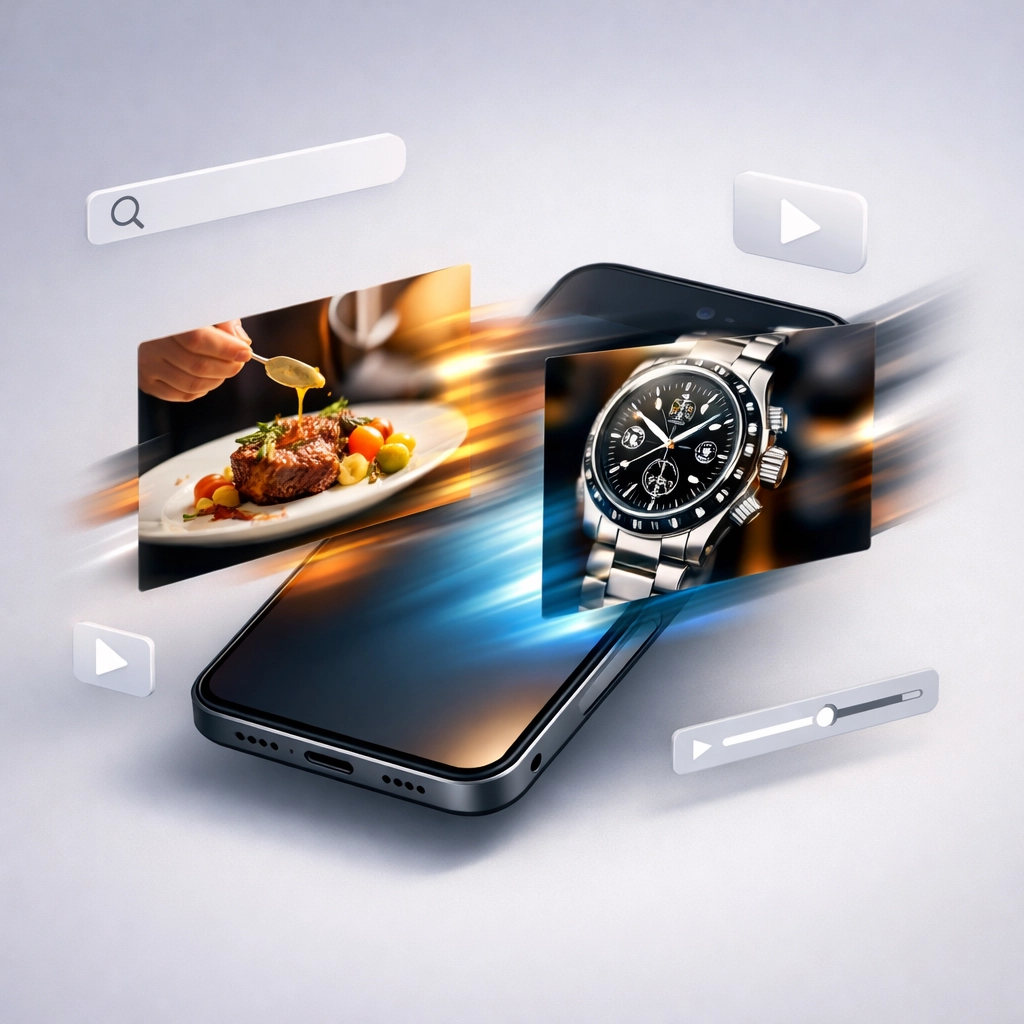
8. Video-First Search Ads
Search isn't just text anymore. When someone searches for "how to fix a leaky faucet" in 2026, they are just as likely to see a video ad at the top of the search results as they are a text link.
The best practice here is to ensure every Search campaign has a Video Extension. Google and Bing are increasingly favoring "rich results." If you have a 15-second explainer video attached to your search ad, your "Quality Score" (or the 2026 equivalent: Ad Relevance Score) will skyrocket, leading to lower Costs Per Click (CPCs).
9. Profit-Based Bidding (Beyond ROAS)
Revenue is a vanity metric; profit is sanity. In 2026, top-tier advertisers have moved away from simple Target ROAS (Return on Ad Spend) and toward Profit-Based Bidding.
By uploading your Cost of Goods Sold (COGS) into your ad platform, you can tell the AI to maximize gross profit rather than just total sales value. This prevents the algorithm from spending $50 to sell a $100 product that only has a $10 margin. It’s a more sophisticated way to ensure your PPC spend is actually growing the business, not just the top-line numbers.
10. The Human Element: The "Pilot" Role
With all this automation, what do you actually do all day? Your role in 2026 is the Pilot. The AI is the plane: it’s great at flying and maintaining altitude, but it’s terrible at deciding where to go or how to handle an emergency.
Human oversight involves:
- Budget Guardrails: Ensuring the AI doesn't spend 80% of your budget on a "glitch" search term.
- Offer Innovation: The AI can’t invent a "Buy One, Get One" holiday special. You have to feed it the offer.
- Negative Feedback Loops: Telling the AI when a conversion is "bad" (e.g., a lead that never picks up the phone).
Why LearnRise Focuses on These Shifts
At LearnRise, we believe that the faster you adapt to these automated systems, the faster you can get back to what matters: growing your brand and talking to your customers. PPC isn't a "set it and forget it" tool; it's a living ecosystem that requires a mix of data science and creative art.
The biggest mistake you can make in 2026 is trying to fight the AI. Instead, learn to speak its language. Feed it better data, give it better videos, and watch your acquisition costs drop.
About the Author: Malibongwe Gcwabaza
Malibongwe Gcwabaza is the CEO of LearnRise, a platform dedicated to helping businesses and individuals master the digital skills required for the 2026 economy. With over a decade of experience in digital marketing and business scaling, Malibongwe focuses on simplifying complex technologies so that everyone: from small business owners to marketing pros: can thrive in an automated world. When he's not looking at ROAS graphs, he's likely exploring the latest in AI-driven education.
About the Author