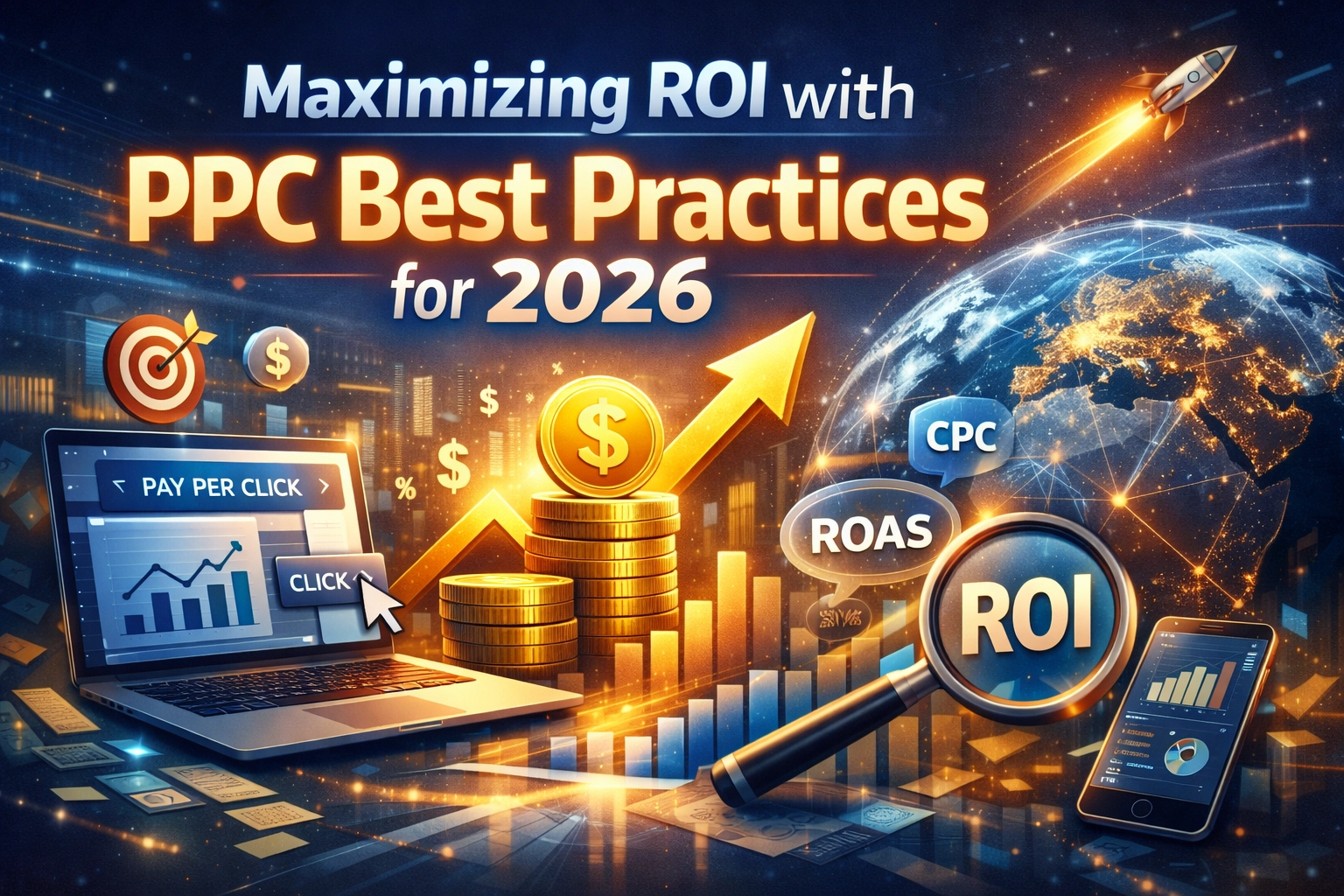
By March 2026, the world of Pay-Per-Click (PPC) advertising has shifted from a game of "who can bid the highest" to "who has the cleanest data." If you’re still trying to manually tweak keyword bids every hour, you’re not just behind: you’re losing money. The machines have taken over the heavy lifting, but that doesn't mean you can just set it and forget it.
The goal for 2026 is high-efficiency ROI. We are moving away from vanity metrics like click-through rates (CTR) and focusing strictly on what hits the bank account: Customer Lifetime Value (LTV) and Contribution Margin. This guide breaks down the core pillars of PPC success in this AI-driven landscape, focusing on data quality, conversion optimization, and the technical bridge between a click and a sale.
The Data-First Foundation: Garbage In, Garbage Out
In 2026, Google, Meta, and TikTok’s algorithms are incredibly powerful, but they are only as smart as the data you feed them. If your tracking is broken or your "conversion" signals are weak (like tracking "page views" as a lead), the AI will optimize for people who like to browse, not people who like to buy.
1. Prioritize First-Party Data
With the final death of third-party cookies and increased privacy regulations (like GDPR and CCPA updates), your first-party data is your most valuable asset.
- Customer Lists: Upload your hashed customer emails to create "lookalike" or "advantage+" audiences.
- Enhanced Conversions: Ensure you have enhanced conversions set up to capture data gaps left by cookie consent banners.
- Offline Conversion Tracking (OCT): This is the holy grail. If you’re in B2B or high-ticket sales, you need to feed your CRM data back into the ad platform. Tell the algorithm which leads actually turned into $50,000 contracts, not just who filled out a form.
2. Feedback Loops and Lead Scoring
Don't just track the "Thank You" page. Implement a scoring system. If a lead downloads a whitepaper, that’s a low-value signal. If they book a demo, that’s a high-value signal. By weighting these conversions differently, you teach the PPC platform to spend your budget on "ready-to-buy" users.

Creative as the New Targeting
Remember when we used to spend hours on "narrowing interests" and "granular keyword groups"? In 2026, the creative is the targeting. Algorithms now analyze the text in your images, the script in your videos, and the hooks in your copy to determine who should see your ad.
Video-First Strategies
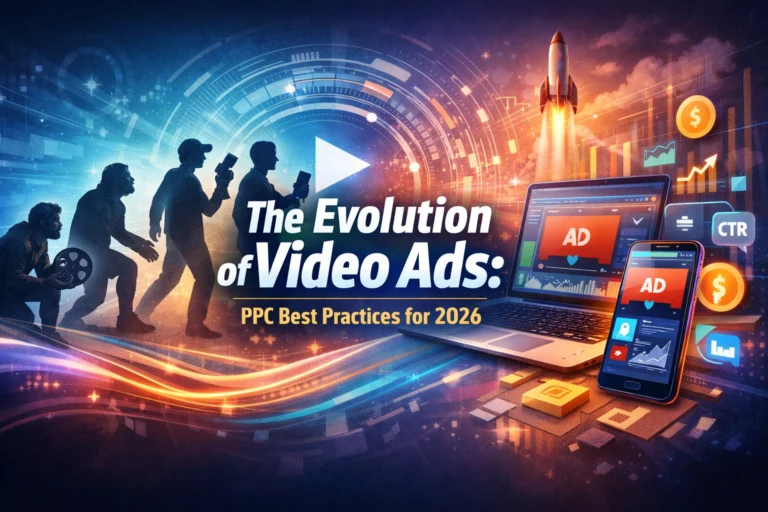
Static images still have a place, but short-form video (YouTube Shorts, Reels, TikTok) is the dominant driver of ROI. For 2026, your PPC creative needs to be:
- Platform-Native: It shouldn't look like an ad. It should look like a piece of content.
- Fast-Paced: You have approximately 1.5 seconds to stop the thumb-scroll.
- Value-Heavy: Show the solution immediately.
Dynamic Creative Optimization (DCO)
Use the platform’s tools to mix and match headlines, descriptions, and visuals. However, the "best practice" now is to provide 3-5 distinct creative "angles" (e.g., one focusing on price, one on fear of missing out, one on social proof) rather than 50 tiny variations of the same thing.
Landing Page Design and CRO: The ROI Multiplier
You can have the best ads in the world, but if your landing page looks like it was built in 2015, your ROI will stay in the gutter. Conversion Rate Optimization (CRO) is no longer a "nice to have"; it is the engine of PPC.
1. Speed is Non-Negotiable
In 2026, if your page takes longer than 1.2 seconds to load on a 5G connection, your bounce rate will skyrocket. Use lightweight frameworks, optimized images, and edge delivery (CDNs) to make sure your page is instant.
2. Intent-Based Personalization
A user clicking an ad for "Best SEO Tools" should see a different headline than a user clicking "Affordable SEO for Small Business." Use dynamic text replacement to match the landing page headline to the search query. This "message match" reduces friction and increases trust instantly.
3. Frictionless Conversion Paths
- One-Tap Signups: Use Google or Apple ID sign-ins to remove form-filling friction.
- Predictive Search: If you have a large catalog, make it easy for them to find exactly what was in the ad.
- Mobile-First Design: 80% of your PPC traffic is likely mobile. Design for the thumb, not the mouse.
| Element | Old Way (2022) | 2026 Best Practice |
|---|---|---|
| Forms | 10+ fields for "data" | 2-3 fields + Social Sign-on |
| Social Proof | Static logos | Video testimonials & live purchase feeds |
| Mobile | Responsive (fits screen) | Mobile-native (bottom navigation) |
| CTAs | "Submit" or "Buy Now" | Value-driven: "Get My Free Plan" |

Mastering Cross-Channel Attribution
The customer journey is no longer linear. A user might see a YouTube ad on their TV, search for you on their phone two days later, click a Meta retargeting ad on their laptop, and finally convert. If you only look at "Last-Click" attribution, you’ll think Meta did all the work and YouTube was a waste of money.
Data-Driven Attribution (DDA)
Move away from Last-Click or First-Click models. Use Data-Driven Attribution, which uses machine learning to assign fractional credit to every touchpoint. This gives you a holistic view of which channels are actually feeding the top of your funnel.
The Rise of "Media Mix Modeling" (MMM)
For larger budgets, 2026 has seen a return to MMM. Since we can't track every single user perfectly due to privacy laws, MMM uses statistical analysis to see how changes in spend across different channels correlate with total revenue. It’s "old school" logic updated with AI, and it’s essential for scaling.
AI Automation: Steering the Ship
Performance Max (P-Max) and Advantage+ campaigns are the standard now. The biggest mistake marketers make in 2026 is fighting against these automated campaign types. Instead, you need to provide the "guardrails."
- Negative Keyword Themes: While you can't see every search term in P-Max, you must use account-level negative keywords to prevent your ads from showing up on "junk" searches or brand-damaging sites.
- Brand Exclusions: Ensure you aren't paying for clicks on your own brand name if you already dominate the organic search results, unless competitors are bidding against you.
- Budget Fluidity: Don't silo your budgets too strictly. If your AI-driven campaign is seeing a spike in ROI on a Tuesday afternoon, your budget should be flexible enough to capture that demand.

Predictive Analytics for PPC
The most advanced PPC teams in 2026 are using predictive analytics to stay ahead of the curve. This involves using historical data to forecast:
- Seasonality: Knowing exactly when to ramp up spend before the trend hits.
- Churn Prediction: Identifying which "clicks" are likely to result in a one-time purchase vs. a long-term subscriber.
- Inventory-Based Bidding: Linking your PPC ads to your warehouse stock. If a product is low on stock, the script automatically lowers the bid to avoid wasting money on "Out of Stock" clicks.
Key Takeaways for 2026
- Data Quality is King: Feed the machine high-quality conversion data and offline signals.
- Creative is Targeting: Spend more time on video production and less time on manual keyword bidding.
- CRO is the ROI Lever: An optimized, lightning-fast landing page can double your ROI without increasing your ad spend by a single cent.
- Holistic Attribution: Stop looking at channels in a vacuum. Understand the full multi-device journey.
PPC in 2026 isn't about outsmarting the platform; it’s about out-preparing your competition. By focusing on the bridge between the ad and the sale: and ensuring the data flowing back to the platforms is pristine: you’ll maximize your ROI while others are still trying to figure out why their "exact match" keywords aren't working like they used to.
About the Author: Malibongwe Gcwabaza
Malibongwe is the CEO of LearnRise and a veteran in the digital marketing space. With over a decade of experience navigating the shifts from manual bidding to AI-driven automation, he focuses on helping businesses build sustainable, high-growth marketing engines. When he's not diving into data attribution models, he’s exploring the intersection of education and technology.
This was Article 20 of our 30-part series on mastering the digital landscape in 2026. Stay tuned for our next deep dive into Interactive Content Marketing.
About the Author