If you’re managing pay-per-click (PPC) campaigns today the same way you were two or three years ago, you’re likely watching your margins shrink while your cost-per-acquisition (CPA) climbs. By 2026, the PPC landscape has shifted from a game of manual keyword bidding to a complex ecosystem of AI signals, privacy-first data, and cross-channel integration.
The platforms have become "black boxes" in many ways. Google and Meta’s AI are more powerful than ever, but they are also hungrier for high-quality data. If you feed them junk, they’ll spend your budget finding more junk. To win in this environment, you have to stop acting like a tactical button-pusher and start acting like a data strategist.
Here are the seven most critical PPC mistakes we're seeing right now and exactly how to fix them to stay competitive in 2026.
1. Relying on "Dirty" Data and Surface-Level Metrics
The biggest mistake you can make in 2026 is trusting the default tracking provided by ad platforms without a secondary layer of validation. Relying solely on click-through rates (CTR) or platform-reported conversions is a recipe for disaster. Bots, "fat-finger" mobile clicks, and soft conversions (like newsletter signups that never buy) can trick AI models into thinking a campaign is successful when it’s actually bleeding money.
The Fix: Build a Robust Data Infrastructure
You need to move toward a "Privacy-First" tracking setup. This means implementing server-side tracking and Google Enhanced Conversions to capture data that browser-based cookies miss. More importantly, you must deduplicate your events.
| Metric Type | What to Ignore (Surface) | What to Track (Deep Value) |
|---|---|---|
| Conversion | PDF Downloads / Page Views | Qualified Leads / Sales |
| Data Source | Browser Pixel Only | Server-Side + CRM Uploads |
| Optimization | Cost Per Click (CPC) | Profit Per Click / LTV |
By importing offline revenue data from your CRM (like HubSpot or Salesforce), you tell the AI exactly which clicks turned into actual cash. This allows the algorithm to ignore low-value users and focus its bidding power on high-intent prospects.

2. Clinging to Legacy Keyword-Heavy Workflows
We still see accounts structured with hundreds of "Single Keyword Ad Groups" (SKAGs). In 2026, this level of granular manual control is actually counter-productive. When you split your data into tiny buckets, you prevent the platform’s AI from reaching "statistical significance." You’re essentially starving the machine of the data it needs to learn.
The Fix: Shift to Full-Funnel Campaign Architecture
Modern PPC requires a "Power Structure." Instead of obsessed-over individual keywords, focus on intent clusters.
- Consolidate: Merge small ad groups into larger ones to give the AI more data per group.
- Intent-Based Targeting: Use Broad Match in combination with Smart Bidding. This sounds scary to old-school marketers, but in 2026, Google’s understanding of user intent is so advanced that Broad Match: when paired with a strong negative keyword list: often outperforms Exact Match by finding long-tail queries you never would have thought of.
- Performance Max (PMax): Use PMax as a "catch-all" but feed it high-quality creative assets and specific audience signals to keep it on track.
3. Treating the Landing Page as an Afterthought
You can have the best ad in the world, but if your landing page takes four seconds to load or doesn't immediately solve the user's problem, you’ve wasted your money. In 2026, the "Post-Click Experience" is a primary factor in your Quality Score and your bottom line.
The Fix: Optimize for Speed and Trust
Your landing page needs to be a conversion machine. This isn't just about design; it’s about technical performance and psychological triggers.
- Load Speed: Use compressed WebP images and minimal JavaScript. If your page isn't "Green" on Google PageSpeed Insights, you’re paying a "slow tax" on your CPCs.
- Message Match: If your ad promises "Affordable SEO Tools," the first headline the user sees must say "Affordable SEO Tools." Any friction in that transition causes immediate bounces.
- Trust Signals: In an era of AI-generated everything, human trust is at a premium. Feature real customer video testimonials and verified third-party reviews (like Trustpilot) prominently.

4. Failing to Test Creative at Scale
In 2026, "Creative is the new targeting." Since we’ve handed over much of the audience selection to the AI, the only way we can tell the algorithm who we want is through our ads. If your ads are generic, the AI will find you a generic audience.
The Mistake: Running two static ads for six months and wondering why performance is dipping. This is called "Asset Fatigue."
The Fix: Continuous Creative Testing
You should be testing at least 3-5 radically different creative hooks at any given time.
- Video First: 2026 is dominated by short-form vertical video. Even for B2B, "Lo-fi" creator-style content often outperforms high-production studio ads because it feels more authentic.
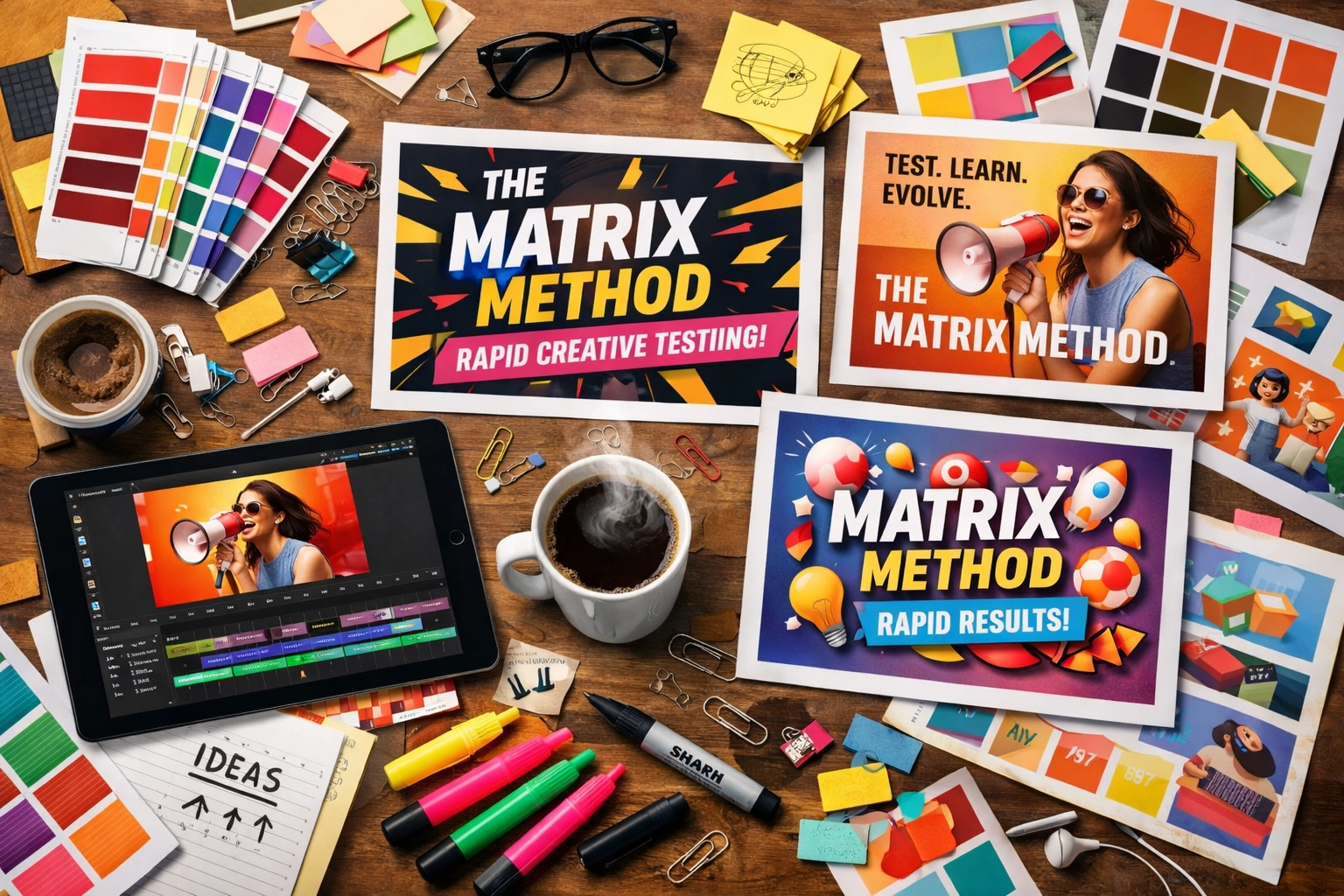
- The Matrix Method: Create a matrix of 3 hooks (the opening 3 seconds) and 3 calls-to-action (CTAs). Mix and match them to see which combination drives the highest "Thumb-Stop" rate.
- AI Variation: Use the platform’s built-in tools to generate variations of your headlines and descriptions, but always keep a "Control" ad to measure against.
5. Trusting Single-Channel Attribution
If you look at Google Ads, it says it drove 50 sales. If you look at Meta, it says it drove 40 sales. But your bank account only shows 60 sales total. This is the attribution nightmare of 2026. If you only look at "Last Click" metrics, you’ll likely kill the top-of-funnel campaigns that are actually introducing people to your brand.
The Fix: Use Incrementality Testing and Directional Data
Stop trying to find one "perfect" number. Instead, look for directional consistency across all your tools.
- Incrementality (Lift) Tests: Periodically turn off ads in a specific geographic region to see if total sales actually drop. This tells you if your ads are driving new business or just taking credit for people who would have bought anyway.
- Marketing Mix Modeling (MMM): For larger budgets, use MMM to see how spend across Search, Social, and YouTube correlates with total revenue over time.
- Post-Purchase Surveys: Simply asking "How did you hear about us?" provides a vital reality check against what the digital dashboards are telling you.
6. Ignoring the Customer Lifetime Value (CLV)
Most PPC managers optimize for the first conversion. But in many industries, the cost to acquire a customer is now higher than the profit from the first sale. If you’re not optimizing for Customer Lifetime Value (CLV), you’re playing a losing game.
The Fix: Teach the AI to Find "Whales"
Don't treat a $10 customer the same as a $1,000 customer.
- Value-Based Bidding: Assign different weights to different conversion actions. A "Request a Quote" from a multi-national corporation should be worth more in your account than a "Request a Quote" from a Gmail address.
- Predictive Audiences: Use your CRM data to build "Lookalike" audiences based on your highest-spending 10% of customers. This guides the AI to hunt for big fish rather than just any fish.

7. Putting All Your Eggs in the Search Basket
Search CPCs are at an all-time high. If your entire growth strategy relies on Google Search, you are vulnerable to every algorithm update and competitor bid war. Furthermore, the rise of Generative AI in search results means fewer users are clicking on traditional links.
The Fix: Channel Diversification
You need to meet your customers where they hang out, not just where they search.
- Retail Media: If you sell physical products, platforms like Amazon, Walmart, and Target often have much higher intent and better conversion rates than broad search.
- Social Search: Gen Z and Millennials are increasingly using TikTok and Instagram as search engines. If you don't have a presence there, you're missing a massive chunk of the market.
- Programmatic & YouTube: Use these to build "Brand Echo." When someone sees your YouTube ad and later searches for your product, your Search conversion rate will be significantly higher because the trust has already been established.

Summary: The PPC Mindset for 2026
The "Golden Age" of easy, cheap PPC is over, but the "Strategic Age" is just beginning. Success in 2026 requires a shift from being a technician to being a strategist. Focus on clean data, lean into AI without losing control, and never stop testing your creative.
If you fix these seven mistakes, you won't just be "running ads": you'll be building a scalable, predictable growth engine for your business.
About the Author: Malibongwe Gcwabaza
Malibongwe Gcwabaza is the CEO of blog and youtube, a leading digital strategy firm specializing in high-performance content and paid media integration. With over a decade of experience in the evolving landscape of search and social advertising, Malibongwe helps businesses navigate the complexities of AI-driven marketing to achieve sustainable, long-term growth. When not analyzing data trends, he focuses on mentoring the next generation of digital marketers in South Africa and beyond.
About the Author