By 2026, the internet is louder than it has ever been. Between AI-generated noise and the sheer volume of creators, content marketing for small business has shifted from "nice to have" to a survival skill. But here is the good news: while the big players are spending millions on shiny ad campaigns, small businesses can win by being faster, more authentic, and much more strategic with how they scale.
Scaling doesn’t mean doing more of everything. It means doing more of what works while spending less time on the grunt work. If you feel like you're on a content treadmill that never stops, this roadmap is for you. We’re going to look at how to scale your production, master video on a shoestring budget, and look at real-world examples of who is doing it right this year.
The Foundation: Why Most Small Businesses Fail to Scale
Most small businesses treat content like a chore. They post a blog post when they feel "inspired" or dump a random photo on Instagram because they haven't posted in a week. That isn't a strategy; it’s a recipe for burnout.
To scale, you need to stop thinking about "posts" and start thinking about "systems." In 2026, search engines and social algorithms prioritize authority and depth. You can't get there with random acts of marketing. You need a foundation built on:
- Qualified Traffic over Vanity Metrics: 1,000 views from people who actually want to buy your product is worth more than 1,000,000 views from people who don't know who you are.
- The Hub and Spoke Model: Create one "heavy" piece of content (like a 2,000-word guide or a 10-minute video) and break it into 20 smaller pieces.
- Owned Media: You don't own your TikTok followers. You own your email list. Scale toward the platforms you control.

Scaling Production Without a Massive Team
The biggest hurdle for small businesses is time. You’re running a business; you aren't a full-time filmmaker or novelist. Here is how to scale production without hiring a 10-person agency.
1. The "Batch and Blast" Workflow
Don't write one blog post on Tuesday and record one video on Thursday. It takes too much mental energy to switch gears. Instead, spend one full day a month on "Production." Write four scripts, film four videos, and outline four articles. This "batching" saves about 40% of the total time spent on content because your brain stays in the creative zone.
2. AI as an Assistant, Not the Author
In 2026, if you use AI to write your entire blog, Google will sniff it out, and your audience will hate it. It feels soulless. However, you should use AI to:
- Generate 50 catchy headlines based on your main topic.
- Transcribe your videos into blog drafts.
- Summarize long articles into LinkedIn posts.
- Create social media captions.
3. User-Generated Content (UGC)
Scaling doesn't mean you have to create everything. Your customers are your best content creators. Encourage them to share photos or videos of your product. A simple "Tag us for a chance to be featured" can give you a week's worth of social media content for free.
Video Marketing on a Budget: The 2026 Reality
If you aren't doing video, you’re invisible. But here’s a secret: the "highly produced" look is actually performing worse in 2026 than "lo-fi" authentic video. People crave realness.
The Smartphone Setup
You don't need a $5,000 RED camera. The iPhone or Samsung in your pocket is more than enough. To make it look professional on a budget, focus on two things: Audio and Lighting.
- Audio: Buy a $30 lavalier microphone. People will forgive bad video, but they will click away from bad audio instantly.
- Lighting: Sit facing a window during the day. Natural light is better than any cheap LED ring light you’ll find online.
Short-Form is King
TikTok, YouTube Shorts, and Instagram Reels are the fastest ways to scale your reach. The goal here is "Educational Entertainment."
- The 3-Second Hook: Start with the value. "Here is why your SEO is failing" instead of "Hi guys, today I want to talk about…"
- Micro-Tutorials: Show one quick win. If you’re a plumber, show how to fix a leaky faucet in 45 seconds. If you’re a consultant, explain one tax loophole.

Distribution: The "Post Once, Share Everywhere" Rule
Scaling content marketing for small business is 20% creation and 80% distribution. Most people do the opposite. They spend ten hours on a blog post and ten seconds sharing it.
| Platform | Content Type | Strategy |
|---|---|---|
| Blog | Long-form Guide | SEO focus; the "Source of Truth." |
| YouTube | Deep-Dive Video | Build trust and authority. |
| TikTok/Reels | 30-60s Clips | Awareness and top-of-funnel traffic. |
| Newsletter | Retention and direct sales. | |
| Thought Leadership | B2B networking and professional credibility. |
Case Study 1: The Local "Eco-Shop"
The Problem: A small organic soap company was struggling to get noticed beyond their local farmer's market.
The Strategy: They started a "Behind the Scenes" series on TikTok. They didn't hire a pro; the owner just propped her phone up while making the soap. They focused on "ASMR" sounds and explaining the benefits of natural ingredients.
The Result: By scaling their video production to 3 videos a week (taking only 2 hours of total time), they grew a following of 50,000. They moved from local sales to a national e-commerce model, using the videos as their primary "ad" spend.
Case Study 2: The B2B SaaS Startup
The Problem: A software company for HVAC contractors had a great product but zero search presence.
The Strategy: They committed to one "Mega Guide" per month (1,500+ words) targeting specific keywords like "how to manage HVAC schedules." They turned each guide into four LinkedIn articles and a series of "Pro Tip" emails.
The Result: Within six months, they ranked on the first page of Google for their primary keywords. Their "content marketing for small business" approach wasn't about volume; it was about being the most helpful resource in a boring niche.

Mastering Search Intent in 2026
SEO has changed. It’s no longer about stuffing keywords into a page. Google’s 2026 algorithms are obsessed with "User Intent."
When someone types a query into a search engine, they are looking for one of three things:
- Information: "How do I scale my business?"
- Comparison: "Best content marketing tools for small business 2026."
- Transaction: "Hire a content marketing consultant."
To scale effectively, your content needs to answer these specific needs. If your blog is just "News about our company," nobody is searching for that. If your blog is "The Ultimate Guide to X," you are building an asset that works for you 24/7.
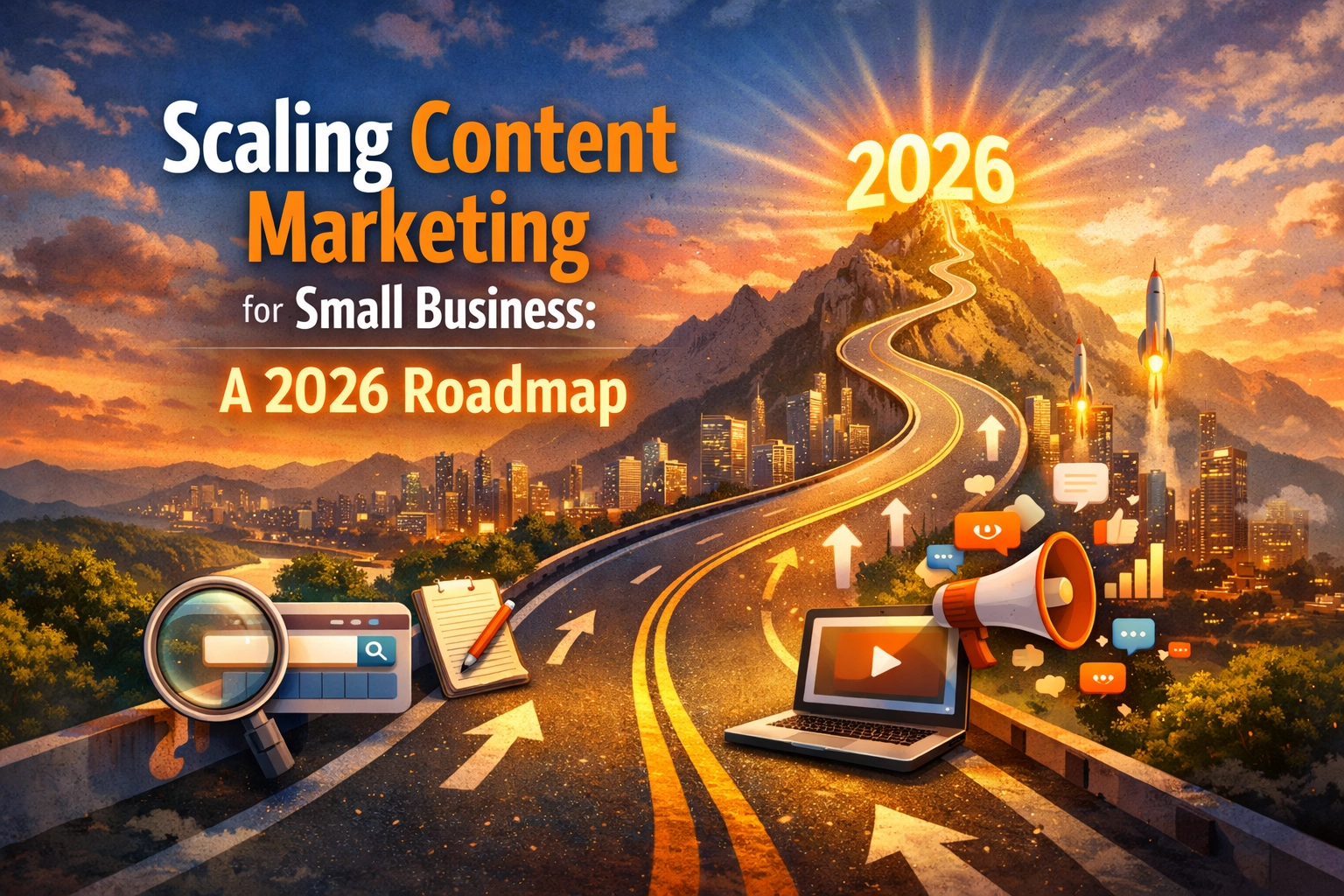
Your 2026 Content Roadmap Checklist
If you're ready to start scaling today, here is your step-by-step plan:
- Audit your current content: What’s actually getting traffic? Double down on that and delete the rest.
- Set your "Pillar" topics: Choose 3-5 broad topics you want to be known for.
- Build a Content Calendar: Plan at least 30 days in advance. Use a simple tool like Trello or even a Google Sheet.
- Invest in "Lo-Fi" Video: Start posting one YouTube Short or TikTok per day. Don't worry about it being perfect.
- Set up an Email Capture: Don't let your traffic go to waste. Offer a free checklist or guide in exchange for an email address.
- Review and Pivot: Every 30 days, look at your analytics. If your videos are killing it but your blog is a ghost town, shift your energy.
The Bottom Line
Scaling content marketing for small business isn't about having the biggest budget; it’s about having the most discipline. In 2026, the businesses that win are the ones that show up consistently, provide genuine value, and aren't afraid to put a human face on their brand.
Stop trying to hack the algorithm and start trying to help your customer. The rest: the traffic, the leads, and the revenue: will follow.
About the Author
Malibongwe Gcwabaza is the CEO of blog and youtube, a leading digital strategy firm dedicated to helping small businesses navigate the complex world of online growth. With over a decade of experience in SEO, video marketing, and brand building, Malibongwe focuses on practical, high-impact strategies that deliver real ROI. When he isn't dissecting the latest search engine updates, he’s helping entrepreneurs simplify their message and scale their impact.
About the Author