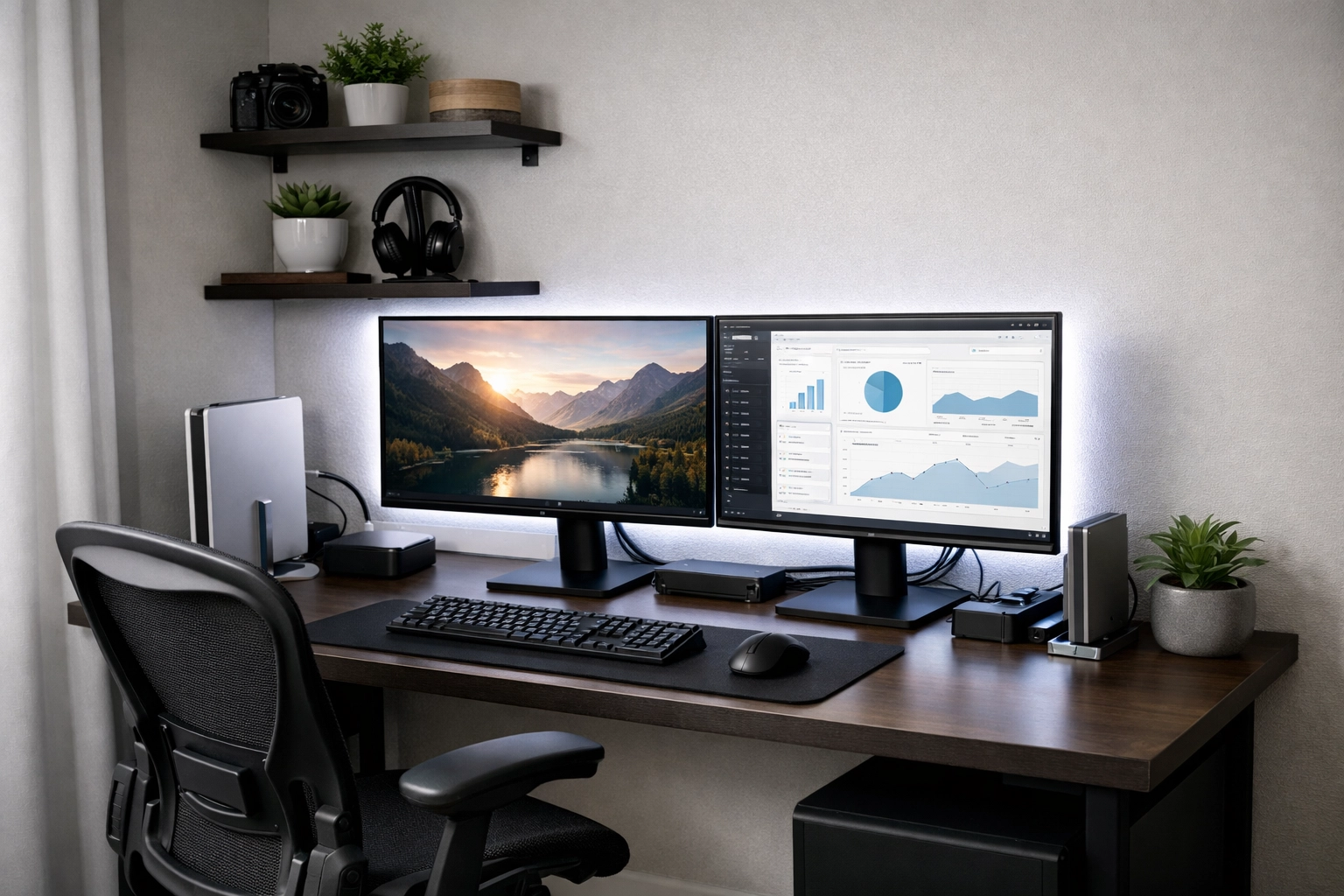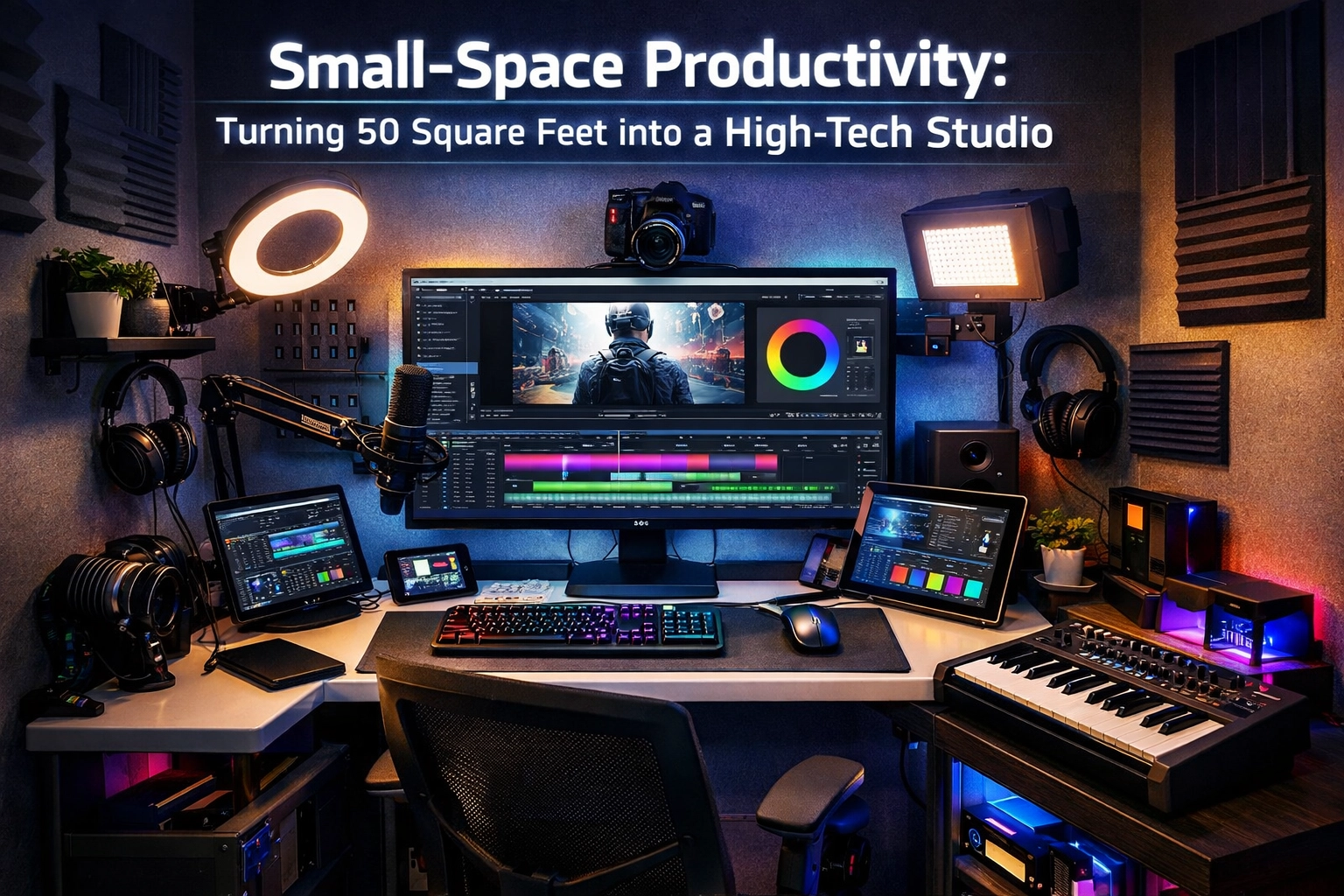
Let’s be real: by 2026, the dream of a sprawling corner office with floor-to-ceiling windows has been replaced by the reality of urban efficiency. Whether you’re living in a micro-apartment in Tokyo, a converted van, or just a tiny "cloffice" in a shared flat, space is the most expensive luxury we have.
But here’s the good news: technology has finally caught up with our lack of square footage. In 2026, you don’t need a massive desk to do massive things. You can run a YouTube empire, code the next big AI agent, or manage a global team from a space no bigger than a walk-in closet: specifically, about 50 square feet.
Turning a tiny footprint into a high-tech powerhouse isn't just about buying small gear; it’s about a total shift in how you think about "workstations." It’s about verticality, multi-use hardware, and the invisible tech that keeps you sane.
The Philosophy of the "Zero-Footprint" Workspace
When you only have 50 square feet, the floor is your enemy. Every inch of floor space occupied by a table leg or a filing cabinet is an inch you can’t move your chair. To build a high-tech studio in 2026, you have to adopt a vertical-first mindset.
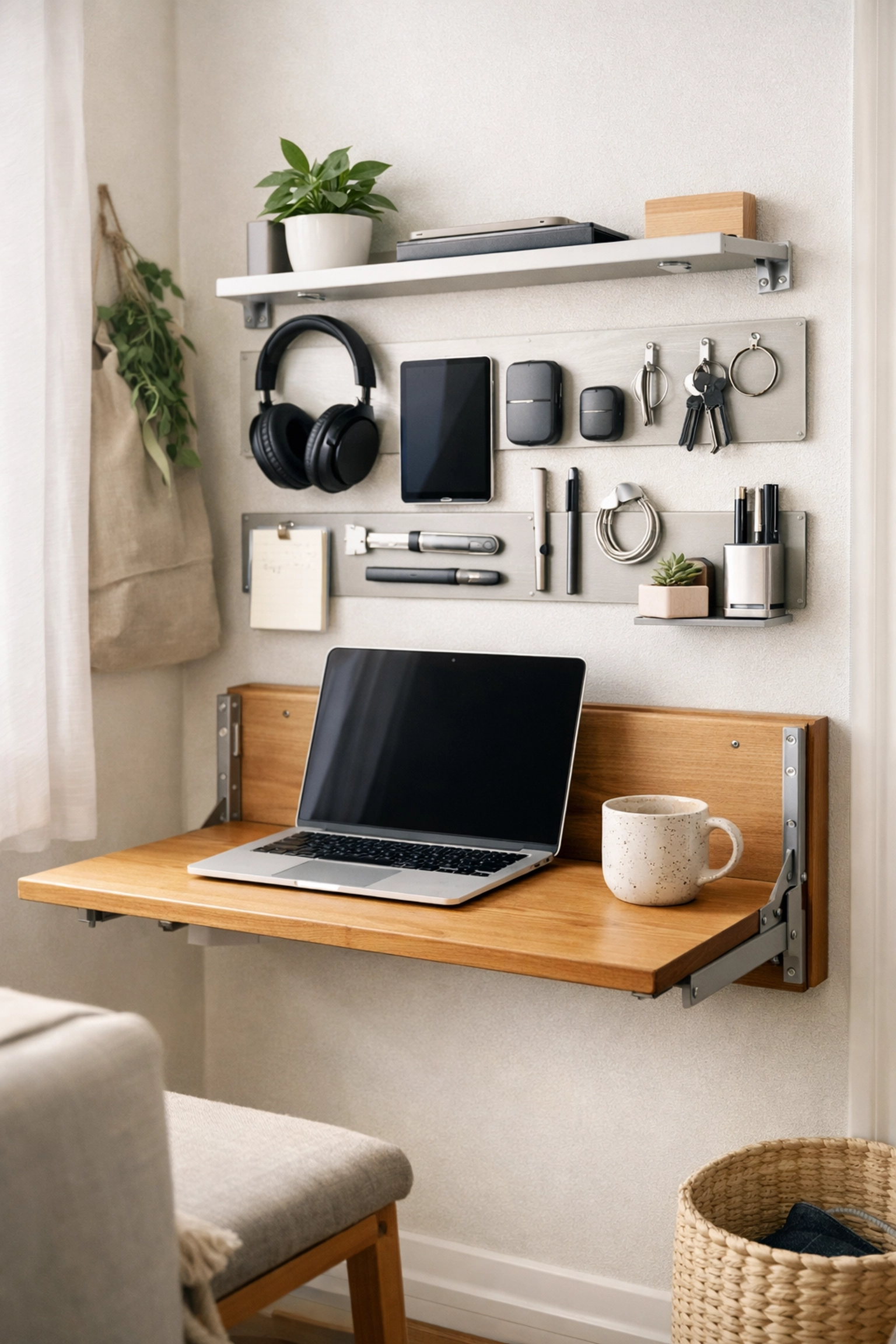
The goal is to have as many "floating" elements as possible. Wall-mounted tracks and heavy-duty shelving systems are the backbone of a 2026 studio. Instead of a traditional desk, we’re seeing a surge in wall-slat systems that allow you to click in desks, monitor arms, and even PC towers at any height.
Why 50 Square Feet is Actually an Advantage
It sounds like a cope, but there’s a psychological edge to small spaces. In a large room, your focus can drift. In a 50-square-foot high-tech pod, everything you need is within arm’s reach. With the right acoustic treatment and lighting, it becomes a flow-state sensory deprivation tank. You aren't just working in a room; you’re stepping into a cockpit.
The 2026 Tech Stack: Less Physical, More Virtual
In 2024, people were still arguing about dual monitors versus ultrawides. In 2026, the most productive small-space creators have moved beyond physical glass entirely: or at least, they’ve minimized it.
1. The AR Overlay
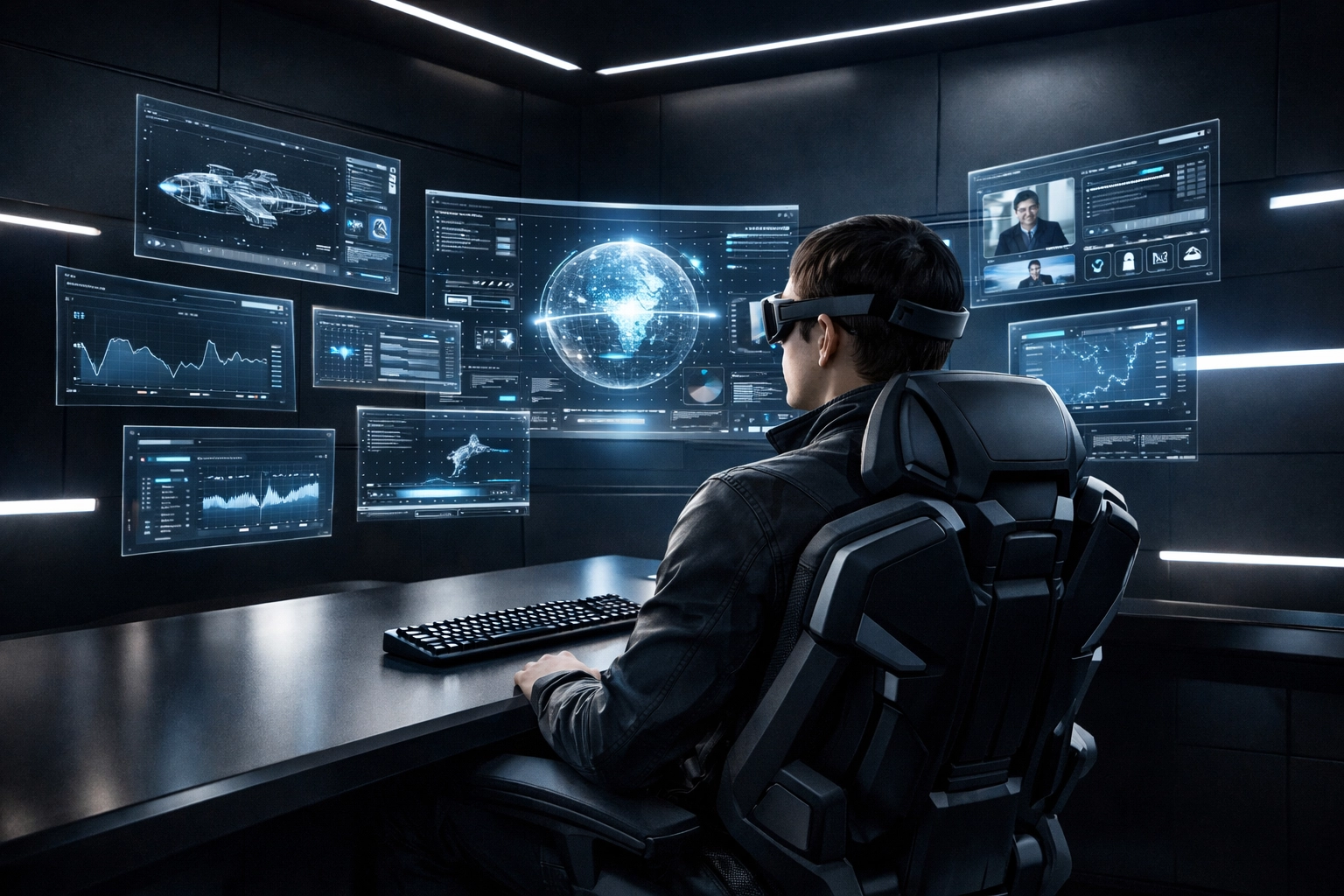
The biggest game-changer for small studios is the maturity of Augmented Reality (AR) glasses. Instead of mounting three 27-inch monitors that eat up your entire wall and generate massive heat, a pair of lightweight AR glasses gives you an infinite canvas. You can have a 100-inch virtual screen for video editing and a side panel for your AI chat assistant, all while keeping your physical desk completely clear for a notebook or a keyboard.
2. The "Invisible" PC
With the speed of 6G and local edge computing, the "tower" is dead for most users. If you need heavy lifting, you’re likely using a headless workstation tucked away in a ventilated cupboard or a cloud-based GPU cluster. For the physical interface, ultra-slim notebooks or even high-powered tablets that dock into a single USB-C (or wireless) hub are the standard.
3. The Centralized Hub
In 2026, cable management isn't just about Velcro ties; it’s about elimination. A single GaN (Gallium Nitride) charging station can now power your entire desk wirelessly or through one hidden cable. If you’re building a studio today, look for furniture with integrated power delivery (Qi2 or higher) built directly into the surface material.
The "Transformer" Furniture Strategy
In a 50-square-foot space, furniture that only does one thing is a waste. We take inspiration from high-end van builds and micro-apartments.
| Feature | Small Space Solution | Why it Works |
|---|---|---|
| Desk | Wall-mounted fold-down or "Drawer" desk | Frees up floor space when not in use. |
| Seating | Ergonomic stool or slim-profile "saddle" chair | Encourages better posture and tucks completely under the desk. |
| Storage | Ceiling-mounted drop-down bins | Uses the "dead space" above your head. |
| Monitors | Gas-spring arms with 360-degree rotation | Allows the screen to become a TV or a secondary light source. |
The Hybrid Surface
As noted by design experts, a small organic desk that fits into a corner is vital. But in 2026, that desk should be motorized. Even in a tiny space, being able to switch from sitting to standing is essential for blood flow and mental clarity. Look for "mini-standing desks": they have a footprint of only about 24×40 inches but provide the full range of motion.
Lighting and Mood: Fighting the "Closet" Feel
The biggest risk of a 50-square-foot studio is the feeling of claustrophobia. Without natural light, your circadian rhythm takes a hit.
Bio-Synced Lighting
In 2026, smart lighting isn't just about changing colors to "gaming red." It’s about bio-syncing. Your studio lights should automatically shift from high-energy blue tones in the morning to warm, amber tones in the late afternoon. For small spaces, use LED light strips behind your monitors and along the ceiling edges. This "wash" of light makes the walls feel further away than they actually are.
Smart Glass and Mirrors
If your 50-square-foot space has a window, use smart film that can transition from clear to frosted with an app. If you don’t have a window, mirrors are your best friend. A full-length mirror on the door or a mirrored backsplash behind your monitor doubles the visual depth of the room instantly.
Acoustics: The Silent Powerhouse
In a small room, sound bounces. If you’re recording audio for YouTube or jumping on a high-stakes VR meeting, you’ll sound like you’re in a bathroom without proper treatment.
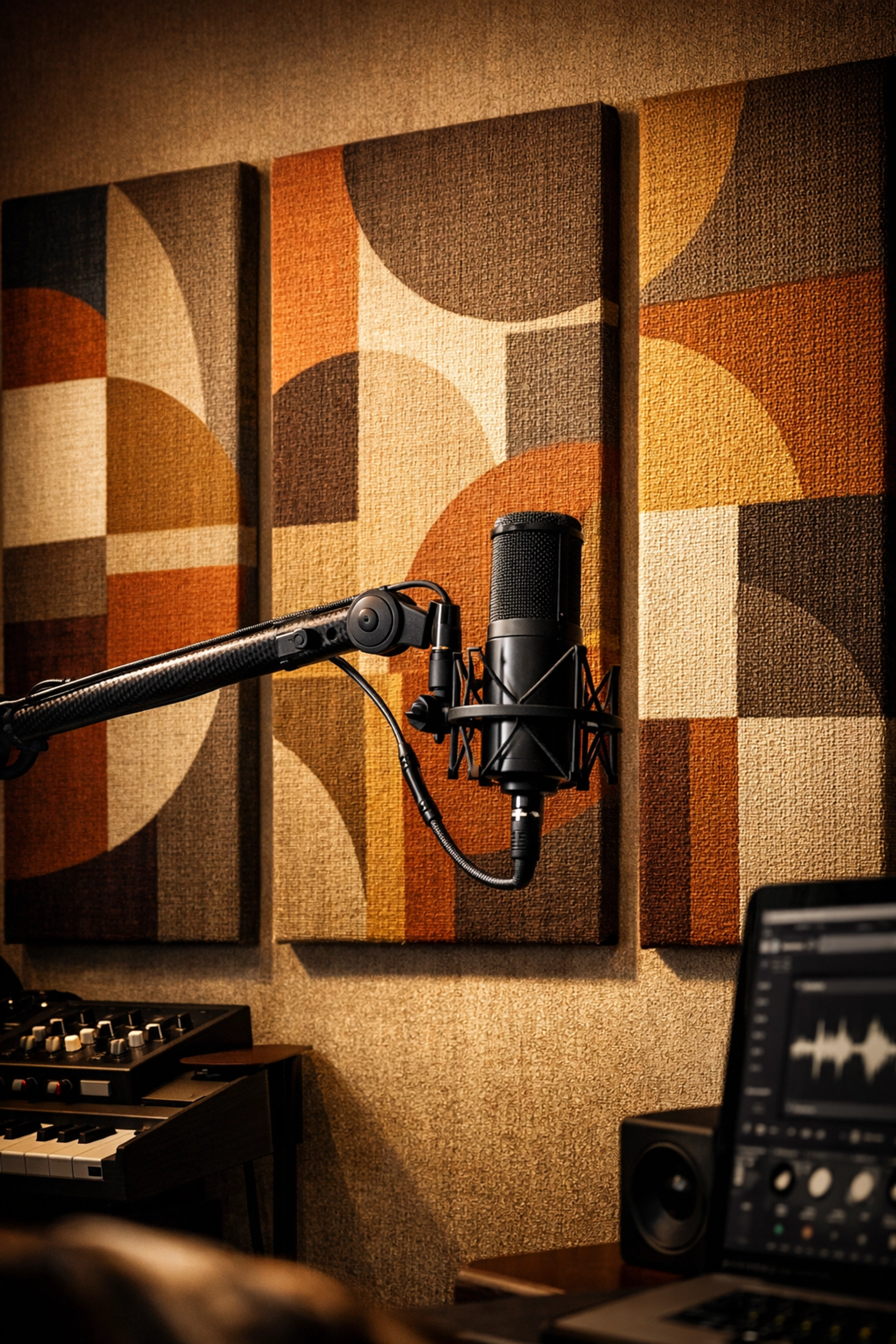
Traditional acoustic foam looks like a 2010s gaming den. In 2026, we use Acoustic Art. These are high-density mineral wool panels wrapped in aesthetic fabrics or printed with custom art. They serve two purposes: they stop the echo and they act as the "decor" for your studio.
Additionally, directional "beamforming" microphones have become so good that they can isolate your voice while ignoring the hum of a portable AC unit or the noise from the hallway, making a dedicated sound booth unnecessary.
Managing the "Clutter Crisis"
In 50 square feet, three loose cables and a coffee mug look like a disaster zone. High-tech productivity requires high-intensity organization.
- The Tech Valet: Use a dedicated charging drawer. All your peripherals: mouse, AR glasses, controllers: go into a drawer with built-in USB ports. Nothing stays on the desk.
- Magnetic Mounts: Use the sides of your metal desk legs or wall plates to magnetically "dock" your phone, remote, and even your keyboard.
- Digital Filing: Physical paper is banned. In 2026, everything is scanned instantly via your glasses or phone and sorted by AI. If you can’t eat it or type on it, it shouldn't be on your desk.
Mental Health: The 20-20-20 Rule in a Box
Working in a small space can be intense. To stay productive, you have to actively manage your brain.
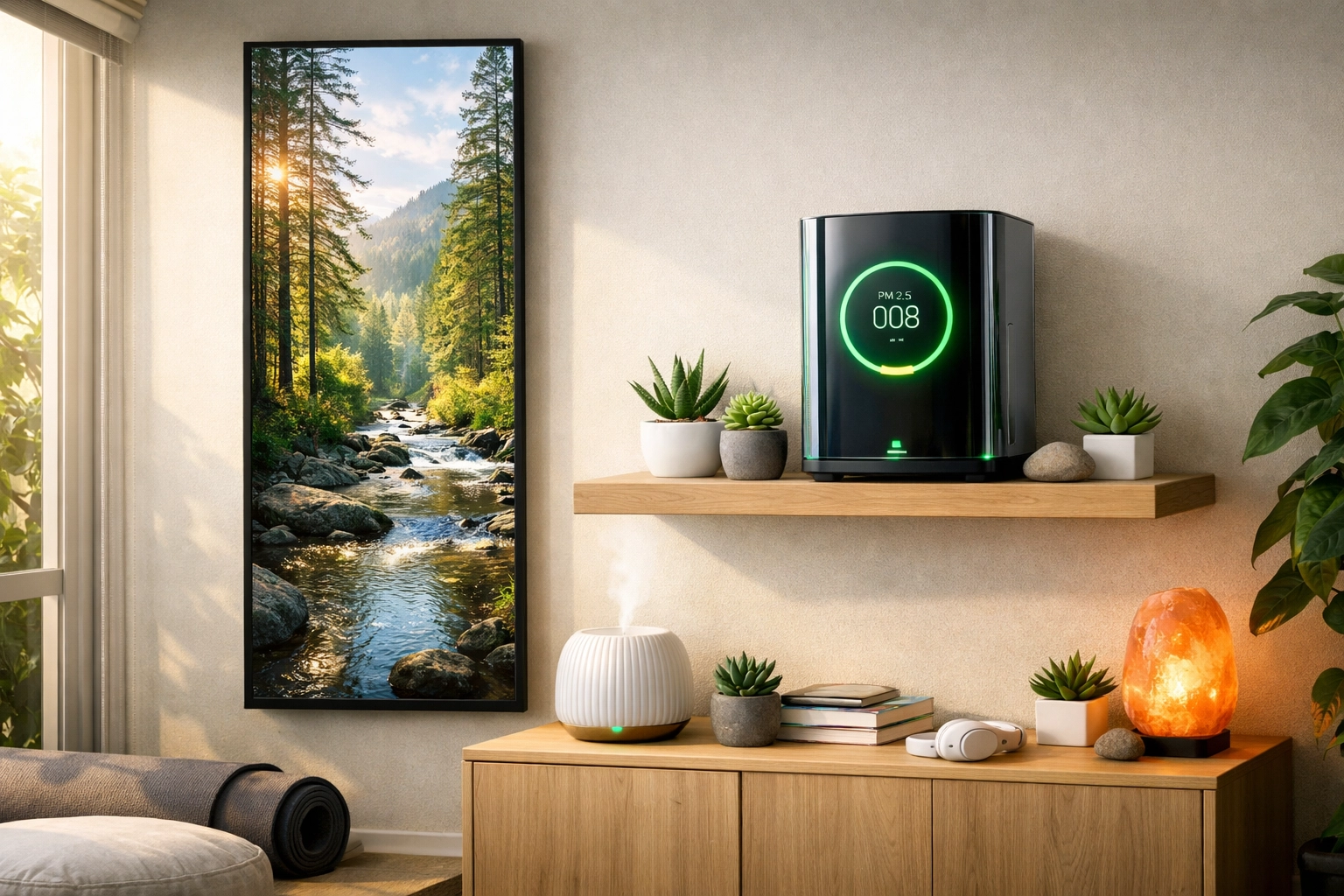
- The 20-20-20 Rule: Every 20 minutes, look at something 20 feet away for 20 seconds. In a 50-square-foot room, you might not have 20 feet of space. This is where your AR glasses or a high-res "virtual window" (a vertically mounted screen showing nature scenes) comes in.
- Scent Memory: Use a specific scent (like cedar or citrus) only when you are working. Because the space is small, the scent will linger, training your brain to enter "work mode" the moment you step inside.
- Oxygen Density: Small rooms get stuffy fast. High CO2 levels tank your productivity. A small, high-tech HEPA filter with a CO2 sensor is a non-negotiable for a 50-square-foot studio in 2026.
Final Thoughts: It’s Not About the Size
The secret to 2026 productivity isn't how much room you have; it’s how well you've optimized the room you're in. A 50-square-foot space, when outfitted with AR displays, vertical mounting, and bio-synced environment controls, can be more effective than a traditional office.
Stop looking at your small space as a limitation. Start looking at it as a high-performance cockpit where every piece of tech is tuned to your specific workflow.
About the Author
Malibongwe Gcwabaza is the CEO of blog and youtube. With a passion for cutting-edge tech and minimalist living, Malibongwe has spent years exploring how humans can stay productive in an increasingly crowded world. When he's not optimizing micro-studios, he’s usually testing the latest AR hardware or hunting for the perfect espresso.
About the Author