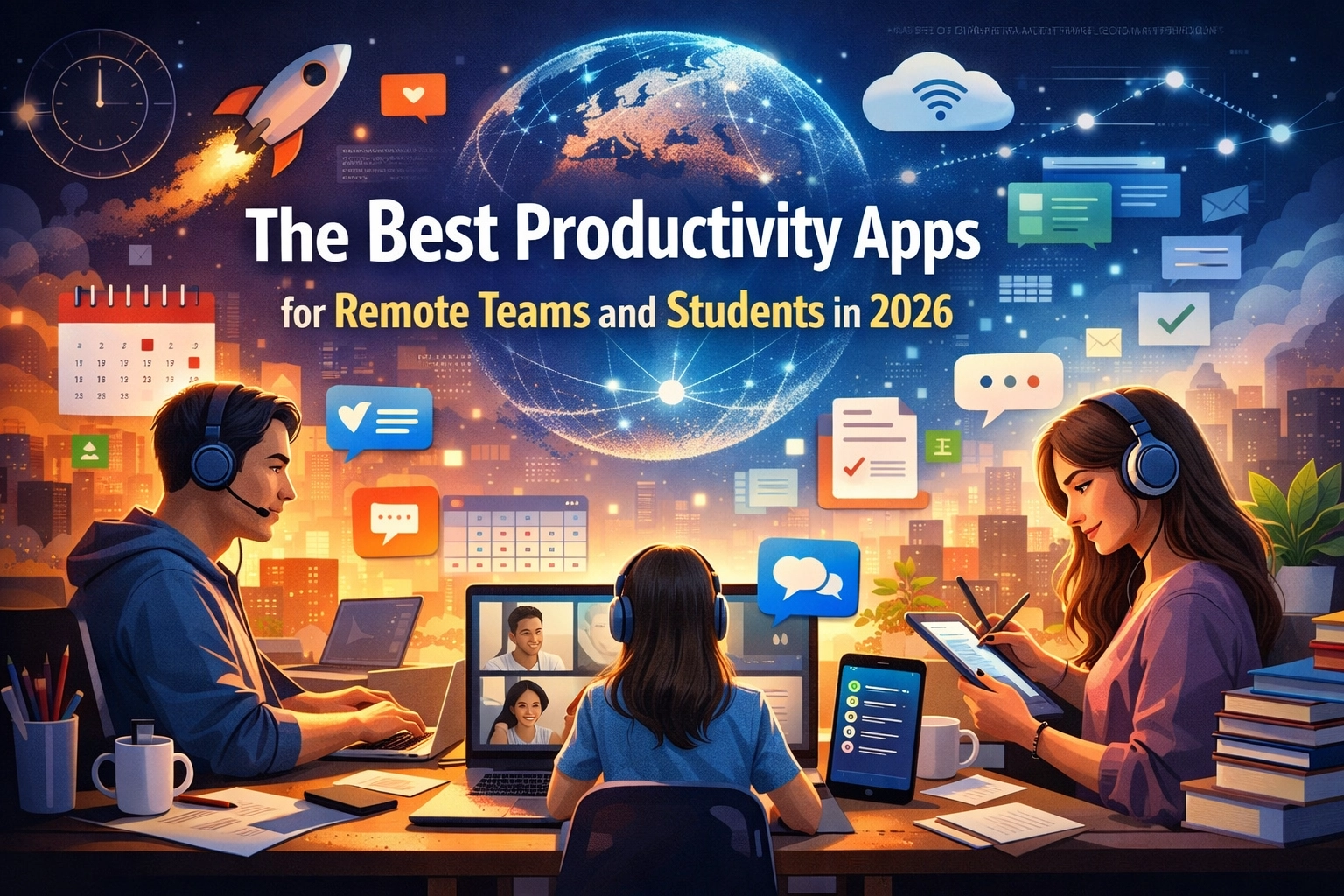
By 2026, the definition of "productivity" has shifted from simply "doing more" to "managing cognitive load." As remote work matures and online education becomes the global standard, the friction isn't a lack of tools: it's the "context-switching tax." Research indicates that the average professional loses nearly 40% of their productive time switching between disparate applications.
In this guide, we aren't just looking at basic to-do lists. We are diving into the high-performance stack required to navigate a landscape dominated by Agentic AI, spatial computing, and asynchronous workflows. Whether you are a lead developer at a distributed tech firm or a student pursuing a Master's in AI Ethics, these are the tools that define efficiency in 2026.
1. The "Second Brain" Evolution: Notion and Obsidian
The concept of the "Second Brain" has moved from a niche productivity hobby to a professional necessity. In 2026, the leaders in this space have bifurcated into two distinct philosophies: cloud-integrated intelligence and local-first privacy.
Notion: The AI-Agent Hub
Notion is no longer just a workspace; it is an operating system for information. By 2026, Notion’s Q&A features have evolved into full-scale agents. For remote teams, this means the software doesn't just store meeting notes: it synthesizes them, identifies action items, and cross-references them with your project database in ClickUp or Jira via native API bridges.
Why it wins for teams:
- Database Automations: 2026 versions allow for complex logic (if-this-then-that) directly within the database architecture without needing Zapier.
- Synchronized Blocks: Essential for maintaining a "single source of truth" across multiple departments.
Obsidian: The Local-First Powerhouse
For students and researchers who prioritize data sovereignty and long-term knowledge retention, Obsidian remains the gold standard. Its "Link Your Thinking" (LYT) methodology, supported by a massive plugin ecosystem, allows for a non-linear knowledge graph.
The 2026 Edge: Obsidian now supports local LLM (Large Language Model) integration. You can run a private instance of an AI on your local machine to query your notes without your data ever hitting the cloud: a massive win for students handling sensitive research or proprietary corporate data.

2. Advanced Time Orchestration: Rize and TMetric
Static calendars are dead. In 2026, we use "Time Orchestration" tools that monitor physiological focus and task complexity.
Rize: The AI Productivity Scientist
Rize has moved beyond simple time tracking. It uses a combination of desktop monitoring and (optionally) biometric data from wearables to tell you when your "Deep Work" capacity is peaking. It automatically categorizes your activities and alerts you when you are nearing burnout or when your focus is fragmented by Slack notifications.
TMetric: The Remote Manager's Choice
For remote teams, TMetric provides the granular data needed for transparent billing and project estimation. Its 2026 update includes "Activity Heatmaps" that don't track keystrokes (which is archaic and invasive) but rather "Impact Hours." It measures how much time is spent in high-value environments like IDEs or design tools versus administrative overhead.
Technical Insight: TMetric’s integration with 50+ tools via REST API allows for seamless data flow, making it the preferred choice for technical teams who need to reconcile time spent on GitHub pull requests with client invoices.
3. Asynchronous Communication: Loom and Slack Huddles
The "meeting that could have been an email" has been replaced by the "video that can be consumed at 2x speed."
Loom: The Context King
Loom is the primary tool for reducing synchronous meeting fatigue. In 2026, its AI-generated summaries and "Chaptering" are so accurate that team members can skip to the specific 30 seconds of a video that concerns their department.
Slack: The Async Central
Slack has successfully fended off competitors by doubling down on "Huddles" and "Canvas." For students, Slack communities have replaced traditional forums. The ability to drop a snippet of Python code and have a peer comment on it in a thread: while a transcript of the audio huddle is indexed for search: makes it an unbeatable collaboration layer.

4. The Student Stack: Anki and Perplexity
Academic productivity in 2026 is about filtering the noise and optimizing for the "Forgetting Curve."
Anki: The Science of Memory
Anki remains the king of Spaced Repetition Systems (SRS). While the UI remains utilitarian, the back-end algorithms have been optimized in 2026 to include "Neural Spacing," which adjusts review intervals based on the difficulty of the conceptual link, not just the individual card. For medical or law students, Anki is non-negotiable.
Perplexity: The Research Accelerator
Forget traditional search engines. Students in 2026 use Perplexity for initial literature reviews. It provides cited, real-time data which saves hours of manual searching. By using the "Pro" settings, students can upload 100-page PDFs and ask the tool to find contradictions in the data set: a technical task that would have taken days in the past.
5. Technical Project Management: Linear and ClickUp
Managing a remote team requires a tool that handles the complexity of the "Sprint" without the bloat of legacy software.
Linear: For High-Performance Engineering
Linear is the choice for remote dev teams. Its keyboard-centric UI and high-performance sync engine make it feel like a local app. It treats "issues" as the primary unit of work, and its 2026 "Project Insights" feature uses historical velocity to predict project delays with a 90% accuracy rate.
ClickUp: The "Everything" App
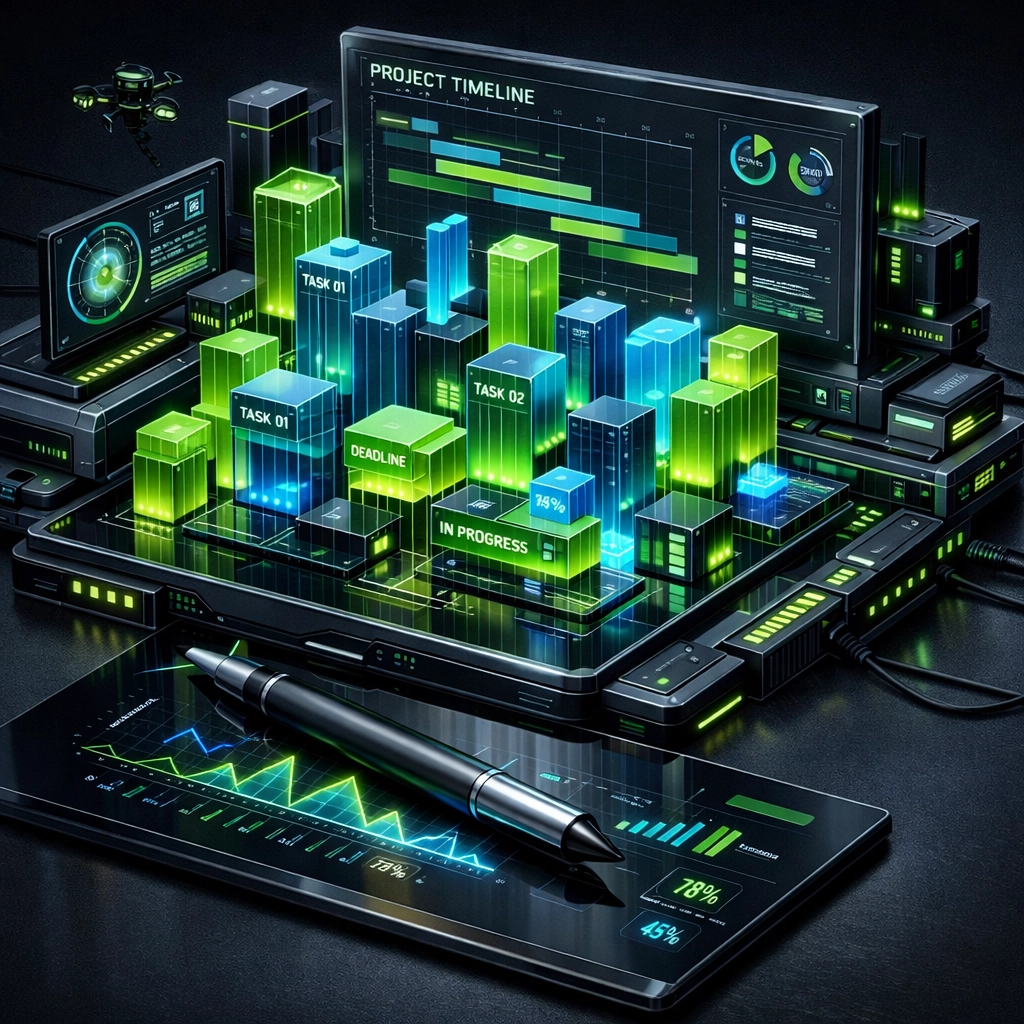
ClickUp targets the "all-in-one" market. For a student-led startup or a diverse remote team (marketing, sales, and dev), ClickUp’s ability to switch between a Gantt Chart, a Kanban Board, and a Document view is its greatest strength. Its "Universal Search" can now find a file across Google Drive, Slack, and Notion simultaneously.
6. Security and Privacy: The 2026 Non-Negotiables
As productivity apps become more integrated, the attack surface grows. The "best" apps in 2026 are those that implement Zero-Knowledge Encryption.
When choosing your stack, look for:
- SOC 2 Type II Compliance: Minimum standard for any team tool.
- End-to-End Encryption (E2EE): Essential for "Second Brain" apps like Anytype or Obsidian.
- Local-First Architecture: Apps that function entirely offline and sync via encrypted peer-to-peer protocols.
The 2026 Productivity Philosophy: "Minimalist Integration"
The trap many remote workers and students fall into is "Productivity Porn": the act of spending more time organizing the tools than doing the work. In 2026, the goal is Minimalist Integration.
Pick one tool for each of these three pillars:
- The Storehouse: (Notion or Obsidian)
- The Engine: (Linear or ClickUp)
- The Pulse: (Slack or Loom)
Everything else is a luxury. If an app doesn't have an open API or a robust export function, it's a data silo that will eventually slow you down.
Conclusion: Future-Proofing Your Workflow
The best productivity app is the one that disappears. In 2026, the focus has moved away from manual input toward "passive capture" and "agentic execution." By leveraging tools like Rize for focus, Notion for knowledge, and Linear for execution, remote teams and students can reclaim their most valuable asset: their attention.
About the Author: Malibongwe Gcwabaza
Malibongwe Gcwabaza is the CEO of blog and youtube, a leading digital media firm specializing in the intersection of emerging technology and career development. With over a decade of experience in remote team leadership and digital transformation, Malibongwe focuses on simplifying complex technical workflows for the modern workforce. Under his leadership, the company has helped thousands of students and professionals navigate the shift toward AI-integrated careers. When he’s not optimizing internal operations, he’s exploring the latest in decentralized web protocols and spatial computing.
About the Author