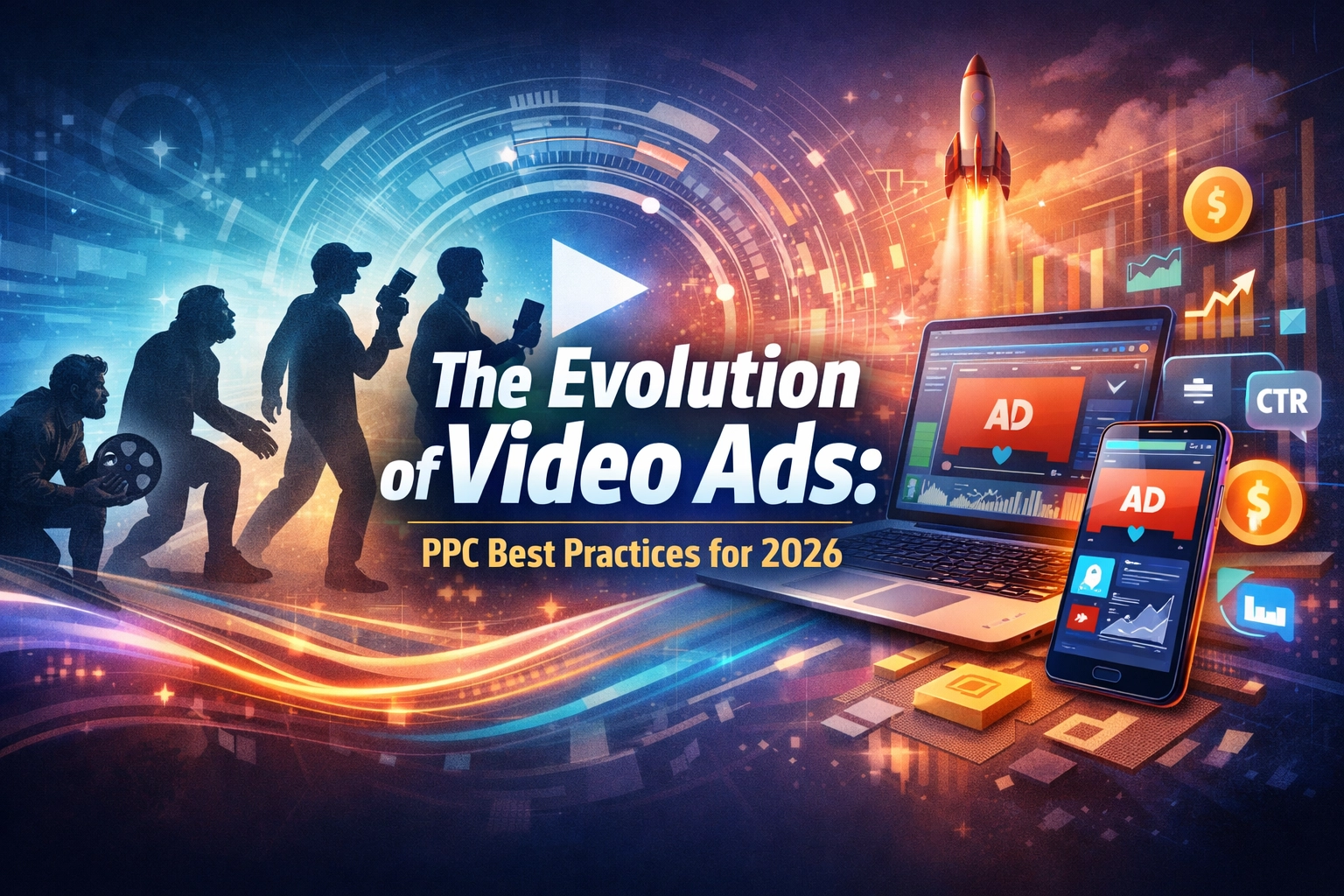
By 2026, the digital advertising landscape has undergone a total transformation. If you’re still running PPC campaigns the way you did in 2022: or even 2024: you’re likely watching your budget evaporate with very little to show for it. We’ve officially moved past the era of "set it and forget it" keyword targeting. Today, the algorithm handles the heavy lifting of finding the audience, which means your success now lives and dies by one thing: your creative strategy.
Video isn’t just a "part" of a PPC strategy anymore; it is the heartbeat of it. Data shows that video content delivers roughly 90% more engagement than static ads. But simply "having a video" isn't enough. To win in 2026, you need to understand the science of attention, the nuance of platform-specific sequencing, and the framework of creative-led growth.
The Shift to Creative-Led Growth
In the early days of PPC, we were obsessed with "hacking" the algorithm. We spent hours on negative keyword lists, manual bid adjustments, and hyper-specific audience layering. In 2026, Google and Meta’s AI systems are so advanced that they actually perform better when you give them more room to breathe.
This shift is called Creative-Led Growth. Since the AI is already great at finding who is likely to click, your job has shifted from "targeting" to "resonating." Your video creative is now your primary targeting tool. If your video appeals to a specific niche, the algorithm will see who engages with it and automatically find more people just like them.
If your creative is generic, your results will be generic. To stay ahead, your PPC best practices for 2026 must prioritize high-volume creative testing over technical account structure.
The Full-Funnel Format Sequencing Strategy
The biggest mistake advertisers make is treating every video ad like a standalone island. In 2026, the highest-performing campaigns use "format sequencing." This is a method of showing different types of video ads to the same person based on where they are in the buying journey.
Research indicates that using a layered approach can lift brand recall by up to 34%. Here is the optimal sequence for a 2026 video campaign:
- The Bumper (6 Seconds): These are short, unskippable ads. Use them for top-of-funnel awareness. Their job isn’t to sell; it’s to build frequency and "prime" the viewer’s brain for your brand.
- The In-Stream (15-60 Seconds): This is the "meat" of your campaign. The 30-second sweet spot works best here. Use this for consideration: explain the problem you solve and show your product in action.
- The Closer (15 Seconds Non-Skippable): This is for your "warm" audience: people who have already seen your other ads or visited your site. These ads should be direct, high-urgency, and feature a clear call to action (CTA).
Mastering the Science of the First 5 Seconds
In 2026, you aren't just competing with other brands; you’re competing with every creator on TikTok, YouTube Shorts, and Instagram Reels. You have exactly five seconds: often less: to convince a user not to hit that skip button or swipe away.
We break the first few seconds of a video ad into three critical phases:
0-2 Seconds: The Hook
Forget the slow cinematic pans or the spinning corporate logo. Those are "skip triggers." If a viewer sees a logo in the first two seconds, their brain immediately tags the content as an "ad" and prepares to skip. Instead, open with something visually striking, an emotionally resonant statement, or a "pattern interrupt": an unexpected sound or visual shift that breaks the scroll.
2-4 Seconds: The Brand Integration
While you shouldn't lead with a logo, you do need to establish who you are. The trick is to introduce your brand naturally within the context of the hook. Ads that establish a brand presence early: without being intrusive: see 40% higher view-through rates.
4-5 Seconds: The Retention Trigger
By second four, the viewer is deciding whether to stay for the full 30 seconds. Give them a reason. Tease a payoff, ask a question that they want the answer to, or use a visual "cliffhanger."
Short-Form Video: The Default Standard
While horizontal video still has its place on desktop-heavy platforms like LinkedIn, vertical short-form video is the king of 2026. Platforms like YouTube Shorts and TikTok have trained our brains to consume content in 9:16 format.
When building your PPC assets, design for "mobile-first" but "sound-optional." Roughly 85% of social video is watched without sound. If your ad requires audio to make sense, you are losing 85% of your potential impact. Use high-contrast captions, text overlays for your main value proposition, and ensure your visual storytelling is strong enough to stand on its own.

Authenticity Over Production Value
The "polished" look of the 2010s is officially dead. In 2026, users have developed a "filter" for high-production commercials. They look like ads, so they get ignored.
The most effective PPC best practices for 2026 involve leaning into User-Generated Content (UGC) and "Lo-Fi" production. A video shot on an iPhone with a creator talking directly to the camera often outperforms a $50,000 studio production. Why? Because it looks like content from a friend.
Pro-Tip: Replace stock photos and generic b-roll with real people. If you’re a B2B company, have your CEO or a lead engineer explain a concept. If you’re B2C, use real customer testimonials. Authenticity is the ultimate currency in a world filled with AI-generated filler.
Multi-Channel Video Integration
Your video ads shouldn't live in a vacuum. A cross-platform approach ensures that you’re catching users wherever they hang out.
- YouTube: The primary driver for long-form intent and brand storytelling. Use YouTube for the "Format Sequencing" mentioned earlier.
- Meta (Facebook/Instagram): Best for discovery and retargeting. Use Reels-style content here to blend into the organic feed.
- LinkedIn: The powerhouse for B2B. Since 65% of B2B companies have acquired customers through LinkedIn ads, ensure your video content here is professional yet conversational. Focus on thought leadership rather than hard selling.
The Testing Framework: 3-5-2 Rule
You cannot guess what will work. You have to test it. In 2026, we follow the 3-5-2 Rule for creative testing:
- 3-5 Variations: Never launch a campaign with just one video. Create 3 to 5 variations. These don't need to be entirely different videos; you can simply change the "Hook" (the first 3 seconds) or the "CTA" (the last 3 seconds).
- 2-Week Cycle: Run your tests for at least two weeks before making major changes. This gives the algorithm enough data to determine which creative is actually driving conversions versus just getting "cheap" views.
Optimization and Data-Driven Decisions
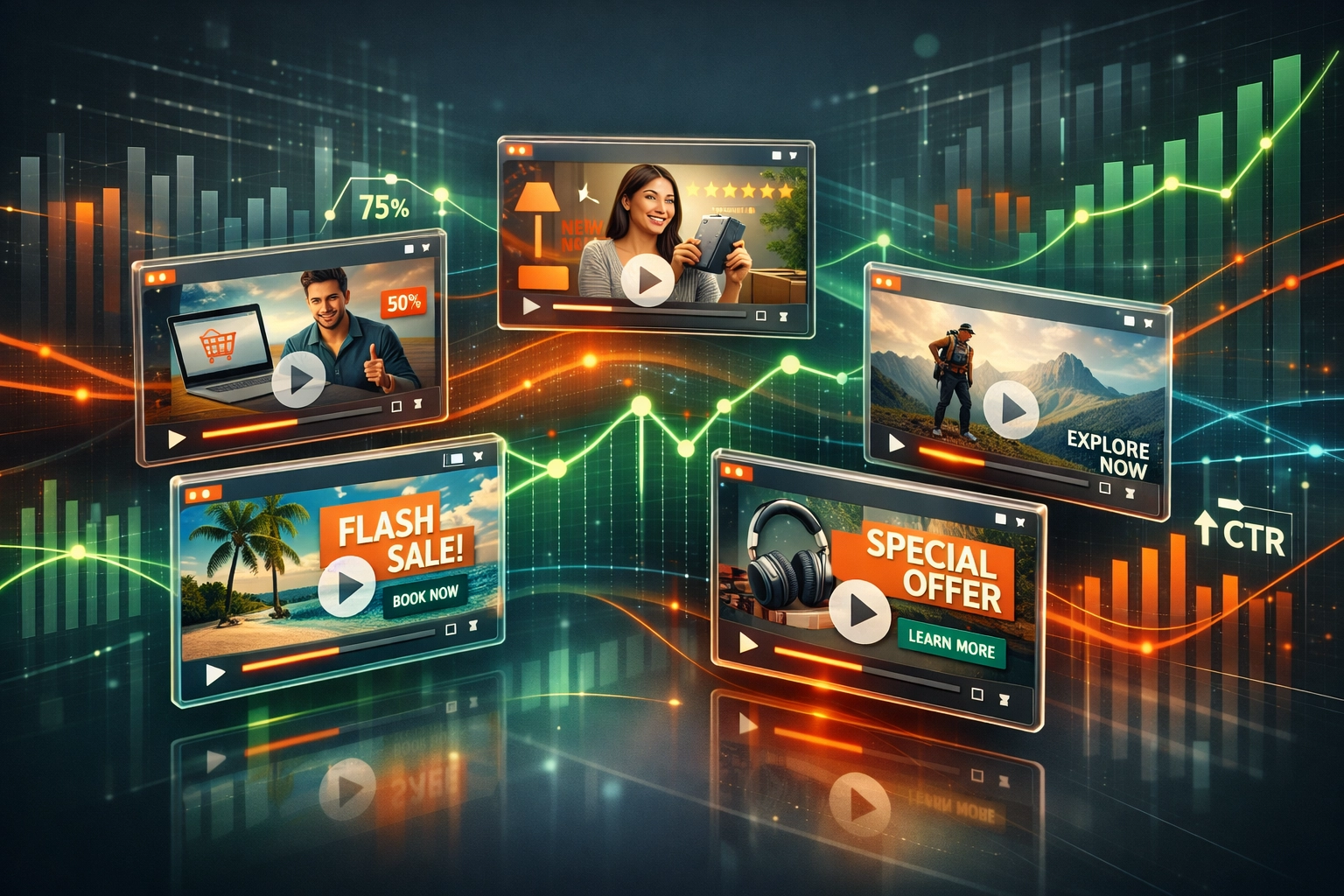
As you gather data, look beyond the "Click-Through Rate" (CTR). In video PPC, you need to look at Retention Curves. If you see a massive drop-off at the 3-second mark, your hook is weak. If people are watching 90% of the video but not clicking, your Call to Action is either missing or uninspiring.
Strategic CTA placement is vital. For a 15-second non-skippable ad, place your CTA around the 10-12 second mark. This gives the viewer enough time to process the instruction before the ad ends. For skippable ads, repeat your CTA both verbally and visually around the 20-second mark.
Conclusion: The Future of PPC is Human
While AI and automation are driving the backend of PPC in 2026, the frontend: the part the human sees: is more important than ever. By focusing on creative-led growth, mastering the first five seconds, and utilizing a sequenced, multi-channel approach, you can dominate the auction without needing a massive enterprise budget.
The goal isn't to shout the loudest; it's to be the most relevant. Use these PPC best practices for 2026 to build a video strategy that doesn't just get views, but builds a brand that lasts.
About the Author: Malibongwe Gcwabaza
Malibongwe is the CEO of blog and youtube, a leading digital strategy firm specializing in helping small businesses navigate the complex world of modern marketing. With over a decade of experience in SEO, PPC, and content creation, Malibongwe focuses on making high-level marketing concepts simple and actionable for everyone. When he’s not dissecting the latest algorithm updates, he’s passionate about building communities and helping entrepreneurs grow their digital footprint.
About the Author