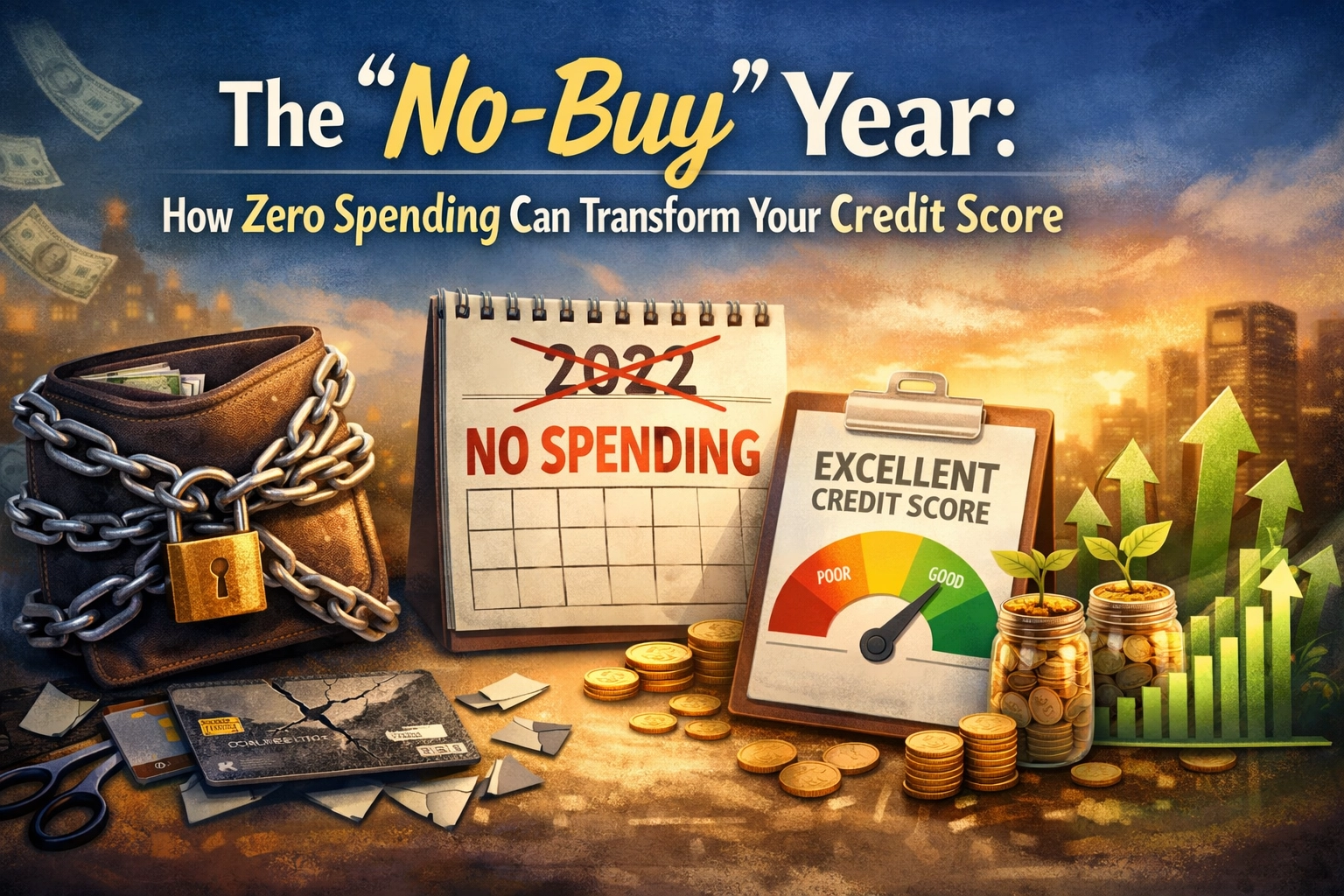
The concept of a "No-Buy" year has exploded in popularity across social media and financial circles. On the surface, it sounds like a radical minimalist challenge: stop buying non-essential items for 365 days. No new clothes, no latest-gen tech gadgets, no overpriced lattes, and definitely no "retail therapy" sessions at 2:00 AM. But while most people approach this challenge to save for a house or clear out clutter, there is a massive secondary benefit that often goes overlooked: the radical transformation of your credit score.
If you are looking at a credit report that feels stuck in the mud, a No-Buy year isn't just a test of willpower. It is a strategic financial reset. However, there is a catch. If you literally spend zero dollars on your credit cards, you might actually hurt your score. To make a No-Buy year work for your credit, you have to play the game with precision.
The Psychology of the No-Buy Year
The No-Buy year is designed to break the "Diderot Effect": a social phenomenon where obtaining a new possession often creates a spiral of consumption that leads you to acquire even more new things. You buy a new pair of shoes, so you need new pants to match, then a new belt, and suddenly you’ve spent $500 on a credit card.
By committing to zero spending on "wants," you immediately halt the accumulation of new debt. This is the first and most critical step in credit repair. Credit scores are heavily influenced by your ability to manage existing debt rather than your ability to shop. When you stop adding to the pile, you can finally see the pile for what it is.
Understanding the Credit Score Paradox
Here is where the "zero spending" part gets tricky. In the world of credit reporting, "zero" isn't always a hero. If you put all your credit cards in a drawer and don't touch them for a year, your credit score might actually stall or drop. Why? Because credit bureaus need data to determine your creditworthiness.
A dormant account provides no data. If a bank sees an account with zero activity for six to twelve months, they might even close the account for inactivity. This would reduce your total available credit and shorten your "age of credit," both of which will send your score diving.
To transform your credit score during a No-Buy year, you need to transition from consumer spending to strategic spending.

The "Small Recurring Charge" Strategy
Instead of spending nothing, you should automate your No-Buy year for credit success. Take one or two credit cards and set up a small, recurring "needs-based" payment: like a basic internet bill or a low-cost insurance premium. Set that card to "Autopay" from your checking account.
This ensures:
- Payment History (35% of your score): Every month shows an "On-Time" payment.
- Credit Utilization (30% of your score): Your balance stays extremely low compared to your limit.
- Account Activity: Your cards stay active and the banks won't close them.
Crushing Credit Utilization
Credit utilization is the ratio of your outstanding credit card balances to your total credit limits. If you have a $10,000 limit and you owe $5,000, your utilization is 50%. This is considered high and negatively impacts your score.
During a No-Buy year, the money you would normally spend on "wants": the $150 dinner, the $80 video game, the $200 Zara haul: is redirected toward your existing balances. This creates a double-whammy effect on your score.
As you pay down your balances using your No-Buy savings, your utilization ratio drops. Most experts suggest keeping this under 30%, but for those looking for a "transformative" score jump, aiming for under 10% is the gold standard. A No-Buy year is the fastest vehicle to reach that 10% mark because you aren't fighting a "leaky bucket" where new charges are being added as fast as you pay them off.
| Spending Category | Traditional Spending Habit | No-Buy Year Habit | Impact on Credit |
|---|---|---|---|
| Dining Out | $400/month on Credit Card | $0 (Meal Prep) | $400 stays in bank/pays debt |
| Subscription Services | 10+ active (Auto-pay) | 2 essentials only | Simplified tracking |
| New Clothing | $200/month on Credit Card | $0 (Wear what you have) | Lowered Utilization |
| Tech Upgrades | $1,000 (Financed/Credit) | $0 (Maintain current tech) | No new hard inquiries |
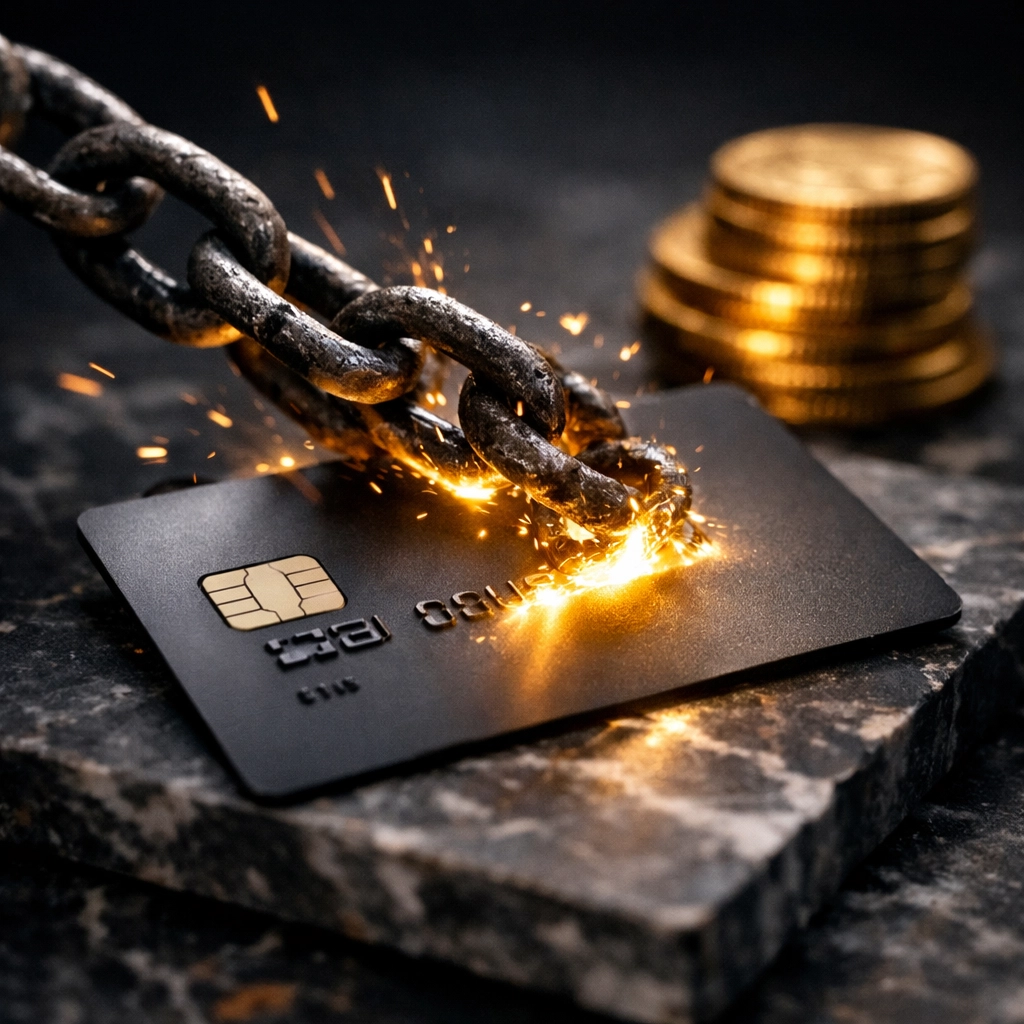
Eliminating the "Hard Inquiry" Cycle
Every time you apply for a new store credit card to get a 10% discount, or you finance a new sofa, a "Hard Inquiry" is placed on your credit report. These stay on your report for two years and can knock a few points off your score each time.
A No-Buy year naturally eliminates hard inquiries. Since the goal is zero spending on new items, there is no reason to apply for new credit. This gives your credit report a "cooling-off period." As these old inquiries age and eventually fall off, your score receives a natural, effortless bump.
The Debt-to-Income (DTI) Ratio Factor
While DTI isn't usually a direct component of your FICO score, it is a massive factor for lenders (especially for mortgages or car loans). During your No-Buy year, your income ideally stays the same or increases, while your debt decreases rapidly.
Lowering your DTI makes you look like a superstar to lenders. By the end of the 12 months, you aren't just a person with a higher number; you are a person with a cleaner financial profile. You have proven that you can live well below your means, which is the ultimate sign of financial maturity.

Avoiding the Pitfalls: When "No-Buy" Goes Wrong
While the benefits are huge, there are a few ways a No-Buy year can accidentally sabotage your credit if you aren't careful:
- Closing Accounts: Some people get so excited about "not spending" that they close all their credit cards. Do not do this. Closing an account reduces your available credit and hurts your score. Keep the accounts open, but keep the physical cards hidden.
- Missing "Hidden" Bills: Sometimes a No-Buy year involves canceling a lot of subscriptions. If you miss a final payment or a "zombie" bill goes to collections because you stopped checking that specific credit card portal, your score will tank. Always monitor your accounts even when you aren't using them.
- Emergency Fund Neglect: If you put every extra cent into paying off debt and have $0 in savings, one car breakdown will force you to break your No-Buy year and put a huge charge back on a credit card. Always keep a small "starter" emergency fund (like $1,000) before aggressively paying down debt during your challenge.
Practical Steps to Start Your No-Buy Year
If you're ready to transform your credit score, follow this checklist to ensure your No-Buy year is effective:
- Define Your Rules: Clearly list what is "essential" (groceries, rent, fuel, basic hygiene) and what is "banned" (takeout, hobby supplies, home decor).
- Inventory Your Debt: List every credit card balance, interest rate, and due date.
- Automate the Essentials: Pick one card for a small recurring utility bill to keep the account active.
- The "Debt Avalanche" or "Snowball": Use the money saved from your "Banned" list to pay off your credit cards one by one.
- Check Your Report: Use a free tool to monitor your score monthly. Seeing the number go up is the best motivation to keep going.

Summary: A Year of Growth
A No-Buy year is often framed as a year of "lack," but for your credit score, it is a year of massive growth. By removing the noise of impulsive consumption, you allow the fundamental pillars of credit: payment history and utilization: to shine.
Twelve months from now, you won't just have a closet that isn't overflowing; you’ll have a credit score that opens doors to better interest rates, better housing options, and a much lower level of financial stress. The best things in life aren't things, and they certainly aren't bought on high-interest credit.
About the Author
Malibongwe Gcwabaza is the CEO of blog and youtube. With a passion for simplifying complex financial and digital concepts, Malibongwe focuses on providing actionable insights that help individuals leverage modern tools and mindsets to achieve financial independence. Under his leadership, blog and youtube has grown into a trusted resource for high-quality, long-form content dedicated to personal growth, technology, and smart living.
About the Author