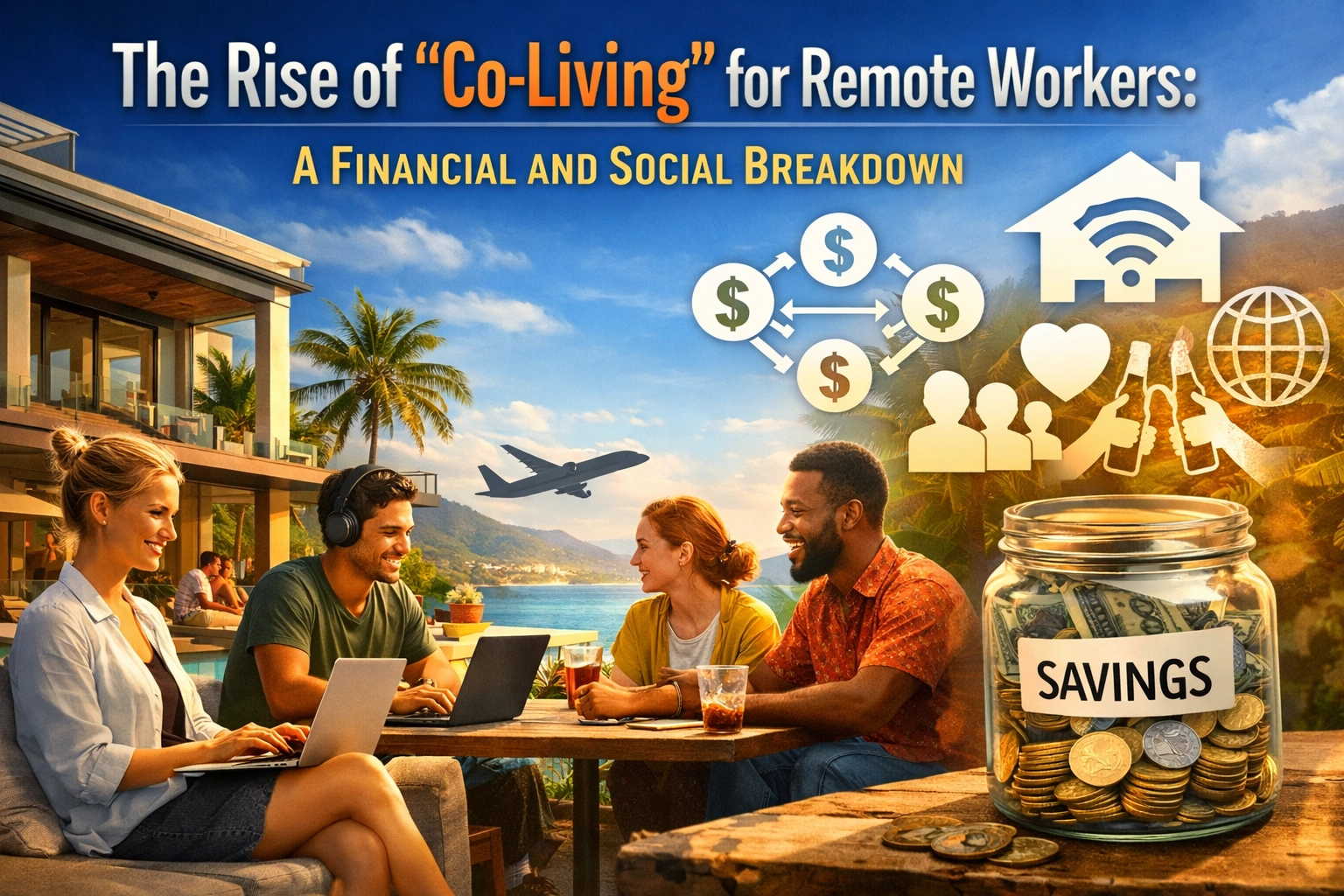
By March 2026, the traditional 12-month apartment lease has started to look like a relic of the industrial age. For the modern remote professional, signing a year-long contract for a static box in a single city feels less like "settling down" and more like a strategic error. As we move deeper into this year, the "Fractional" workforce and the rise of portfolio careers have birthed a housing revolution: Co-living.
This isn't the "adult dorm" trend of the early 2020s. Today, co-living is a sophisticated, data-driven real estate sector designed specifically for high-output digital professionals. It’s an ecosystem where high-speed infrastructure, professional networking, and financial optimization converge.
In this breakdown, we’ll look at why co-living has become the primary choice for the 2026 remote workforce, backed by the latest market data and financial performance metrics.
The Macroeconomic Shift: Why 2026 is the Tipping Point
The global co-living market is currently on a trajectory to hit $16.05 billion by 2030, but the real story is in the CAGR of 13.5%. What’s driving this? The sheer volume of the remote workforce. In the U.S. alone, nearly 28 million people are fully remote. Economists now project that within the next decade, 25% of the total workforce will no longer have a fixed office.
When your office is a laptop and a secure VPN, the logic of paying $3,500 for a studio in Manhattan: plus utilities, plus gym memberships, plus a coworking desk: starts to fall apart. Co-living operators have stepped into this gap by offering "Productivity-as-a-Service."

The Financial Breakdown: Co-Living vs. Traditional Rentals
For most residents, the primary driver is the "All-Inclusive" math. In 2026, inflation and fluctuating energy costs have made variable utility bills a nightmare for freelancers and solopreneurs. Co-living stabilizes these costs.
1. Monthly Savings in High-Tier Markets
In Tier-1 cities like New York, San Francisco, or London, the savings are staggering. A digital nomad or remote consultant choosing a premium co-living space over a standard studio apartment can save upwards of $1,701 per month in New York City.
This includes:
- Zero Utility Volatility: No separate bills for electricity, water, or trash.
- Enterprise-Grade Connectivity: Most top-tier spaces now include 1Gbps symmetrical fiber and redundant 5G failovers: costs that would easily exceed $150/month for an individual.
- Furnishing & Maintenance: The upfront cost of furnishing an apartment (roughly $5,000–$10,000 for quality ergonomic setups) is eliminated.
2. The Flexibility Premium
Traditional leases often carry heavy penalties for early termination. In a "portfolio career" environment where a professional might spend three months in Austin for a tech contract and four months in Lisbon for a creative project, the 30-day rolling contract is a financial asset. You aren't paying for "dead time" when you travel.
Infrastructure for the "AI Whisperer" and Tech Elite
A major draw for the 2026 professional is the specialized infrastructure. We are no longer just looking for a "desk in the corner." Modern co-living spaces are designed for specific technical workflows:
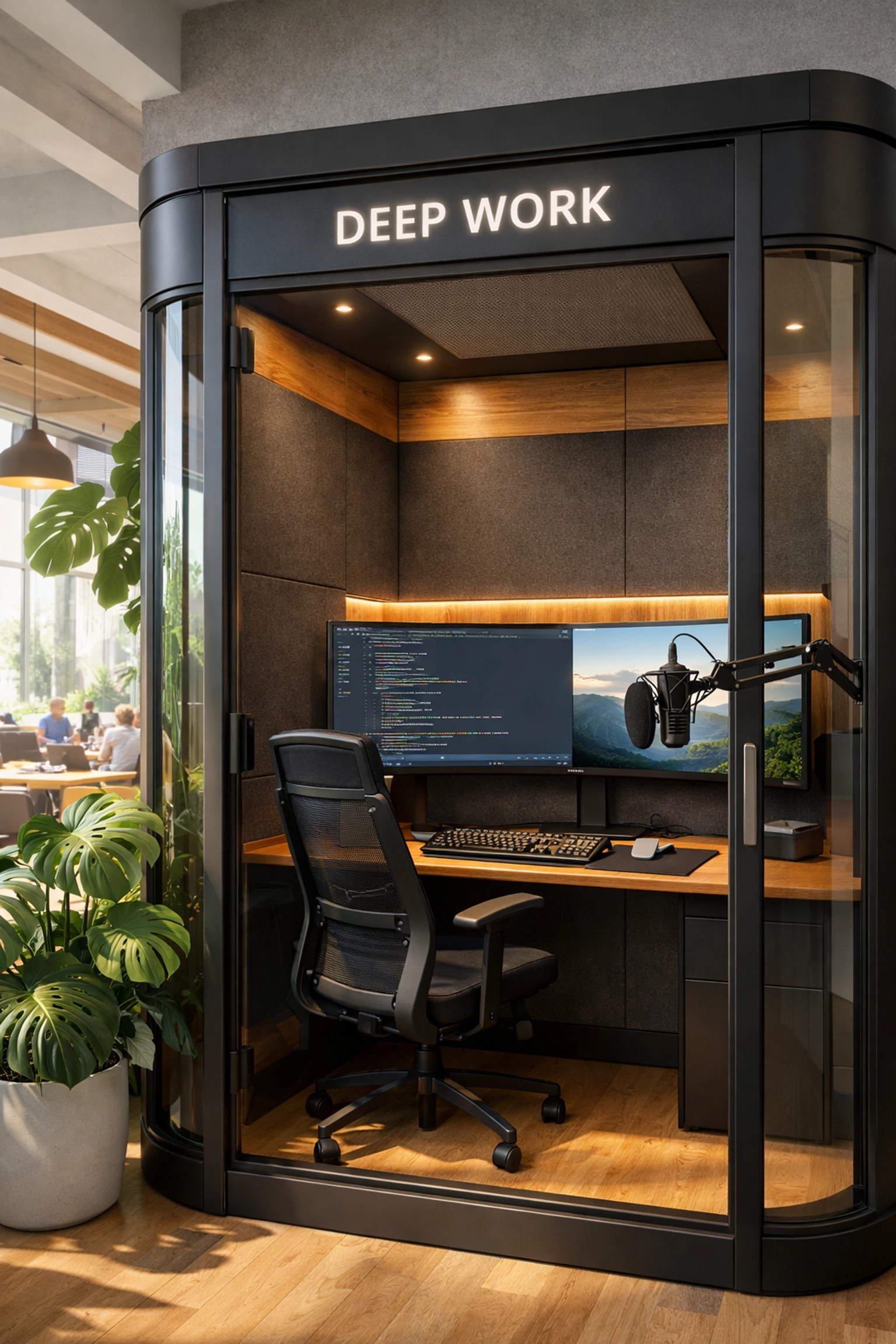
- Acoustic Engineering: High-end spaces now feature sound-proofed pods optimized for "AI Prompt Engineering" and deep-work sessions where vocal clarity for AI-agents and virtual meetings is paramount.
- Smart Environments: Integration with "Digital Twins" where your room settings (lighting, temperature, standing desk height) follow your profile from one location to another.
- On-Site Hardware: It’s becoming common to find communal "rendering farms" or access to local GPU clusters for residents working in AI development or 3D design: resource-heavy tasks that are difficult on a standard MacBook.
The Social Breakdown: Solving the Loneliness Epidemic
While the financial metrics are easy to track, the social ROI is perhaps more significant. We are living through a period where social isolation has been linked to a 26% higher risk of premature death. Remote work, for all its freedom, can be a vacuum.
Data from London-based co-living hubs shows that 68% of residents reported a measurable improvement in their social lives within three months of moving in.
Community as a Business Catalyst
For the solopreneur, co-living is the ultimate networking event. When you share a kitchen with a Data Scientist, a Creative Director, and a FinTech Lawyer, the "accidental collisions" lead to business partnerships. This is the "Human-in-the-Loop" advantage. While AI can handle our outreach, it cannot replace the trust built over a shared meal in a communal lounge.
The Investor’s Perspective: 100%+ Better Returns
If you are looking at this from a real estate investment standpoint, the numbers are equally compelling. Property owners who convert traditional single-family homes or commercial lofts into co-living spaces (using platforms like PadSplit or specialized 2026 REITs) are seeing returns 100% higher than traditional long-term rentals.
The "Working Professional" segment is the fastest-growing demographic in this sector, with a projected 14.4% CAGR through 2030. High occupancy rates: averaging eight months per tenant: provide a stability that short-term vacation rentals (like Airbnb) often lack, while still commanding a per-room premium.

The 2026 Challenges: Privacy and the "Authenticity Gap"
It isn't all perfect. As the sector matures, we are seeing pushback in two main areas:
- Privacy Fatigue: Even with private ensuites, the "always-on" nature of communal living can lead to burnout for introverts. The best spaces in 2026 are combatting this with "Deep Work Zones" where social interaction is strictly prohibited.
- The Local Impact: There is a growing conversation around "Digital Gentrification." When a co-living building filled with high-earning remote workers moves into a traditional neighborhood, it can create a bubble. The most successful operators are now prioritizing "local integration," offering neighborhood memberships and using local vendors to ensure they aren't just "sovereign islands" of wealth.
Conclusion: Is Co-Living Right for You?
As we navigate the complexities of 2026, your living situation should be an asset, not a liability. If you are a remote worker looking to optimize your tax strategy, expand your professional network, and eliminate the "subscription bloat" of individual utility and gym contracts, co-living is no longer a niche alternative: it is the strategic choice.
The rise of the fractional workforce demands a fractional housing model. By decoupling our homes from long-term geographic commitments, we are finally achieving true digital sovereignty.
About the Author: Malibongwe Gcwabaza
CEO of blog and youtube
Malibongwe Gcwabaza is a forward-thinking entrepreneur and the CEO of blog and youtube. With over a decade of experience in digital media and remote work infrastructure, Malibongwe focuses on how emerging technologies like AI and decentralized finance are reshaping the global workforce. He is a frequent speaker on "The Future of Work" and an advocate for sustainable, tech-enabled living solutions.

Quick Reference Guide: Co-Living vs. Traditional Rental (2026)
| Feature | Co-Living Space | Traditional Studio |
|---|---|---|
| Lease Term | 30 days – 6 months | 12 months+ |
| Internet | 1Gbps+ (Included) | $80 – $150/mo (Extra) |
| Utilities | $0 (All-inclusive) | $150 – $300/mo |
| Networking | Built-in professional community | None |
| Upfront Cost | 1 month deposit | 2-3 months + furniture |
| Best For | Solopreneurs, Nomads, Tech Pros | Local families, long-term residents |
Are you ready to audit your "Subscription Bloat" and move toward a more optimized lifestyle? Check out our latest guide on How to Audit Your Subscriptions and Save $2,000 This Year.
About the Author