Let’s be real: your subscribers' inboxes are a battlefield. Every morning, they wake up to a mountain of "Special Offers," "Quick Questions," and "Don't Miss Out" subject lines. Traditional email marketing has always been a one-way street. You send a broadcast, they (maybe) open it, and if you’re lucky, they click a link.
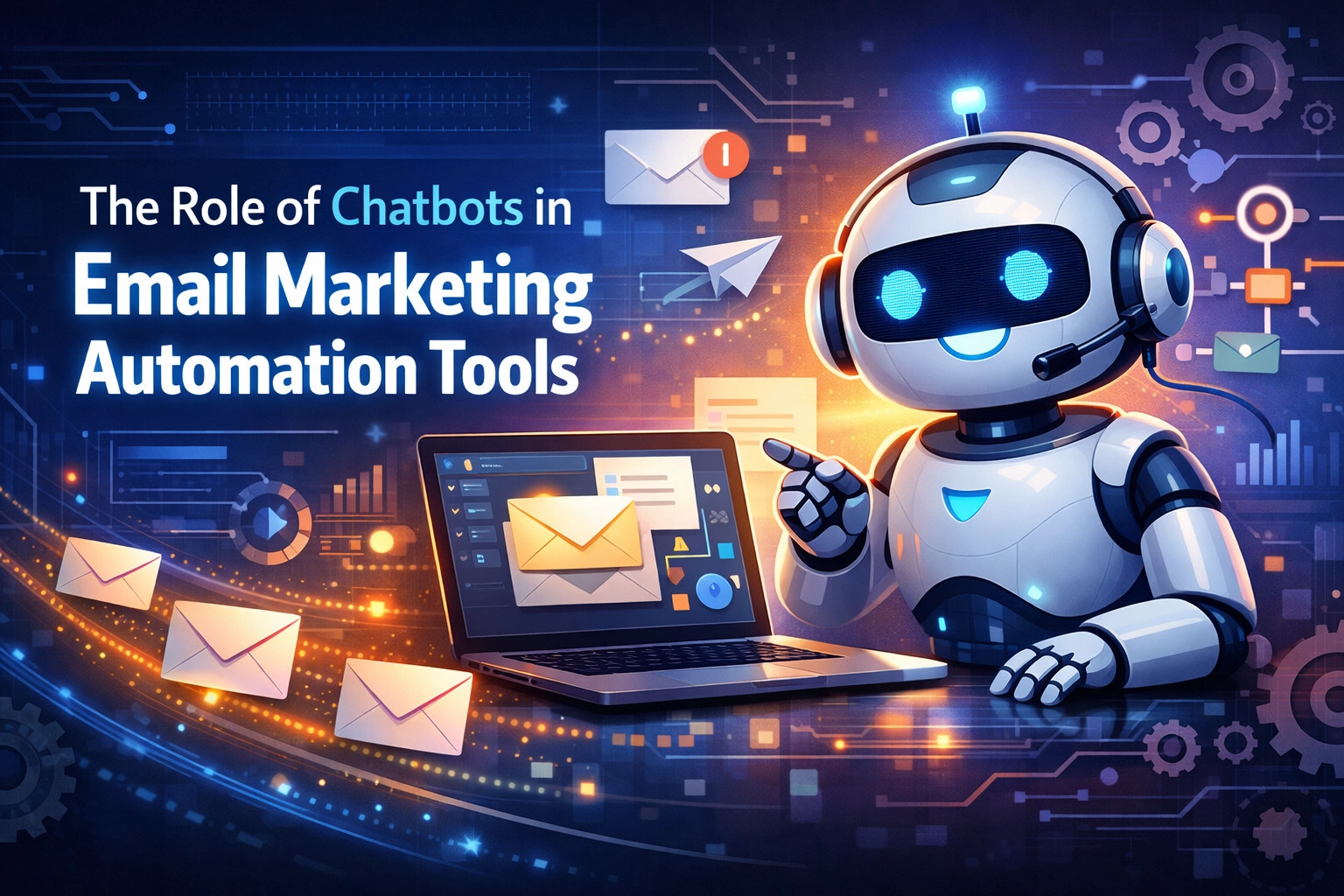
But the game changed. We’ve moved into the era of conversational marketing. If you’re still treating your email marketing automation tools like a digital megaphone, you’re leaving money on the table. The real power move in 2026 is integrating chatbots directly into those automation workflows.
Chatbots aren’t just those annoying bubbles in the corner of a website anymore. They are the sophisticated "front-of-house" staff that feed your email engine with high-quality data, making your automated journeys feel like a 1-on-1 conversation rather than a mass blast.
Why The "Old Way" of Email Marketing is Dying
Traditional email automation relies on triggers: "If user signs up, send Welcome Email." "If user clicks link, send Follow-up." It’s logical, but it’s static. It assumes you know what the user wants based on a single action.
The problem? Humans are unpredictable. A user might sign up for your newsletter because they want a discount code, but they might actually be interested in a high-ticket service you haven't mentioned yet. A static sequence won't catch that.
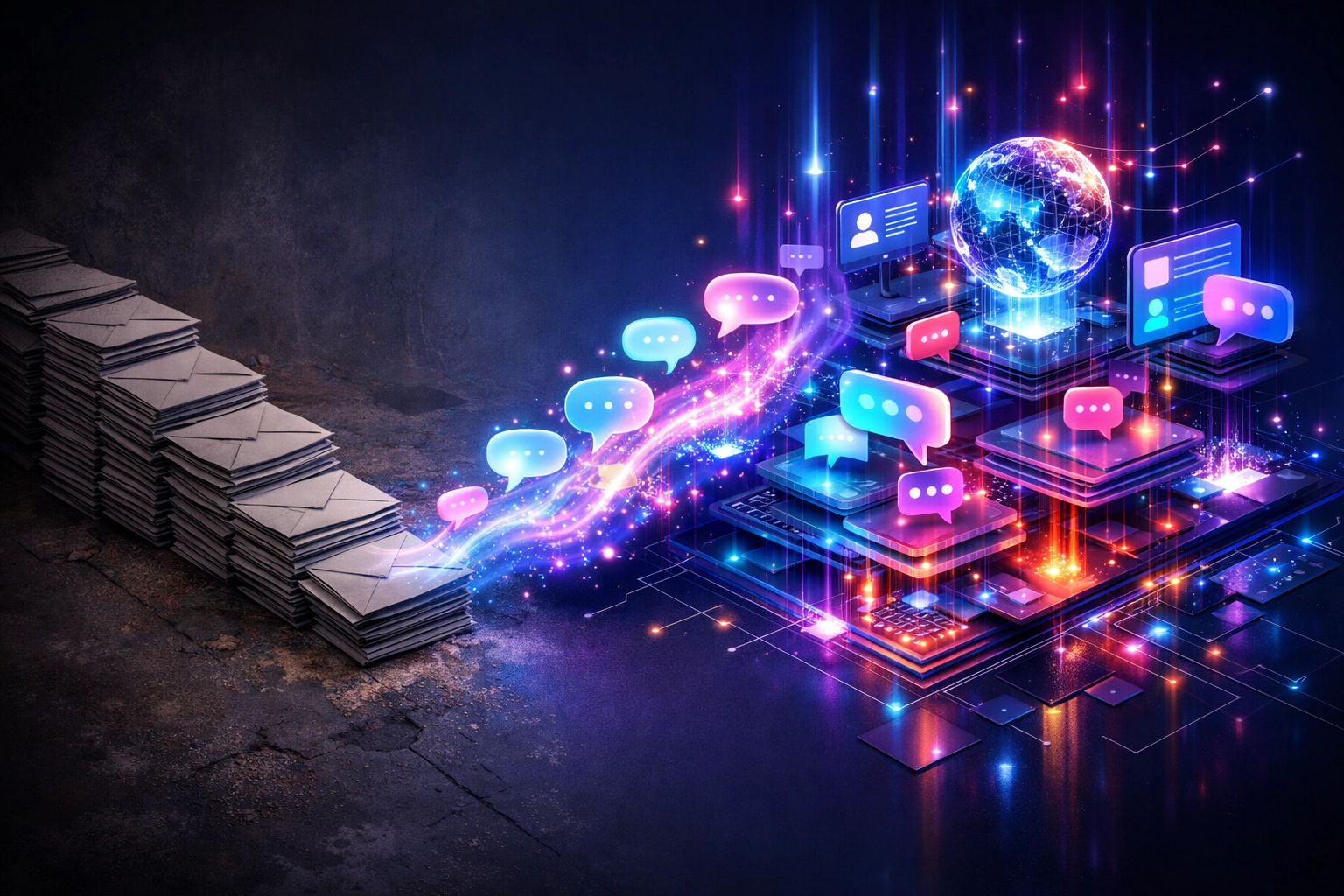
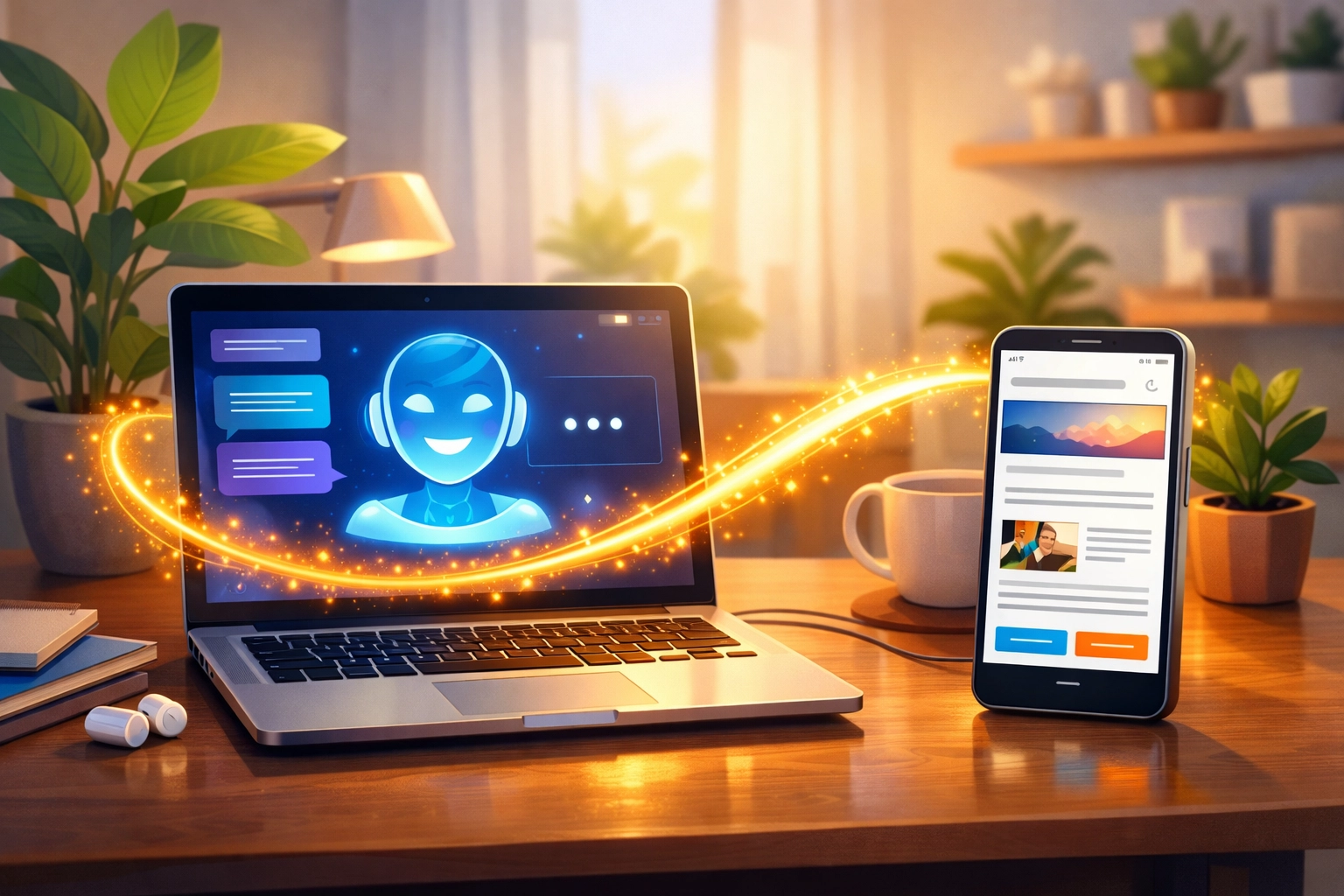
This is where chatbots come in. By integrating conversational AI with your email marketing automation tools, you turn a linear sequence into a dynamic web. The chatbot talks, listens, and then tells the email tool exactly what to send next.
The Bridge: How Chatbots Feed Your Automation Engine
Think of a chatbot as a high-speed data collector. In the time it takes someone to fill out a 5-field contact form, a chatbot can have a 10-message conversation that reveals their budget, their pain points, and their timeline.
1. Instant Lead Qualification
When a visitor hits your site, a chatbot can ask, "Hey, are you looking for a quick fix or a long-term strategy?" Based on that answer, the bot can tag that lead in your CRM. Your email marketing automation tools then pick up that tag and trigger a specific drip campaign tailored to that exact need. You aren't guessing; you're responding to data given in real-time.
2. Zero-Party Data Collection
In a world where third-party cookies are a thing of the past, zero-party data (data the customer intentionally shares) is gold. Chatbots are the most friction-less way to get this. Instead of a boring survey, a chatbot asks questions during a natural interaction. "What's your biggest challenge with SEO?" "Are you a solo founder or a team lead?" This information allows your email tool to segment users with surgical precision.
3. Abandoned Cart Recovery 2.0
We all know the standard abandoned cart email. But what if a chatbot on the site asks, "Need a hand with your checkout?" and discovers the user is worried about shipping costs? The bot can offer a one-time free shipping code and then pass that interaction data to your email automation software. If they still don't buy, the follow-up email can specifically mention the shipping deal they discussed with the bot.
Orchestrating the Omnichannel Journey
One of the biggest mistakes businesses make is keeping their "Chat Team" and "Email Team" in separate silos. In 2026, the customer journey is a single, fluid experience.
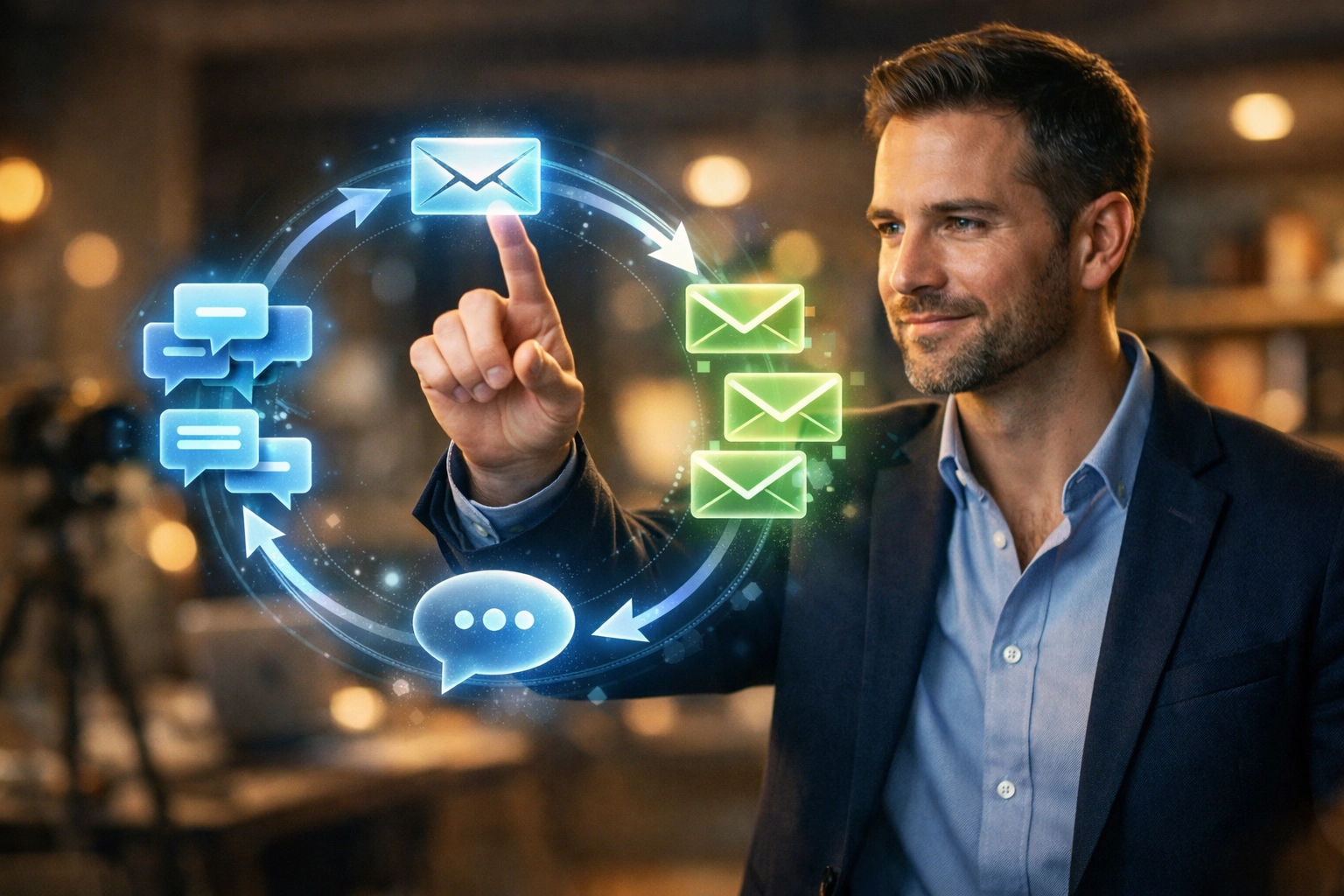
When you use modern email marketing automation tools that support chatbot integration (like HubSpot, Botpress, or Intercom), you create an omnichannel loop.
The Hybrid Workflow Example:
- The Hook: A user interacts with a chatbot on your pricing page.
- The Interaction: The bot realizes the user is a "High Value" lead but isn't ready to buy today.
- The Hand-off: The bot asks, "Can I send you our enterprise case study via email?"
- The Automation: The user says yes, provides their email, and the email marketing automation tool immediately fires off the case study.
- The Follow-up: Three days later, if the email wasn't opened, the chatbot recognizes the user when they return to the site and says, "Hey, noticed you didn't get a chance to check that case study. Want me to summarize the key points here?"
This level of synchronization makes your brand look incredibly attentive and professional without you having to lift a finger.
Conversational AI: Moving Beyond "If/Then"
We’ve moved past simple decision-tree bots. Today’s conversational AI uses Natural Language Processing (NLP) to understand intent. This is a game-changer for your email sequences.
If a customer replies to an automated email with a complex question like, "I love the software, but does it integrate with my legacy ERP system?" a standard auto-responder would fail. However, if your email tool is connected to a conversational AI engine, that engine can parse the question, find the answer in your knowledge base, and draft a personalized reply: or even trigger a specific "Technical Integration" email sequence.
This is "intelligent automation." It's about using AI to ensure the customer never hits a dead end in their journey.
5 Best Practices for Integrating Chatbots with Email Tools
If you’re ready to bridge the gap, here are five rules to live by:
1. Maintain a Consistent Voice
The "person" the customer talks to in the chat bubble should sound like the "person" writing the emails. If your chatbot is super formal but your emails are casual and full of emojis, the experience feels disjointed. Simple brand tones work best: keep it human.
2. Don't Ask the Same Question Twice
There is nothing more frustrating than telling a chatbot your name and company size, only to receive an automated email five minutes later asking for your name and company size. Ensure your email marketing automation tools are pulling data directly from the chat logs.
3. Use Chatbots for "Opt-In" Confirmation
Instead of a boring double opt-in email, use a chatbot to confirm the subscription. "I've sent that guide to your inbox! While you're here, do you want me to sign you up for our weekly growth tips too?" The conversion rate on this is significantly higher than a standard checkbox.
4. Personalize Based on Chat Sentiment
Advanced AI can detect if a user is frustrated or happy. If a user has a "frustrated" interaction with a bot, your automation tool should probably skip the "How are we doing? Give us a 5-star review!" email for a few weeks.
5. Transition to Human at the Right Time
Automation is great, but it’s not a total replacement for humans. Use chatbots to handle the 80% of repetitive tasks, but have a clear trigger in your email automation to alert a real person when a "High Intent" lead is stuck or asking for a human.
| Feature | Traditional Email Automation | Chatbot-Integrated Automation |
|---|---|---|
| Response Time | Delayed (Hours/Days) | Instant (Real-time) |
| Data Collection | Static Forms | Conversational Flow |
| Personalization | Based on Clicks | Based on Dialogue & Intent |
| Engagement | One-way | Two-way |
| Conversion Rate | Moderate | High (Omnichannel) |
The ROI of Conversational Email Marketing
Why go through the effort of setting this up? Because the ROI is undeniable. When you treat email marketing automation tools as a component of a larger conversational strategy, your engagement metrics skyrocket.
We’ve seen businesses reduce their lead-to-close time by 30% simply by using chatbots to "warm up" leads before they even enter the main email drip. Why? Because the lead feels heard. They’ve already had a "conversation" with your brand, so when your email lands in their inbox, it’s not a cold intrusion: it’s a continuation of a chat they’ve already started.
Looking Ahead: The Future of Chatbots and Email
By the end of 2026, the line between "Chat" and "Email" will be almost non-existent. We’re already seeing "In-Email Apps" where users can interact with a mini-chatbot directly inside the Gmail or Outlook interface.
Imagine sending an email where the user can chat with your support bot right inside the message to reschedule a demo or ask a product question. No clicking away to a landing page. No friction. Just a seamless interaction that lives wherever the customer is.
Conclusion
The role of chatbots in email marketing automation tools is no longer optional for businesses that want to scale. It’s the difference between being a "brand that emails" and a "brand that listens."
Start small. Pick one part of your customer journey: maybe your lead magnet delivery or your "Contact Us" page: and see how a chatbot can improve the data flow into your email tool. You’ll quickly find that when you stop talking at your customers and start talking with them, your automation becomes infinitely more effective.
About the Author: Malibongwe Gcwabaza
Malibongwe is the CEO of blog and youtube, a digital strategist obsessed with the intersection of AI and human-centric marketing. With over a decade of experience in scaling tech brands, he focuses on making complex automation simple and accessible for businesses of all sizes. When he's not optimizing conversion funnels, you can find him exploring the latest in predictive analytics and conversational design.
About the Author