By 2026, the traditional educational landscape has undergone a radical shift. While a Master’s degree was once the "gold standard" for upward mobility, the sheer speed of technological evolution has left many two-year academic programs struggling to remain relevant. For a professional in 2026, the real question isn't whether you have a degree, but whether you have the specific, validated skills to handle the current economy's demands.
Data from the first quarter of 2026 suggests that the average cost of a Master’s degree in the United States has climbed to over $65,000, with specialized tech degrees exceeding $100,000. Meanwhile, high-tier industry certifications: which often cost less than $2,000 in total: are yielding starting salaries that match or exceed those of MBA or MS graduates.
If you are looking to maximize your ROI (Return on Investment) and your ROE (Return on Effort), these are the five certifications currently dominating the 2026 job market.
1. AWS Certified Solutions Architect – Professional (Cloud Infrastructure)
In a world where "Sovereign Clouds" and multi-agent AI systems are the norms, the infrastructure that holds everything together is more complex than ever. The AWS Solutions Architect – Professional isn't just a "tech cert"; it is a license to design the backbone of modern enterprise.
By 2026, entry-level cloud roles are starting at $121,000, but those who hold the Professional-level certification are seeing median salaries exceed $200,000. The reason is simple: companies are moving away from centralized data centers toward decentralized, edge-computing models. Architecting these systems requires a level of precision that a general computer science degree simply doesn't provide.
Why it beats a Master’s: A Master’s in Information Technology often spends six months on theoretical networking. This certification requires you to solve real-world scenarios involving auto-scaling, cost optimization, and cross-region disaster recovery in real-time.

2. Generative AI & Large Language Model (LLM) Engineer
The "AI Whisperer" has evolved. In 2026, companies are no longer impressed by someone who can write a basic prompt. They need professionals who can fine-tune models, manage agentic workflows, and integrate LLMs into proprietary data streams while maintaining strict data privacy.
Certifications from leading providers (like NVIDIA’s Deep Learning Institute or specialized credentials from OpenAI/Microsoft) are now the primary filter for high-paying roles. These professionals are commanding salaries between $125,000 and $180,000.
In the 2026 market, "Prompt Engineering" has matured into "AI Strategy." If you can demonstrate that you understand how to minimize "hallucination" in a corporate AI assistant and maximize its token efficiency, you are more valuable to a CEO than a general MBA graduate.
3. CISSP (Certified Information Systems Security Professional)
Cybersecurity remains the highest-stakes department in any organization. With the rise of deepfakes and AI-driven phishing attacks, the CISSP remains the "gold standard" for security leadership.
The 2026 version of the CISSP exam has been updated to include heavy emphasis on Quantum-resistant cryptography and AI-driven threat hunting. While a Master’s in Cybersecurity provides a great foundation, the CISSP is a "practitioner’s" credential. It proves you have the five years of cumulative, paid work experience in two or more of the eight domains of the CISSP Common Body of Knowledge (CBK).
The Salary Snapshot: CISSP holders in 2026 are frequently moving into CISO (Chief Information Security Officer) roles, where salaries start at $160,000 and can easily reach $250,000 with bonuses.

4. PMP (Project Management Professional) – AI-Augmented Edition
The role of the Project Manager has changed. In 2026, you aren't just managing people; you are managing "Human-in-the-Loop" AI systems and fractional workforces. The Project Management Institute (PMI) has adapted the PMP to reflect this, focusing heavily on hybrid methodologies: mixing Agile, Waterfall, and AI-driven predictive analytics.
With the "Fractional Workforce" trend exploding (where top pros work for three companies at once), the ability to coordinate complex, asynchronous projects is a high-value skill. PMP-certified individuals are earning between $88,000 and $147,000. Compared to a Master’s in Management, the PMP is more globally recognized and significantly faster to obtain.
5. Google Analytics & Digital Data Professional
Data is the lifeblood of 2026 commerce, but the way we collect it has changed. With the death of the third-party cookie and the rise of Generative Engine Optimization (GEO), businesses need experts who can interpret first-party data.
The Google Analytics Professional Certificate (and its advanced counterparts) focuses on "Life-Cycle Mapping": understanding exactly how a customer moves from an AI search result to a purchase. Digital analytics specialists are currently earning between $78,000 and $139,000.
While a Master’s in Data Science is valuable for deep research, a Google-certified analytics pro is often more "plug-and-play" for a marketing department that needs to see an immediate lift in ROI.

Comparing the ROI: The 2026 Reality Check
Let’s look at the hard numbers. The cost of a Master’s degree is often financed through high-interest student loans. By the time you factor in interest over 10 years, a $60,000 degree can cost you nearly $100,000.
In contrast, the top five certifications listed above have a combined average cost (including study materials and exam fees) of roughly $1,500 to $3,000.
| Path | Average Cost | Time to Complete | 2026 Starting Salary (Avg) |
|---|---|---|---|
| Master’s Degree (Tech/Business) | $65,000+ | 2 Years | $95,000 |
| High-Tier Industry Cert (e.g., AWS Pro) | $2,000 | 6 Months | $121,000+ |
The "Stacking" Strategy
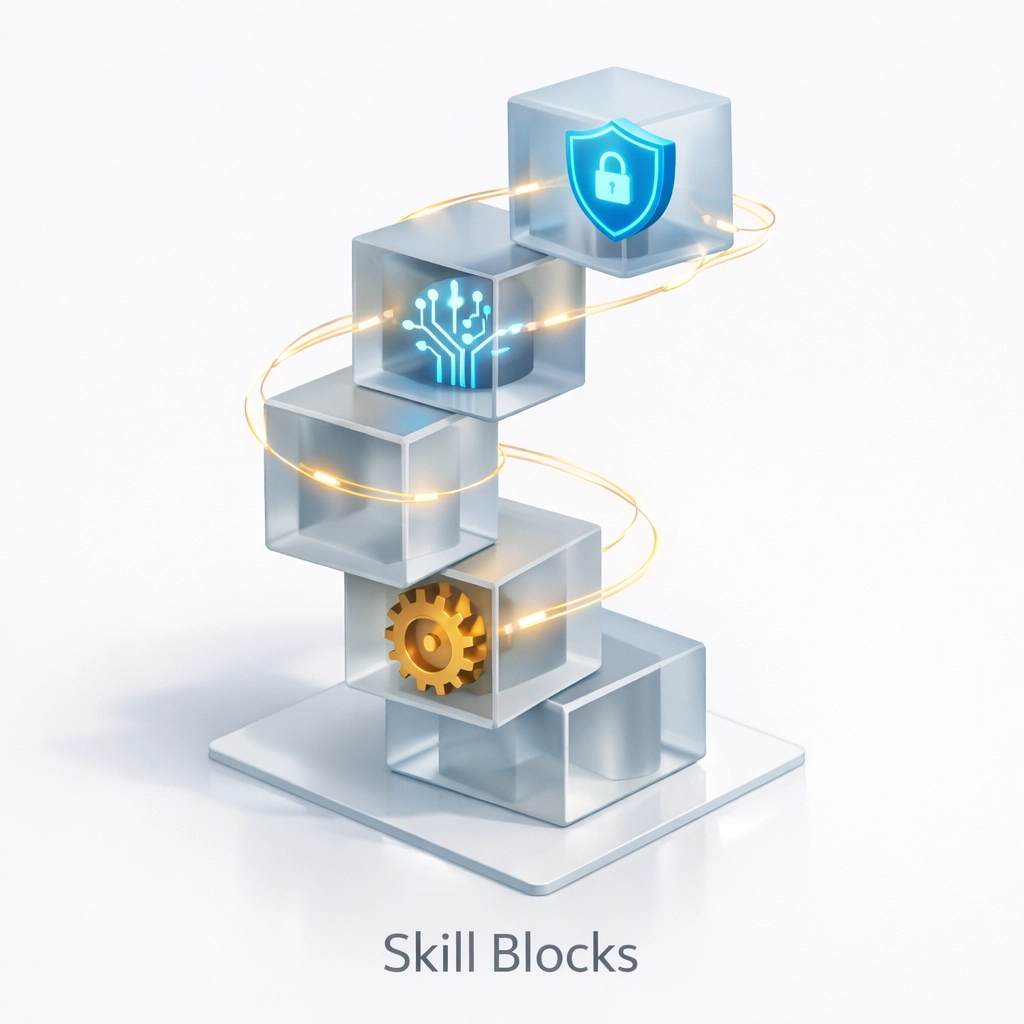
The most successful professionals in 2026 aren't choosing between a degree and a certification; they are "stacking." This involves taking a base-level education and layering it with highly specific industry credentials every 18 months. This keeps your skill set "evergreen" and prevents the skill-decay that often happens in traditional academic settings.
Why "Skill-Based Hiring" is Winning
In 2026, "Skill-Based Hiring" has officially overtaken "Credential-Based Hiring." Major tech firms and even government agencies have removed degree requirements from their job descriptions. They want to see your GitHub, your portfolio of AI agents, and your active certifications.
Certifications are verified on the blockchain in 2026, making them impossible to forge and easy for recruiters to scan. When an HR bot filters 5,000 resumes, it looks for the specific certification codes that match the current tech stack of the company. If you have the code, you get the interview. If you only have "Master of Science," you might get filtered out for being a "generalist" in a "specialist" market.
Final Thoughts: Which One is for You?
Choosing the right path depends on your current trajectory:
- If you love infrastructure: Go for the AWS Solutions Architect – Professional.
- If you want to be at the forefront of the AI revolution: Pursue Gen AI/LLM Engineering credentials.
- If you are a protector by nature: The CISSP is your path to a six-figure leadership role.
- If you are a natural leader: Get the PMP and master the "Fractional Workforce" management style.
- If you love the "why" behind consumer behavior: The Google Analytics path is your best bet.
The 2026 market rewards the agile. Don't spend two years learning what happened yesterday when you can spend six months learning what is happening tomorrow.
About the Author: Malibongwe Gcwabaza
Malibongwe Gcwabaza is the CEO of blog and youtube, a leading digital media firm specializing in career evolution and the future of work. With over a decade of experience in the tech sector, Malibongwe focuses on bridging the gap between traditional education and the high-speed requirements of the 2026 economy. His insights help thousands of professionals transition into "Portfolio Careers" and "Solopreneurship" through strategic skill acquisition and AI integration.
About the Author