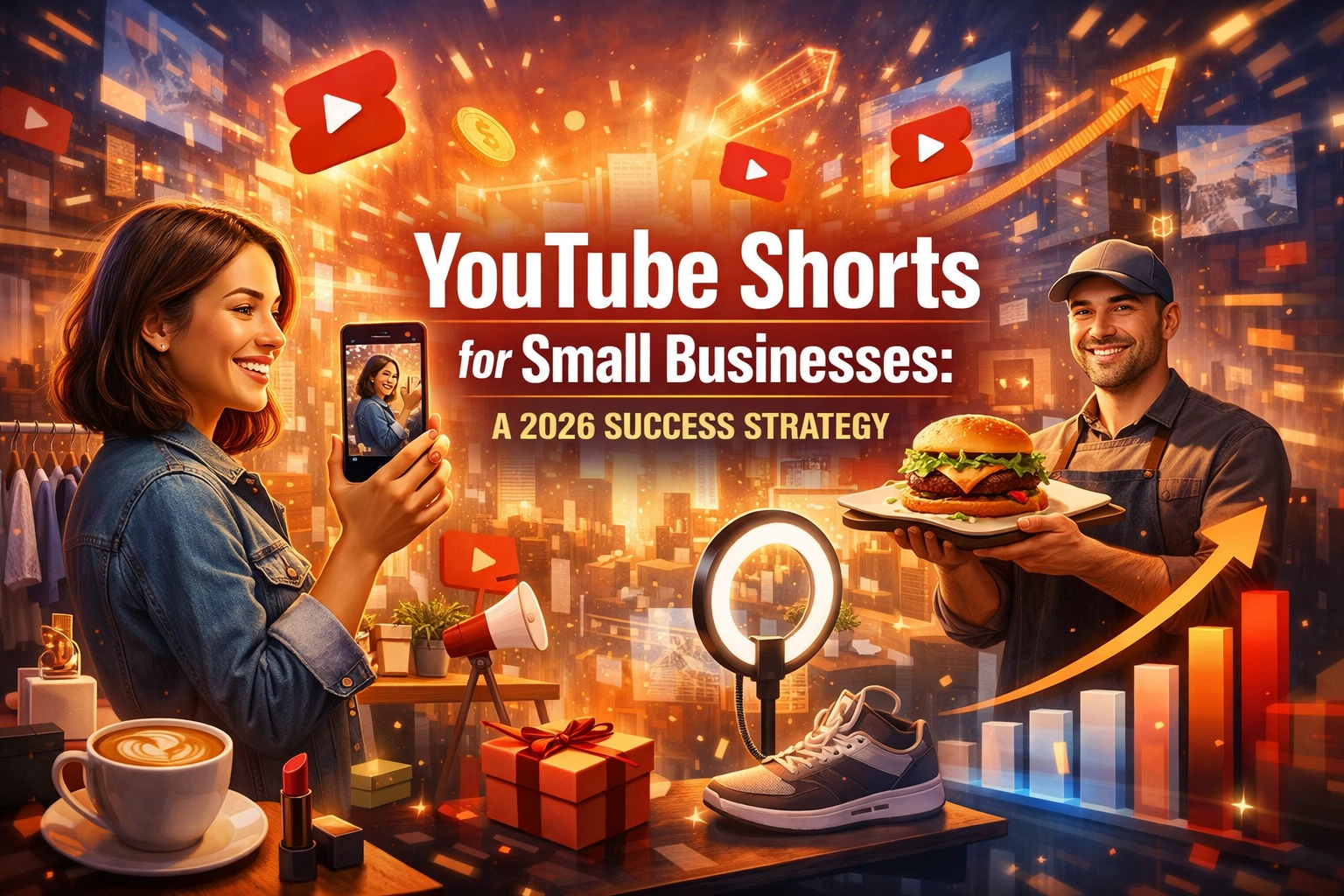
By 2026, the "shiny new object" energy around vertical video has finally cooled off, leaving behind a powerful, mature marketing tool that small businesses can no longer ignore. If you’re still treating YouTube Shorts like a secondary dump for your TikTok reposts, you’re leaving money on the table.
In today’s digital landscape, Shorts have evolved into a discovery engine that works harder than any other social platform. Why? Because it’s backed by Google. While a TikTok might go viral and vanish in 48 hours, a well-optimized YouTube Short can surface in search results months after you hit publish.
For a small business owner, this is the ultimate win: your effort scales. This guide breaks down the exact strategy you need to dominate YouTube Shorts in 2026, focusing on conversion, searchability, and sustainable growth.
The Search Engine Advantage: Why Shorts Win in 2026
The biggest shift we’ve seen in the last two years is how YouTube integrates Shorts into the global search ecosystem. When someone searches for "how to fix a leaky faucet" or "best coffee shop in Johannesburg" on Google, Shorts are now prominently displayed in the "Short Videos" carousel.
Unlike Instagram Reels, which primarily rely on an interest-based algorithm to push content to followers and strangers, YouTube Shorts rely heavily on intent. If you provide the answer to a specific question in 60 seconds or less, YouTube will keep serving that video to people asking that question for the foreseeable future.
This "evergreen" nature of Shorts is why they are the superior choice for small businesses with limited marketing time. You aren't just feeding a hungry algorithm; you’re building an asset library.

Building Your 2026 Content Pillars
To succeed, you need to stop guessing what to film. Consistency is easier when you have a framework. For small businesses, we recommend focusing on these four pillars:
1. The "Problem-Solver" (Educational)
Identify the top five questions your customers ask. Each question is a Short.
- Example: A skincare brand creator shows "3 signs your skin barrier is damaged" in 20 seconds.
- The Hook: "Stop using moisturizer if your skin does this."
2. The "Behind-the-Curtain" (Trust Building)
In 2026, consumers are cynical. They want to see the person behind the product. Show the messy desk, the packing process, or the "fail" that happened before the win.
- Example: A local bakery showing the 4:00 AM start time.
- The Hook: "What it actually looks like to run a bakery at 4 AM."
3. The "Product in Action" (Demonstration)
Don’t tell them it’s a good product; show them. Use high-quality audio (ASMR style works wonders) and tight shots.
- Example: A tool company showing a drill going through concrete like butter.
- The Hook: "Is this the strongest drill of 2026?"
4. The "Myth Buster" (Authority)
Every industry has common misconceptions. Use Shorts to debunk them. This positions you as an expert instantly.
- Example: A real estate agent explaining why a 20% down payment isn't always necessary.
- The Hook: "The biggest lie you’ve been told about buying a house."
Technical Optimization: The 15-35 Second Sweet Spot
While Shorts can be up to 60 seconds, data from 2025 and early 2026 shows that the 15 to 35-second range is the "Goldilocks Zone" for small businesses.
Why? Retention. YouTube’s algorithm prioritizes "Average Percentage Viewed." If your video is 60 seconds and people drop off at 30, you have 50% retention. If your video is 20 seconds and they watch the whole thing twice because it looped perfectly, you have 200% retention. That’s the signal that tells YouTube to blast your video to a million more people.

Optimization Checklist:
- The Hook (0-3 Seconds): You must have a visual or verbal hook. Move the camera, use a bold text overlay, or start with a controversial statement.
- The Loop: Design the end of your script to lead back into the beginning. This keeps people watching and inflates your stats.
- SEO Titles: Forget the "Click here!" titles. Use keywords. "How to [Benefit] for [Audience]" is a classic for a reason.
- The "Related Video" Feature: This is your secret weapon. In YouTube Studio, you can link a Short to a long-form video. Use your Short as a "trailer" to drive traffic to your main revenue-generating content.
Social Media Growth Tips for 2026
Growing a brand today requires a mix of technical savvy and human connection. Here are our top social media growth tips for small businesses looking to scale their Shorts presence:
- Batch, Don't Sprinkle: Set aside three hours once a week to film all your Shorts. Changing clothes and locations within your office or shop can make one afternoon of filming look like a month of daily content.
- Use Native Features: While third-party editors like CapCut are great, try to use some of YouTube’s native tools: like their trending audio or the "Remix" feature. The algorithm tends to favor creators who use the platform's internal tools.
- Engage in the First Hour: When you post a Short, stay on the app for 30-60 minutes. Reply to every single comment. This initial engagement tells YouTube the video is sparking conversation.
- Pin Your Call to Action (CTA): Don't just hope people visit your site. Pin a comment on your own video with a link to your newsletter, product, or a related long-form video.
- Quality over Quantity (Mostly): In 2024, the advice was "post 3 times a day." In 2026, the advice is "post 3 high-quality Shorts a week." One Short that provides genuine value will outperform ten pieces of low-effort filler.

The 90-Day Success Roadmap
If you are starting from zero, here is how you should structure your first three months.
| Phase | Focus | Goal |
|---|---|---|
| Days 1-30 | Quantity & Learning | Post 15 Shorts. Focus on getting comfortable on camera and finding your "voice." Don't worry about the views. |
| Days 31-60 | Analyzing Data | Look at your "Audience Retention" graphs in YouTube Analytics. Where are people dropping off? Cut those parts out in your next batch. |
| Days 61-90 | Optimization & Scaling | Double down on the one "Pillar" that performed best. If BTS videos got more views than Tutorials, make 70% of your content BTS. |
Integrating Shorts with Long-Form Content
One of the biggest mistakes small businesses make is treating Shorts as a separate entity. In 2026, the most successful channels use a "hub and spoke" model.
Your Long-Form Videos (5-10 minutes) are your Hubs. This is where you build deep authority, explain complex topics, and sell high-ticket services.
Your Shorts (15-60 seconds) are the Spokes. They grab people from the feed and pull them into your ecosystem.
For every long-form video you produce, you should be able to extract at least three Shorts.
- Short 1: The controversial "Hot Take" from the video.
- Short 2: A 30-second summary of the main point.
- Short 3: A "funny moment" or outtake.
This repurposing strategy saves time and ensures your branding is consistent across all formats.

Equipment: What You Actually Need in 2026
You don't need a $5,000 cinema camera. In fact, "over-produced" content often performs worse on Shorts because it looks like an ad. People skip ads. They watch stories.
- The Phone: Anything from the last 3 years (iPhone 14+ or Samsung S23+) is more than enough.
- Lighting: Natural light from a window is best. If you work in a dark space, a basic COB light with a softbox is better than a ring light (which creates those weird circles in your eyes).
- Audio: This is the most important part. People will watch a blurry video, but they will swipe away instantly if the audio is echoey or quiet. Use a small clip-on wireless mic (like a DJI Mic or Rode Wireless Go).
- Stability: A simple tripod is necessary, but don't be afraid to do "handheld" shots for BTS content to give it a raw, authentic feel.
Final Thoughts: The Future is Vertical
YouTube Shorts isn't just a trend; it's the storefront of the future. Small businesses that embrace this format in 2026 are the ones that will be discoverable in 2027 and beyond. The key is to start small, focus on the viewer's needs, and use the data to guide your creative choices.
Stop overthinking the "perfect" video. The "perfect" video is the one you actually post. Grab your phone, find a well-lit corner, and answer one question your customer asked you this week. That’s your first Short.
About the Author: Malibongwe Gcwabaza
Malibongwe Gcwabaza is the CEO of blog and youtube, a boutique digital strategy firm dedicated to helping small businesses navigate the evolving world of video marketing. With over a decade of experience in content creation and SEO, Malibongwe focuses on making complex digital growth strategies simple and actionable for entrepreneurs. When he's not analyzing YouTube algorithms, he’s passionate about empowering African businesses to take their place on the global digital stage.
About the Author